 ELA
30 “In Conclusion” Synonyms and When to Use Them
Find 30 alternatives to in conclusion, grouped by purpose and formality, with examples and warnings for phrases that signal cause, sequence, or hindsight.
Study strategies, subject guides, and practical ways to learn with AI.
ELAFind 30 alternatives to in conclusion, grouped by purpose and formality, with examples and warnings for phrases that signal cause, sequence, or hindsight.
 ELA
Respecting elders means treating older people with dignity, listening to what they have lived through, and pushing back against the assumption that they are frail or a burden. The United Nations frames this through principles of independence, participation, care, self-fulfillment, and dignity. For a persuasive essay, take a clear position and back it with facts (logos), human stories (pathos), and credible sources (ethos).
 ELA
Narrative poetry tells a story through poetic language. A narrative poem usually gives readers a speaker, a setting, and an event that changes, while image, sound, rhythm, or line breaks shape how the story is experienced. To write one, choose a focused event and its turning point, select a speaker, sketch the story movement, and then let one poetic technique guide the lines.
 ELA
A professional email tells the recipient, in under a minute, who you are, what you need, and when you need it. Use a specific subject, an appropriate greeting, a one-line purpose, only the necessary context, and a clear request. Match formality to the relationship and follow up once politely after a reasonable wait.
 ELA
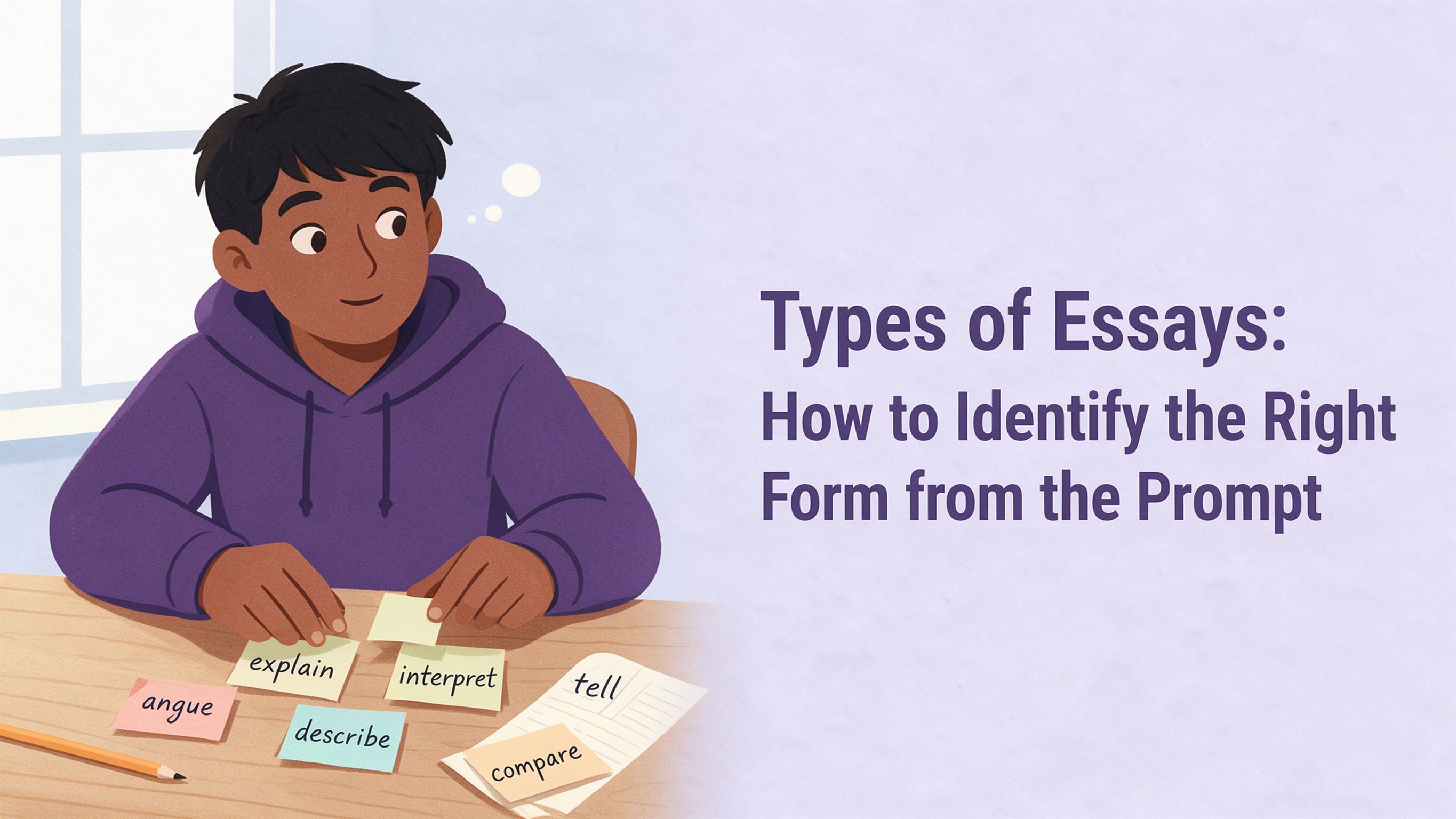
Essay types are names for the job a prompt asks you to do. Read the task verb, identify the reader outcome, and choose the structure and evidence that serve that job. Many assignments mix modes, so select one primary task and keep any secondary mode short.
 ELA
An analytical essay makes a focused, debatable claim about a subject and backs it with evidence plus reasoning. You can point it at a historical decision, a scientific study, a film, a policy, or a text. The work is interpretation: name a pattern, choice, or cause and show how the evidence supports it. Retelling what happened is a separate job. Turn the prompt into a question, gather evidence before fixing the thesis, and build each paragraph around one reason.