Would Flying Higher Save More Fuel?
A fuel-efficient cruise altitude balances drag, lift, engine thrust, aircraft weight and climb cost. Thin air can help, but the highest altitude is not automatically best.
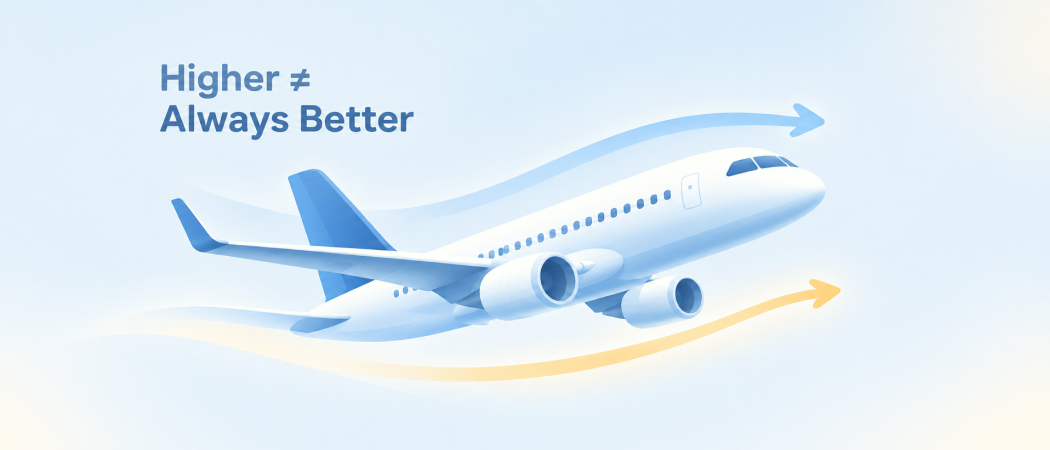
The Sweet Spot
Does Flying Higher Always Save Fuel?
Picture yourself in the cockpit of a long-haul jet. The fuel display is slowly ticking down, and you know thinner air creates less resistance. Climbing higher sounds like free fuel savings. So why do pilots level off instead of climbing all the way to the airplane’s ceiling? Picture a long-haul jet in cruise. Thinner air means less drag—so should the pilots keep climbing until the airplane reaches its ceiling?
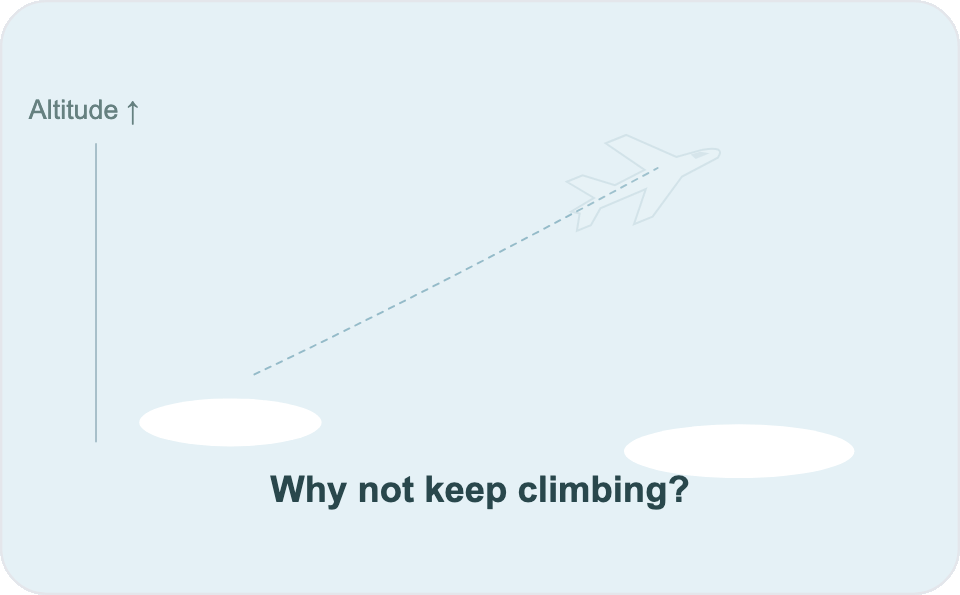
Here is the puzzle: climbing higher helps one part of the problem, but it changes several others at the same time
We will explain the answer through four connected points. We’ll explain the answer through the following four connected points:
Thin-air advantage — lower density reduces aerodynamic drag
Lift and drag — restore lift, then evaluate total drag
Engine limits — thinner air narrows available thrust margins
Whole-flight balance — combine weight, weather, route, and climb cost
The Thin-Air Advantage
First, isolate one variable. Keep the airplane, its true airspeed, and its drag coefficient the same, and only reduce air density. At the same true airspeed, shape, and drag coefficient: lower density → less aerodynamic drag
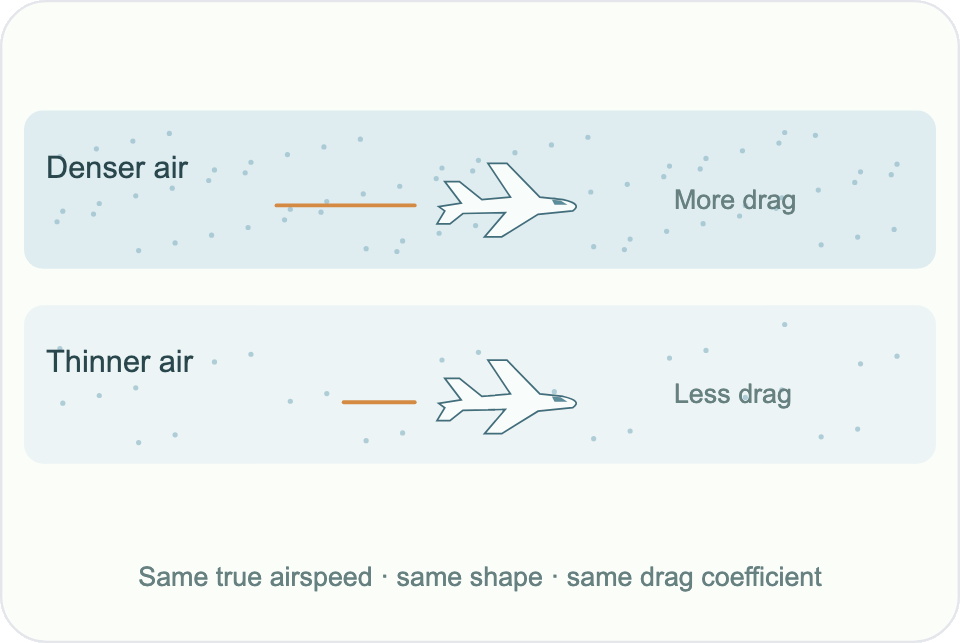
The lower panel has fewer air molecules, so this part of drag falls. That is the real advantage of high-altitude cruise—but it is only one side of the comparison
The Thin Air Advantage
The Wing Still Has to Support the Airplane
At the same true airspeed and lift coefficient, lower density means less lift. Because the airplane’s weight has not changed, the wing must compensate until lift again equals weight. At the same speed, thinner air produces less lift. The aircraft must fly faster or increase its lift coefficient to restore lift
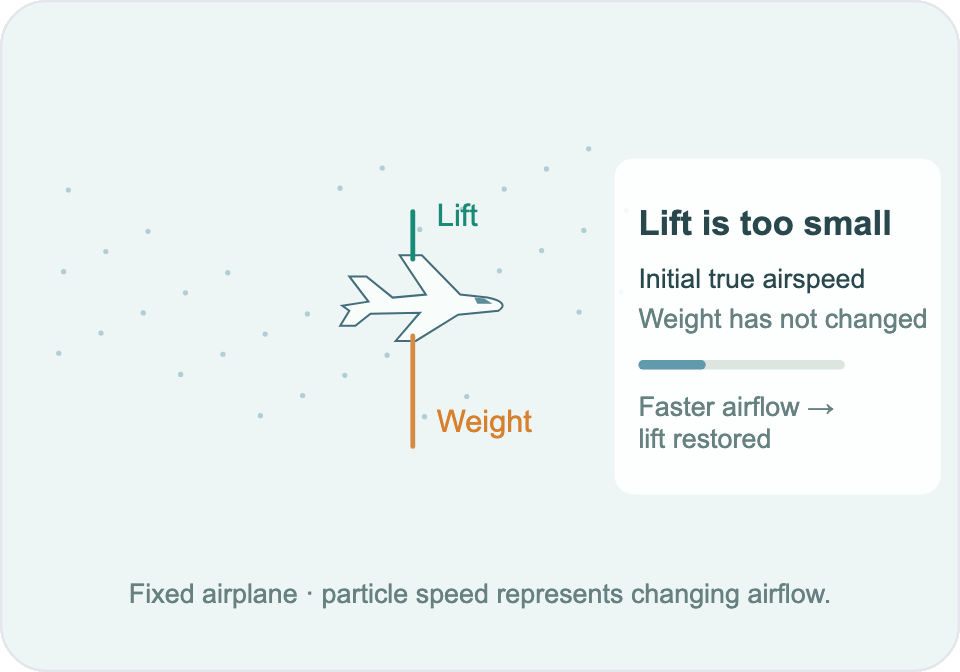
The airplane can increase true airspeed, increase lift coefficient, or use a combination of both. This step only explains how lift is restored; it does not yet tell us whether total drag rises or falls
Why Higher Stops Being Better
Now separate speed from drag. Flying faster increases the V-squared term, but thinner air lowers density, so total drag does not automatically rise. More true airspeed does not automatically mean more total drag. Lower density offsets part of V², while lift-related drag may rise
1. Other drag. Meanwhile, thinner air reduces other drag
2. Lift-related drag. If the wing must use a higher lift coefficient to support the airplane, lift-related drag increases
3. Total drag. The result is a trade-off—not a rule that faster always means more total drag

The Engine's Breath
The Engines Must Still Provide Thrust
A jet engine does not simply stop working at normal cruise altitude. Its compressor manages incoming air, but the engine still has finite thrust and temperature margins. Thinner air changes engine airflow and available thrust. The aircraft must stay inside both aerodynamic and engine limits
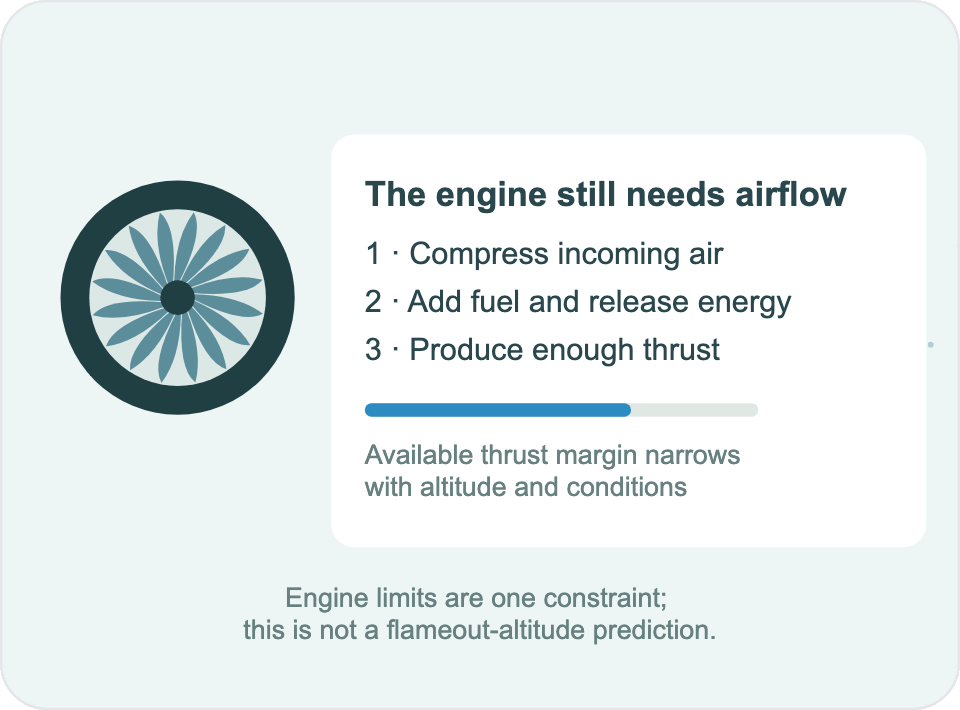
As altitude and conditions change, the available thrust margin can narrow. So the useful cruise level is constrained by both the wing and the engine
Finding the Balance
A Lighter Airplane Can Climb Higher
The sweet spot is not fixed for the entire flight. As fuel burns, the airplane becomes lighter and needs less lift. As fuel burns, the airplane becomes lighter, so its efficient cruise level may rise
1. Fuel burns. As fuel burns, the airplane becomes lighter
2. Higher level. On a long flight, that can make a higher cruise level more efficient later
3. Step climbs. Airliners therefore often climb in steps, when traffic, weather, and available flight levels allow

Count the Whole Trip
A climb is not free. It takes energy to gain altitude, so the decision must include the remaining cruise distance. Climbing costs energy. Cruise savings must be large enough—and last long enough—to repay that cost
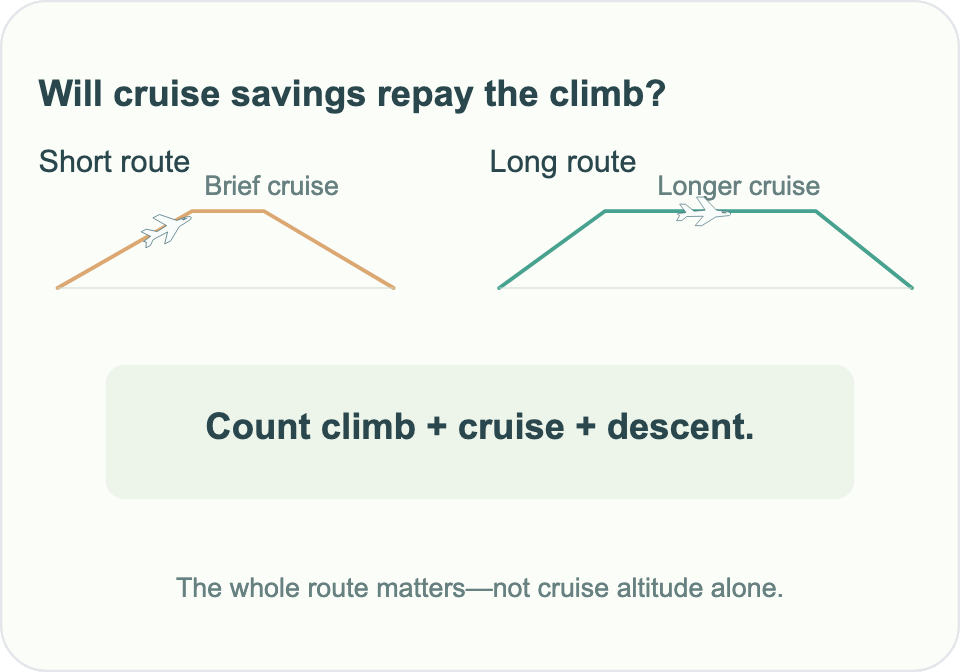
A short route may not have enough cruise time to recover an additional climb. The whole profile—climb, cruise, and descent—matters more than cruise altitude alone
The Right Height Beats the Greatest Height
Now we can answer the original question. Flying higher can help, but higher is not automatically better. Efficient altitude balances drag, lift, thrust, weight, weather, route, and climb cost
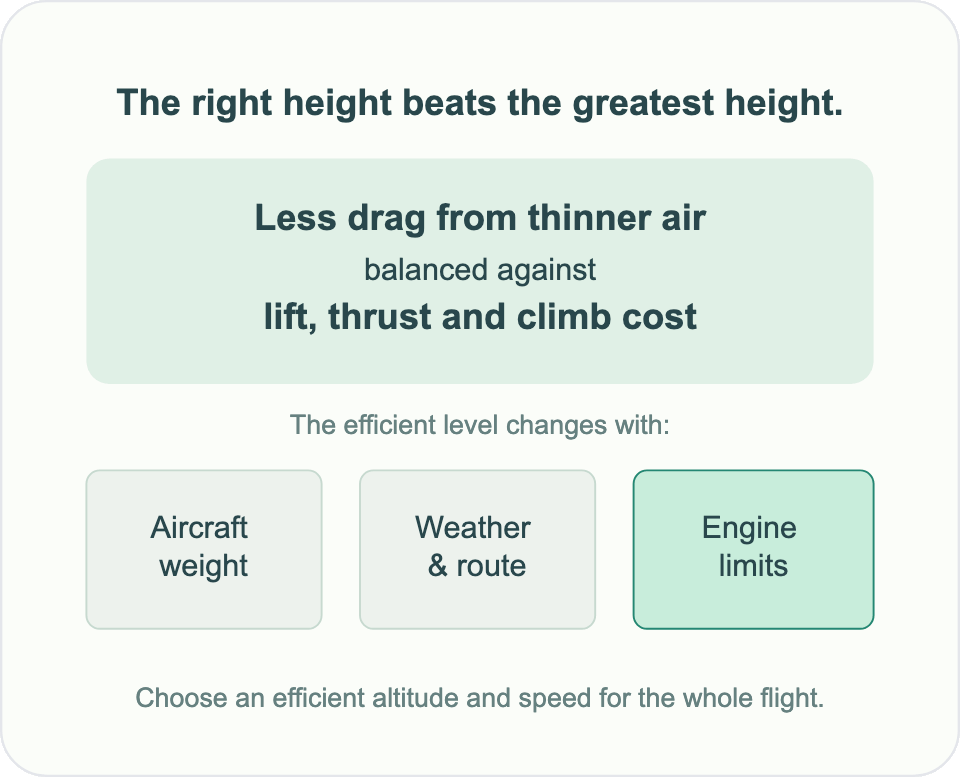
The goal is the most efficient altitude and speed for this aircraft, at this weight, on this route, in these conditions—not the highest altitude it can reach