All posts

Study strategies, subject guides, and practical ways to learn with AI.

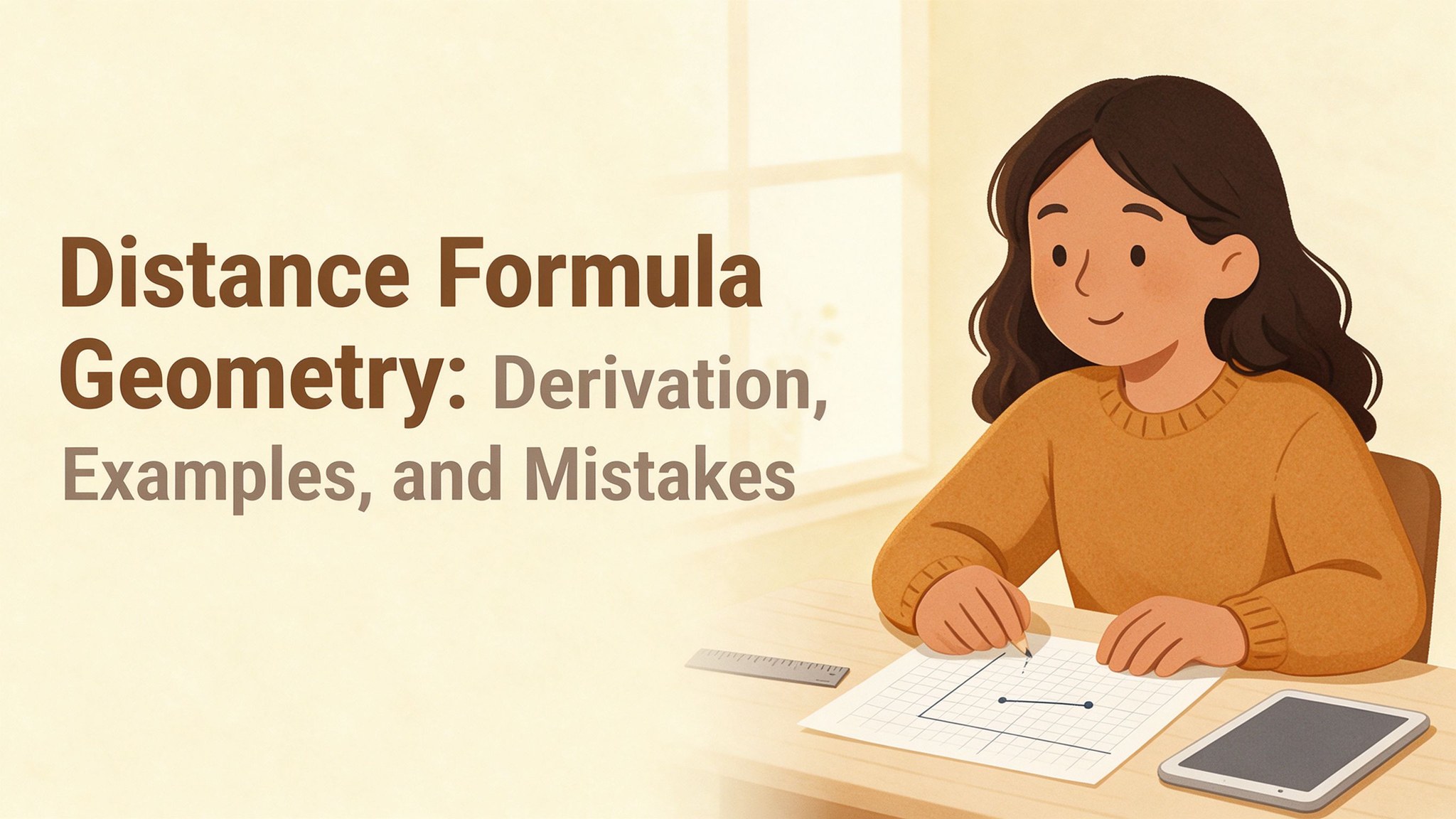
Distance Formula Geometry: Derivation, Examples, and Mistakes

The distance formula gives the straight-line distance between two points on a coordinate plane. For points (x₁, y₁) and (x₂, y₂), d = √((x₂ − x₁)² + (y₂ − y₁)²). It extends the Pythagorean theorem: the two coordinate differences form the legs of a right triangle, and d is the hypotenuse, which is the length of segment AB. Label the two points, subtract matching coordinates, square and add, then take the principal square root to find the segment length.
·
94%(74 Rated)

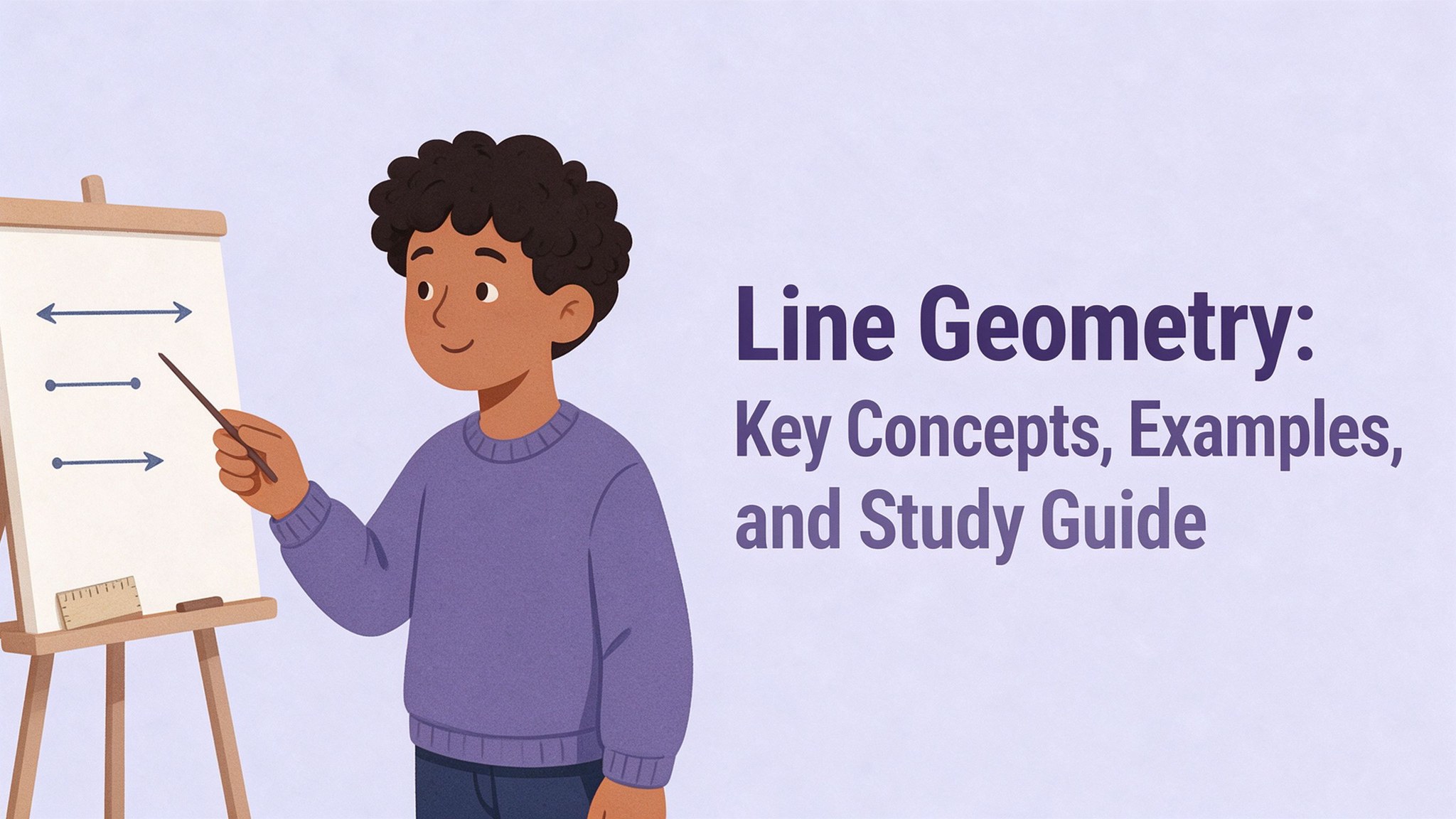
Line Geometry: Key Concepts, Examples, and Study Guide

In geometry, a line is a straight, one-dimensional figure with no thickness that extends infinitely in both directions. A segment is bounded by two endpoints, while a ray has one endpoint and continues in one direction. On the same plane, lines may be parallel, perpendicular, or intersecting; slope and y = mx + b describe their direction and position on a coordinate plane. Start by checking endpoints or slopes, then use the relationship rule to name the figure or write its equation.

·
96%(88 Rated)

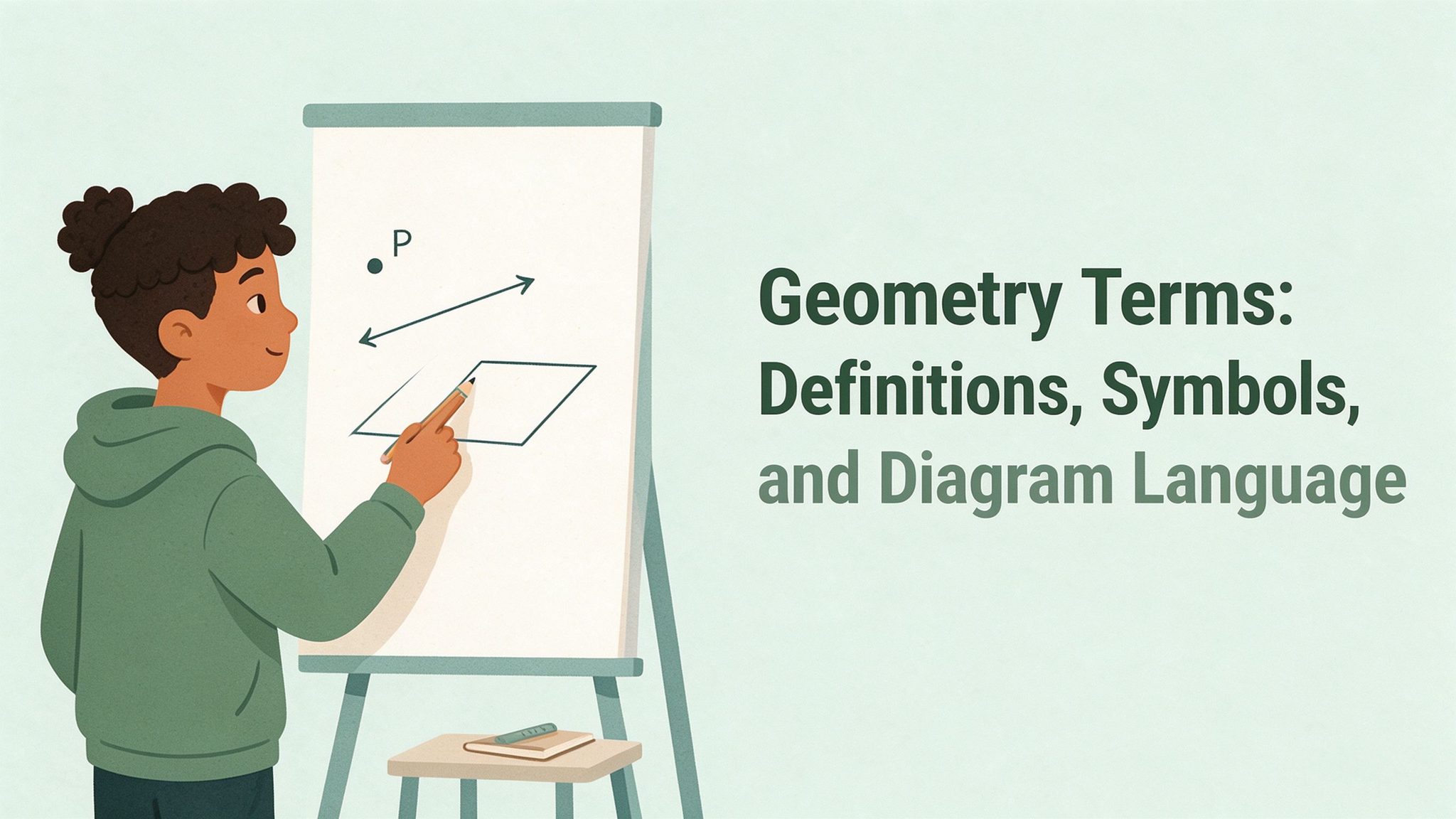
Geometry Terms: Definitions, Symbols, and Diagram Language

Geometry terms are the shared vocabulary of the subject. Point, line, and plane are the three undefined terms every other figure is built from, and segments, rays, and angles are defined in terms of them. The mark above two letters tells you whether you are looking at a line, a segment, or a ray. Master this notation and the diagram language around it, and theorems, proofs, and constructions become readable at a glance.

·
96%(82 Rated)

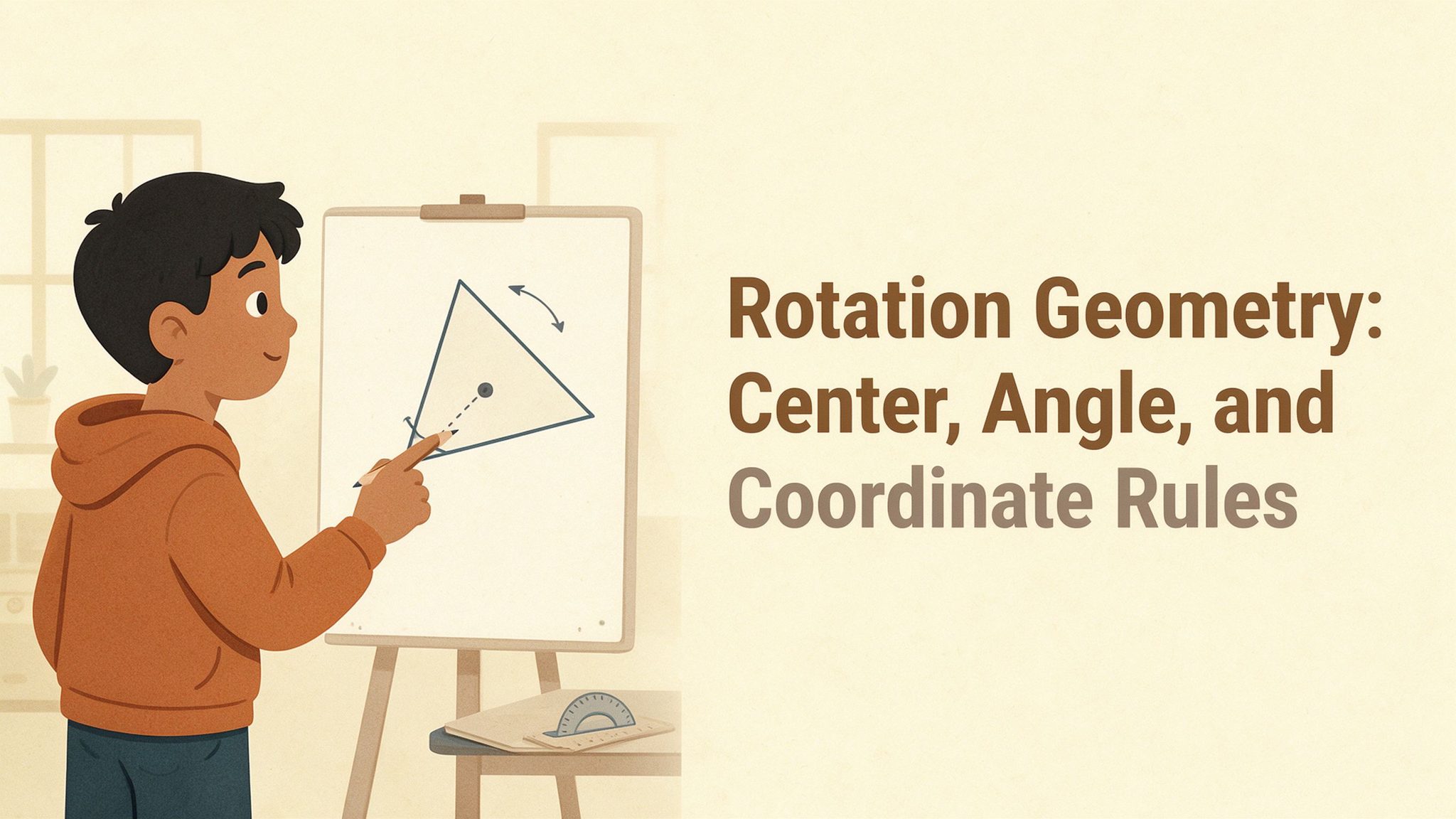
Rotation Geometry: Center, Angle, and Coordinate Rules

In rotation geometry, a figure turns around a fixed center point through an angle, clockwise or counterclockwise, while every point stays the same distance from the center. About the origin, a 90° counterclockwise turn maps (x, y) to (−y, x), a 90° clockwise turn maps (x, y) to (y, −x), and a 180° turn maps (x, y) to (−x, −y). For a center away from the origin, translate it to the origin, apply the matching rule, then translate back.

·
96%(125 Rated)