All posts

Study strategies, subject guides, and practical ways to learn with AI.

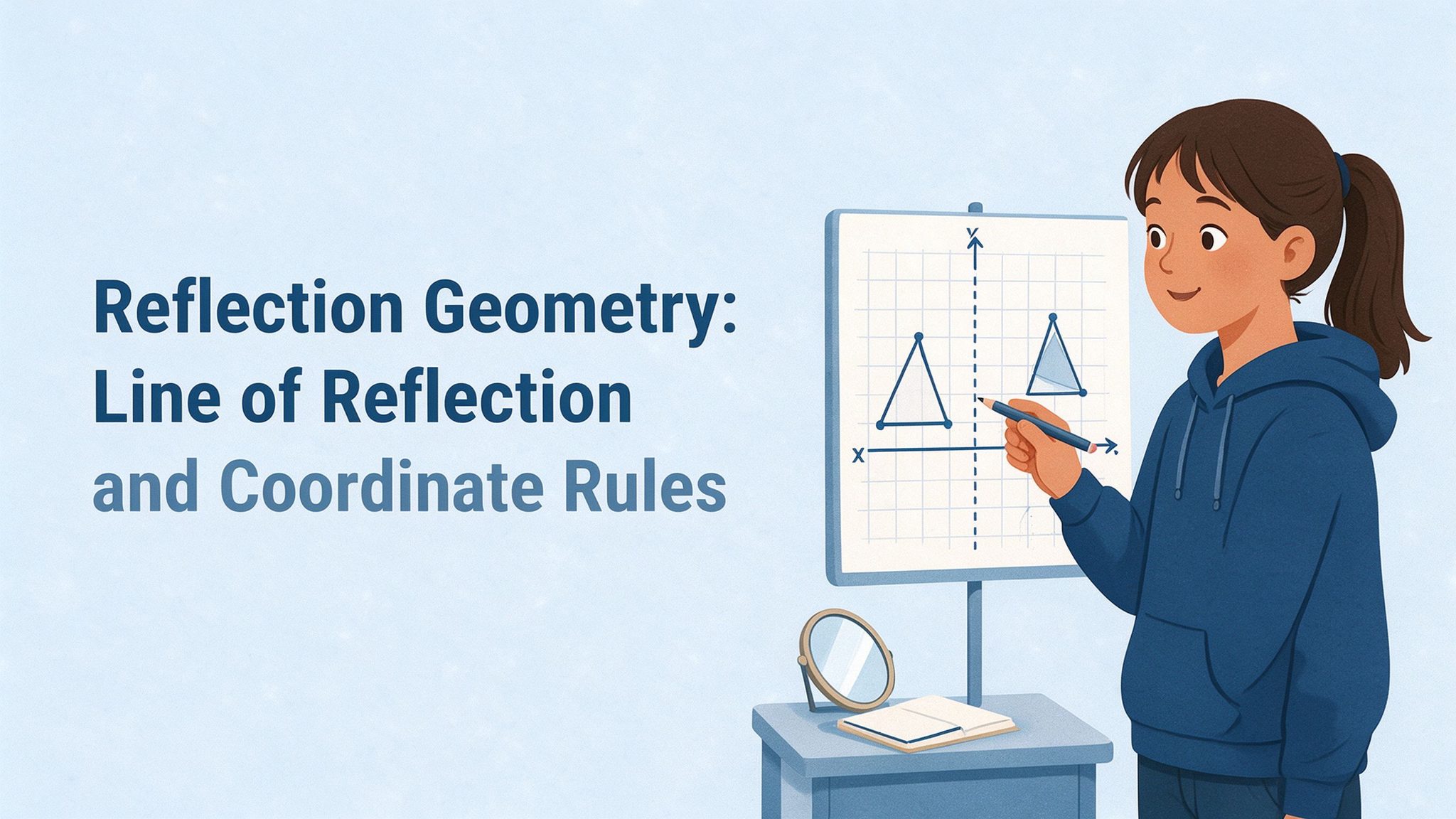
Reflection Geometry: Line of Reflection and Coordinate Rules

A reflection in geometry flips a figure across a line called the line of reflection. Each point and its image sit the same perpendicular distance from that line, which is the perpendicular bisector of the segment joining them. On a coordinate plane: over the x-axis, (x, y) maps to (x, −y); over the y-axis, (x, y) maps to (−x, y); over y = x, swap to (y, x). Distance and size stay fixed, but the mirror flip reverses orientation.
·
95%(117 Rated)

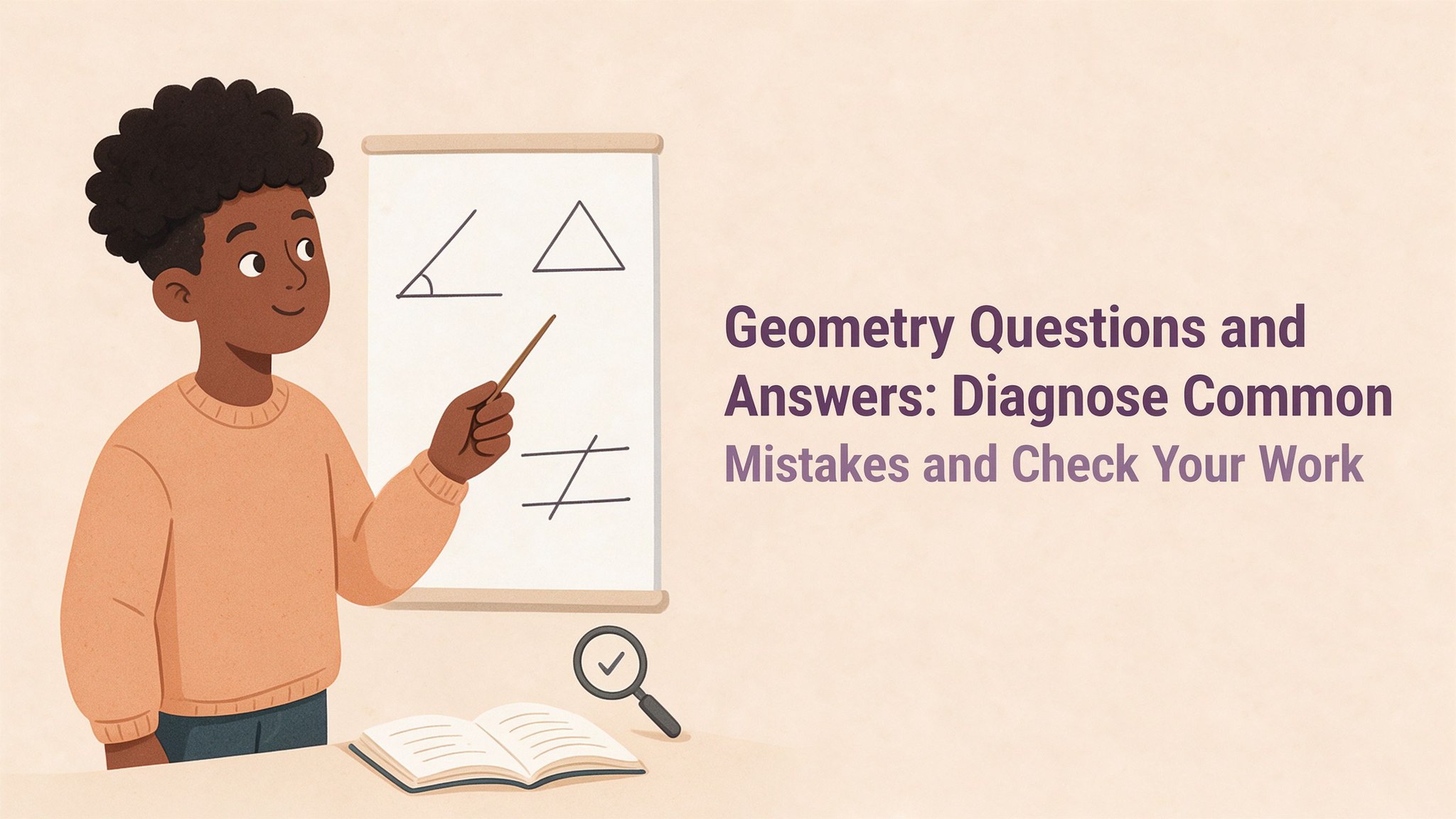
Geometry Questions and Answers: Diagnose Common Mistakes and Check Your Work

Geometry questions often go wrong when a student misreads a definition or condition before choosing a rule. This guide diagnoses errors in angle and triangle notation, parallel-line angle pairs, the Pythagorean theorem, similar-triangle correspondence, area versus perimeter, and proof reasoning. For each question, identify the required condition, choose the rule that matches it, then check labels, units, the diagram, and the conclusion before you move on.

·
91%(34 Rated)

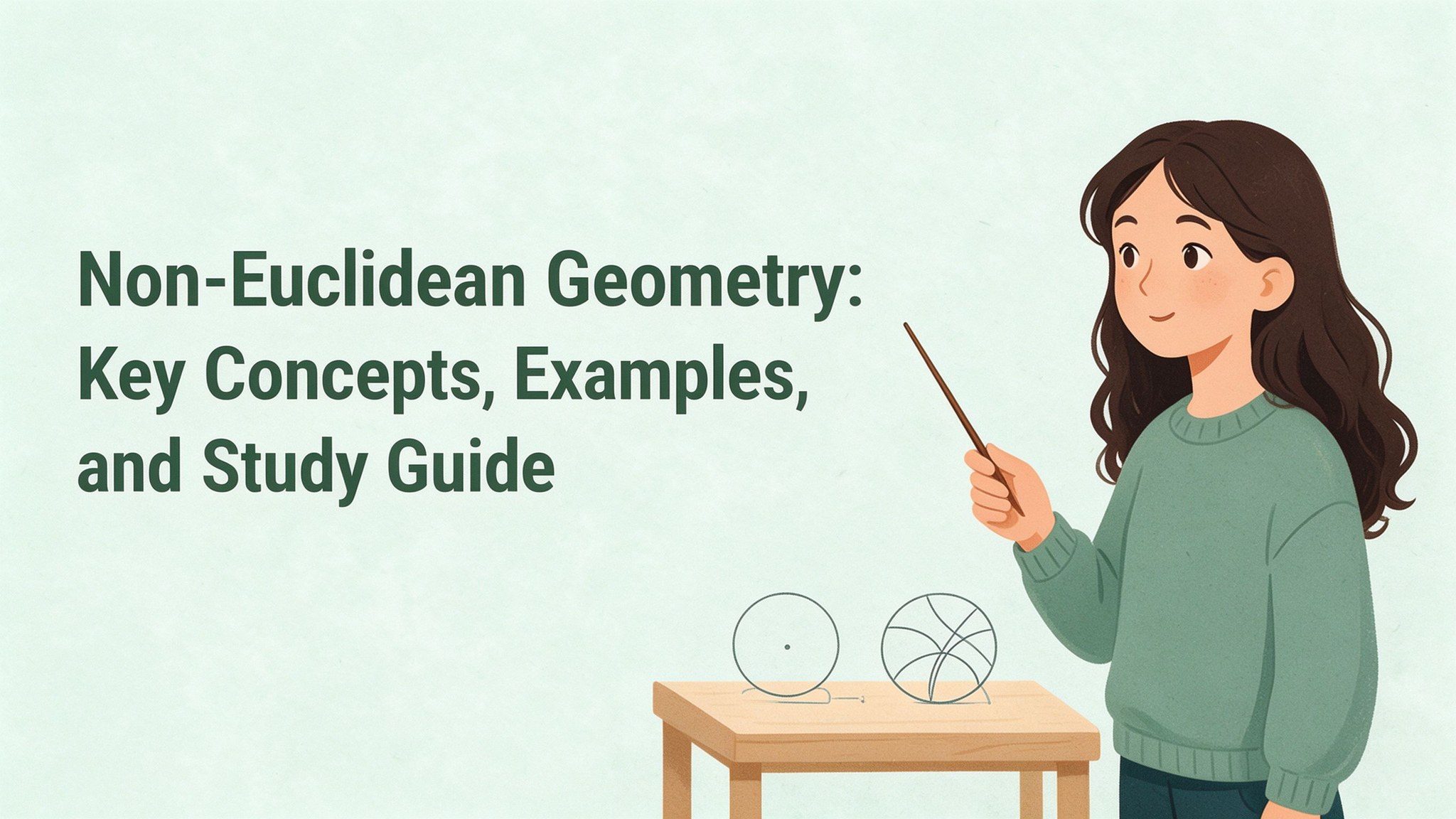
Non-Euclidean Geometry: Key Concepts, Examples, and Study Guide

Non-Euclidean geometry studies systems that do not follow the ordinary flat-plane parallel rule. In spherical geometry, paths are great-circle arcs on a ball, and a triangle’s angles add to more than 180°. In hyperbolic geometry, a point off a line has many nonintersecting lines, and a triangle’s angles add to less than 180°. Start by naming the model, checking how many parallels it allows, then compare its angle sum with the familiar 180° baseline.

·
90%(94 Rated)
ELA

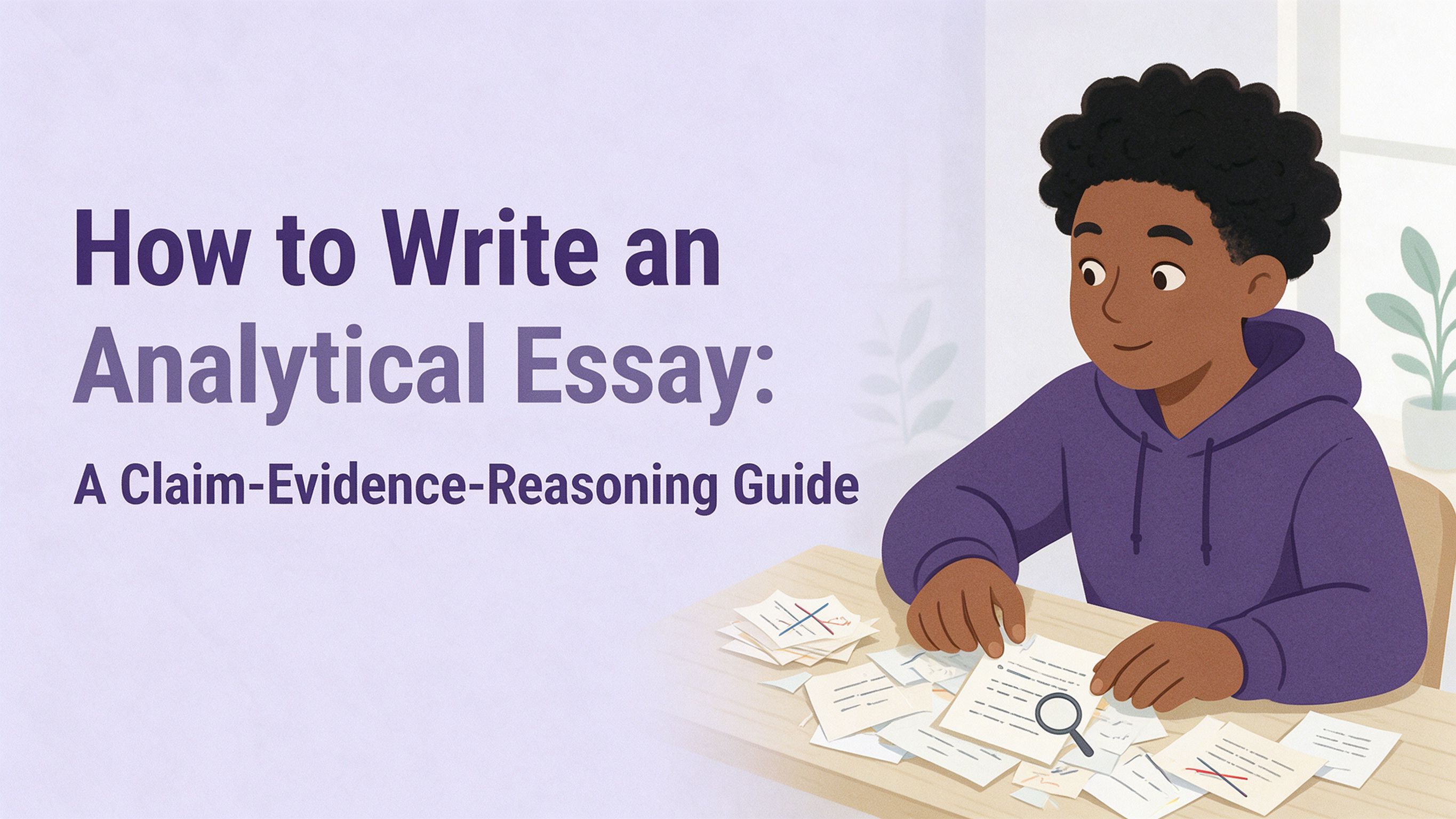
How to Write an Analytical Essay: A Claim-Evidence-Reasoning Guide

An analytical essay makes a focused, debatable claim about a subject and backs it with evidence plus reasoning. You can point it at a historical decision, a scientific study, a film, a policy, or a text. The work is interpretation: name a pattern, choice, or cause and show how the evidence supports it. Retelling what happened is a separate job. Turn the prompt into a question, gather evidence before fixing the thesis, and build each paragraph around one reason.

·
90%(80 Rated)
ELA

How to Write a Literary Analysis Essay with Close Reading

A literary analysis essay makes an interpretive claim about how a poem, play, story, or novel creates meaning. You look closely at diction, imagery, point of view, structure, or symbolism, then explain how those choices produce an effect. Keep plot summary to the minimum a reader needs. Start by marking patterns in one passage, turn a pattern into a how-or-why question, and build each body paragraph from a short quotation.

·
90%(132 Rated)