Amino Acid Structure and Side Chains
Amino acids share a framework but differ in their R groups. Compare nonpolar, polar, charged and aromatic side chains, including how their descriptions overlap and depend on conditions near pH 7.
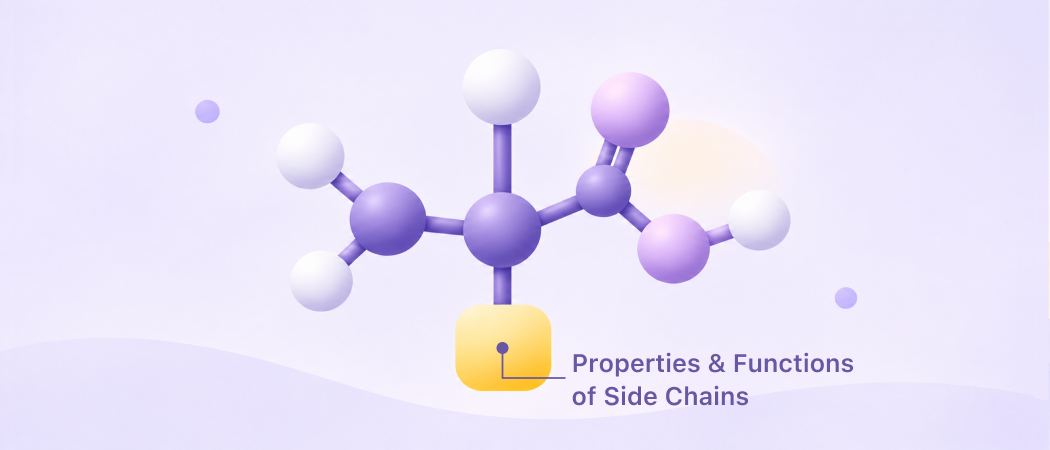
Shared framework, variable side chain
Amino acids → proteins
Proteins are folded chains of amino acids
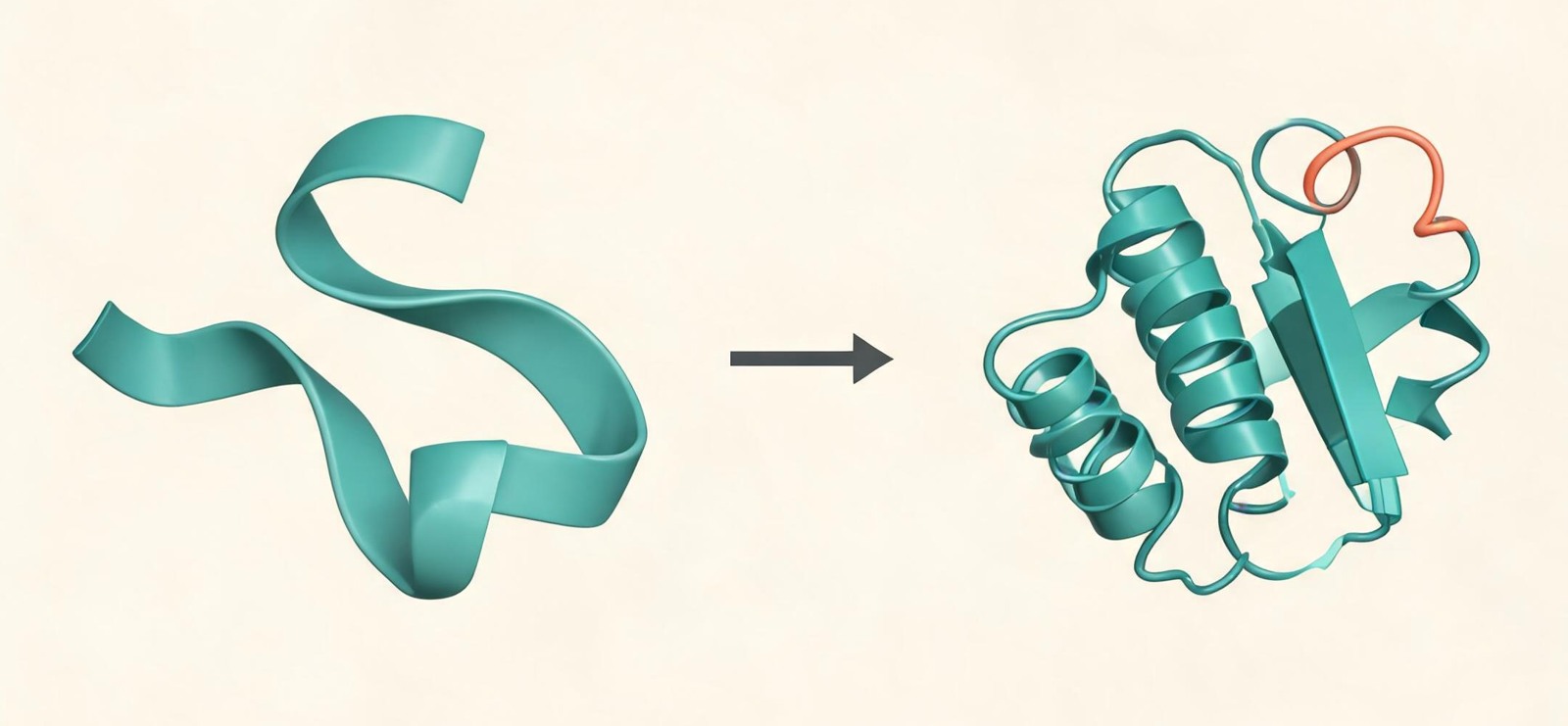
Most use the same twenty standard building blocks
Usually 20 standard amino acids
Shared framework · variable R
Each amino acid has a shared framework and a side chain
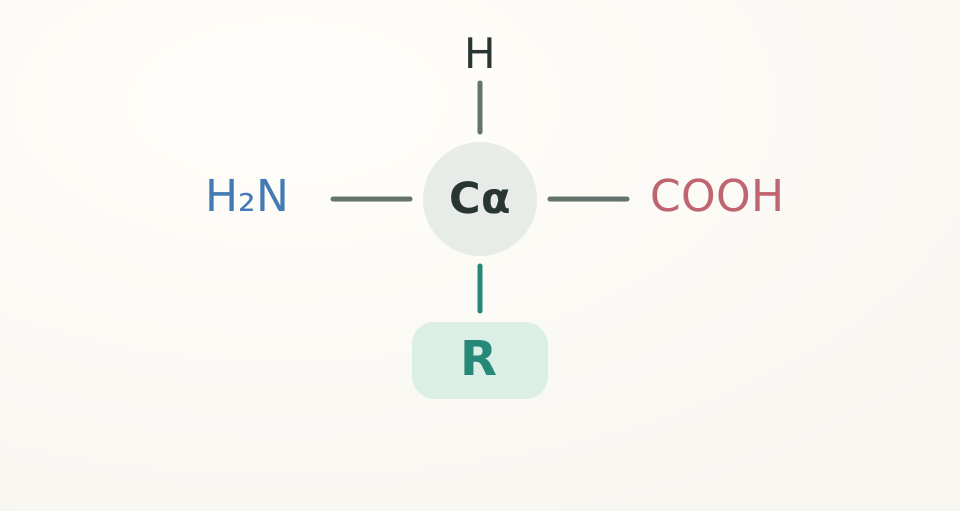
The α carbon
The central alpha carbon connects to an amino group, a carboxyl group, a hydrogen, and a side chain called R
Glycine vs alanine
| Item | Properties |
|---|---|
| Glycine | R = H |
| Alanine | R = CH₃ |
Glycine has the smallest side chain: just hydrogen. Alanine has a methyl group instead
| Item | Properties |
|---|---|
| Glycine | R = H |
| Alanine | R = CH₃ |
Branched, nonpolar R
| Item | Properties |
|---|---|
| Valine | Branched, nonpolar R |
| Leucine | Branched, nonpolar R |
| Isoleucine | Branched, nonpolar R |
Valine, leucine, and isoleucine have branched side chains made only of carbon and hydrogen
| Item | Properties |
|---|---|
| Val · Leu · Ile | Branched R groups |
| Atoms in R | C + H only |
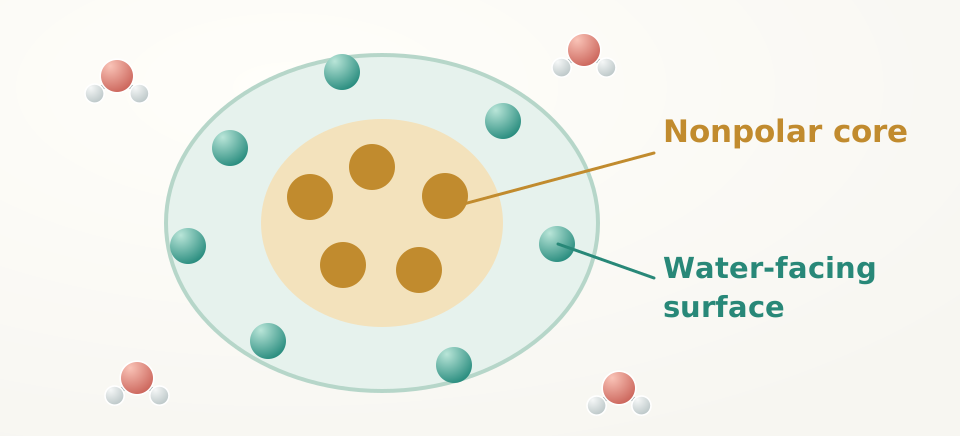
Hydrophobic means that contact with water is unfavourable
Nonpolar side chains often cluster away from water, inside soluble proteins
Nonpolar R: often inside soluble proteins
Polarity and charge near pH 7
Polar side-chain groups
| Item | Properties |
|---|---|
| Serine | R includes –OH |
| Asparagine | R includes –CONH₂ |
Serine has a hydroxyl group. Asparagine has an amide group
| Item | Properties |
|---|---|
| Serine | Hydroxyl · –OH |
| Asparagine | Amide · –CONH₂ |
Find their oxygen and nitrogen atoms
Polar atoms: O and N
These groups help the side chains form hydrogen bonds with water
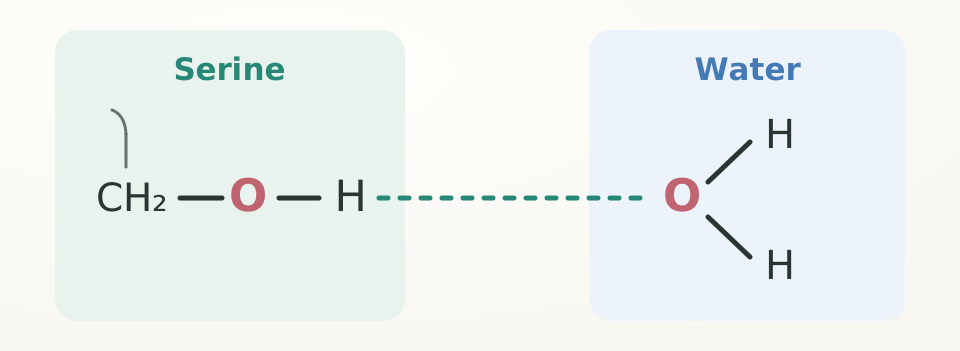
Polar R → hydrogen bonds
Polar side chains can form hydrogen bonds with water
Aspartate and glutamate
| Item | Properties |
|---|---|
| Aspartic acid | Usually –COO⁻ near pH 7 |
| Glutamic acid | One extra –CH₂– versus Asp |
Glutamate has one extra carbon compared with aspartate
| Item | Properties |
|---|---|
| Aspartate | Shorter R |
| Glutamate | + one –CH₂– |
Acidic R · Asp, Glu
Aspartate and glutamate have acidic side chains
Basic side chains
| Item | Properties |
|---|---|
| Lysine | Usually + near pH 7 |
| Arginine | Usually + near pH 7 |
| Histidine | pH-sensitive charge |
Compare the nitrogen-containing side chains
| Item | Properties |
|---|---|
| Lys · Arg | N-containing ends |
| His | N-containing ring |
Lysine has a long chain, arginine has a nitrogen-rich end, and histidine has a ring
| Side chain | Recognise it by |
|---|---|
| Lysine | Amino end |
| Arginine | Guanidino end |
| Histidine | N-containing ring |
Basic R accepts H⁺
Basic side chains can accept protons
Lysine and arginine are usually positive near pH seven
| Item | Properties |
|---|---|
| Lysine | Usually + near pH 7 |
| Arginine | Usually + near pH 7 |
Aromatic rings and overlapping properties
Aromatic side chains
| Item | Properties |
|---|---|
| Phe | Nonpolar aromatic R |
| Tyr | Aromatic R with a polar –OH |
| Trp | Larger aromatic ring system |
Phenylalanine has a nonpolar ring. Tyrosine adds a polar hydroxyl group to that ring. Tryptophan has a larger ring system containing nitrogen
| Item | Properties |
|---|---|
| Phe | Nonpolar ring |
| Tyr | Ring + polar –OH |
| Trp | Larger N-containing rings |
Aromatic = ring structure
Aromatic describes a ring structure, not a rule about water
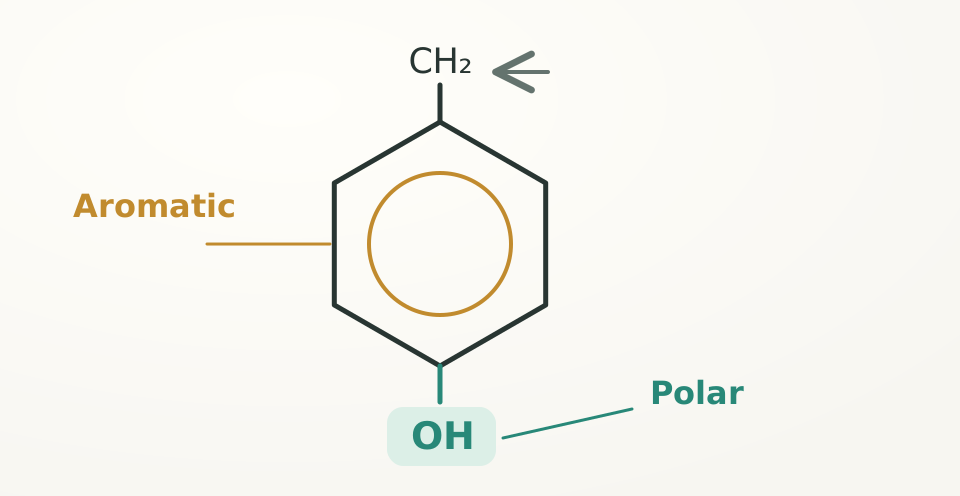
Tyrosine has an aromatic ring and a hydroxyl group
Key ideas
Amino acids share a framework but have different side chains
| Item | Properties |
|---|---|
| Shared | Amino-acid framework |
| Variable | Side chain R |
Side-chain structure helps explain water interactions and charge
R → water interactions + charge
Reference · 20 amino acids
| Item | Properties |
|---|---|
| Glycine | R = H |
| Alanine | R = CH₃ |
| Valine | Branched, nonpolar R |
| Leucine | Branched, nonpolar R |
| Isoleucine | Branched, nonpolar R |
| Proline | Ring includes backbone N |
| Methionine | R contains sulfur |
| Phenylalanine | Nonpolar aromatic R |
| Tyrosine | Aromatic R with a polar –OH |
| Tryptophan | Larger aromatic ring system |
| Serine | R includes –OH |
| Threonine | R includes –OH |
| Cysteine | R includes –SH |
| Asparagine | R includes –CONH₂ |
| Glutamine | R includes –CONH₂ |
| Aspartic acid | Usually –COO⁻ near pH 7 |
| Glutamic acid | One extra –CH₂– versus Asp |
| Lysine | Usually + near pH 7 |
| Arginine | Usually + near pH 7 |
| Histidine | pH-sensitive charge |