 Math
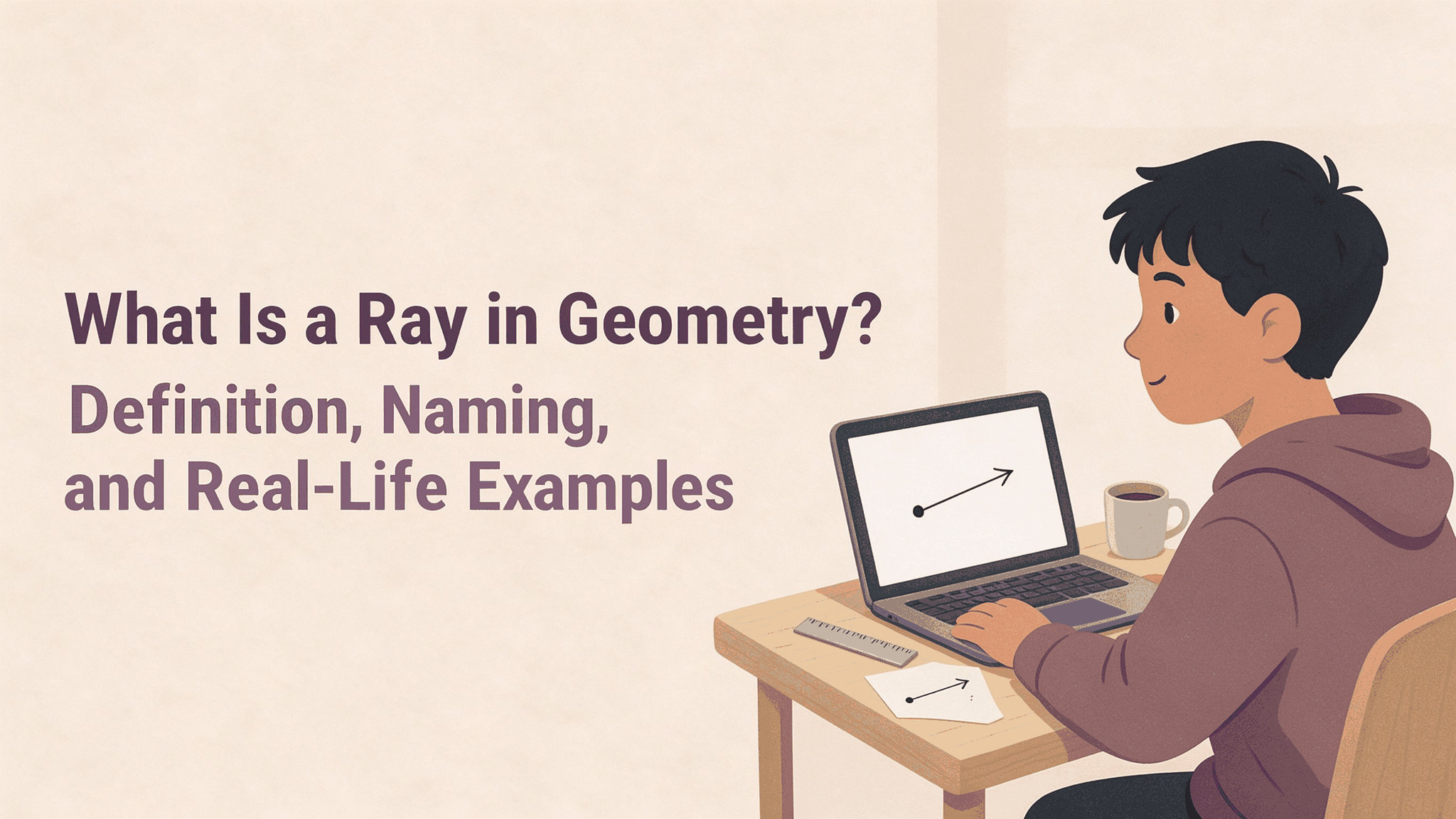
What Is a Ray in Geometry? Definition, Naming, and Real-Life Examples
Learn what a ray in geometry is, how to name it endpoint-first, how it differs from a line and a segment, opposite rays, angles, and real-life examples.
Study strategies, subject guides, and practical ways to learn with AI.
MathLearn what a ray in geometry is, how to name it endpoint-first, how it differs from a line and a segment, opposite rays, angles, and real-life examples.
 Math
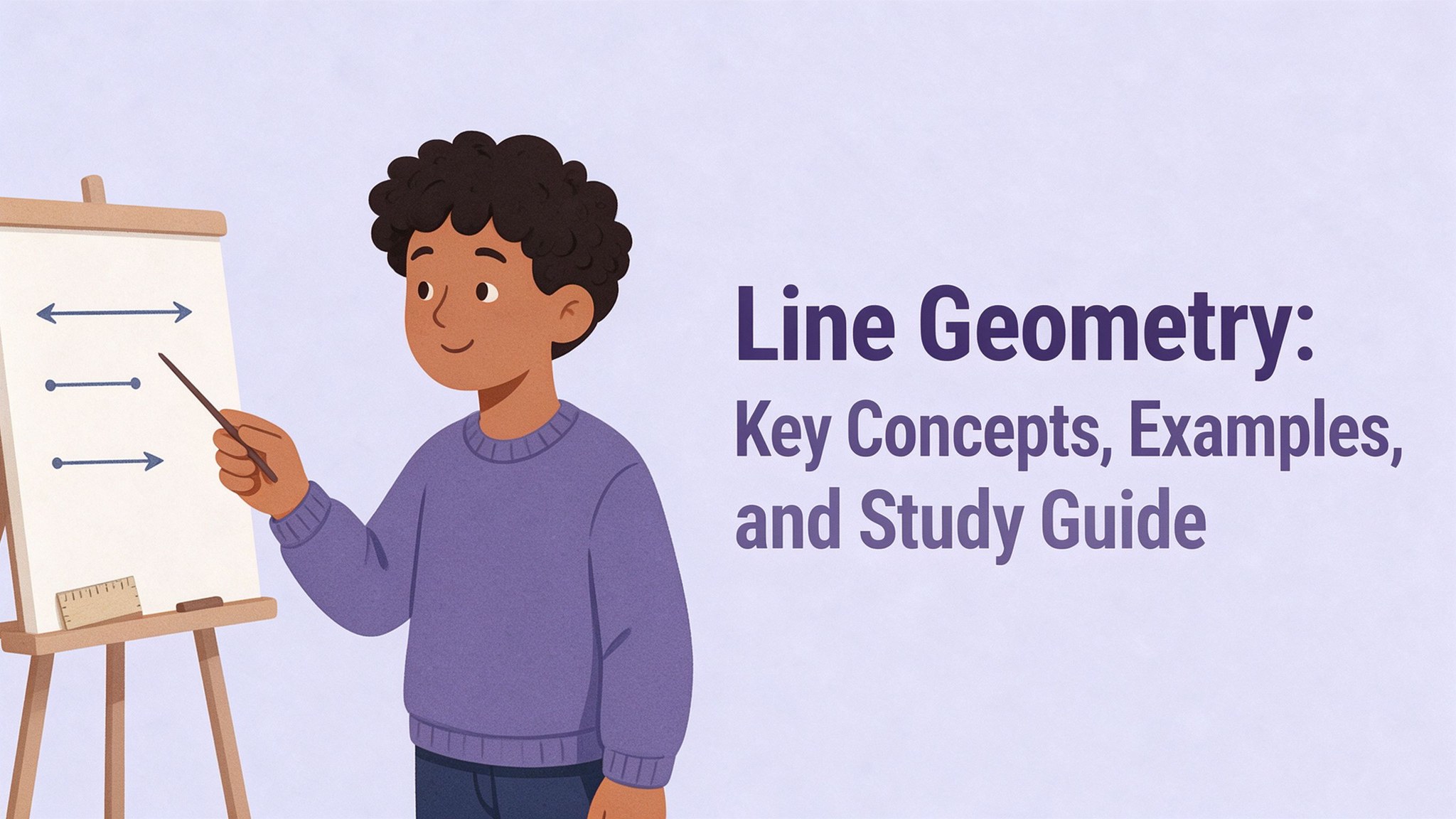
In geometry, a line is a straight, one-dimensional figure with no thickness that extends infinitely in both directions. A segment is bounded by two endpoints, while a ray has one endpoint and continues in one direction. On the same plane, lines may be parallel, perpendicular, or intersecting; slope and y = mx + b describe their direction and position on a coordinate plane. Start by checking endpoints or slopes, then use the relationship rule to name the figure or write its equation.
 Math
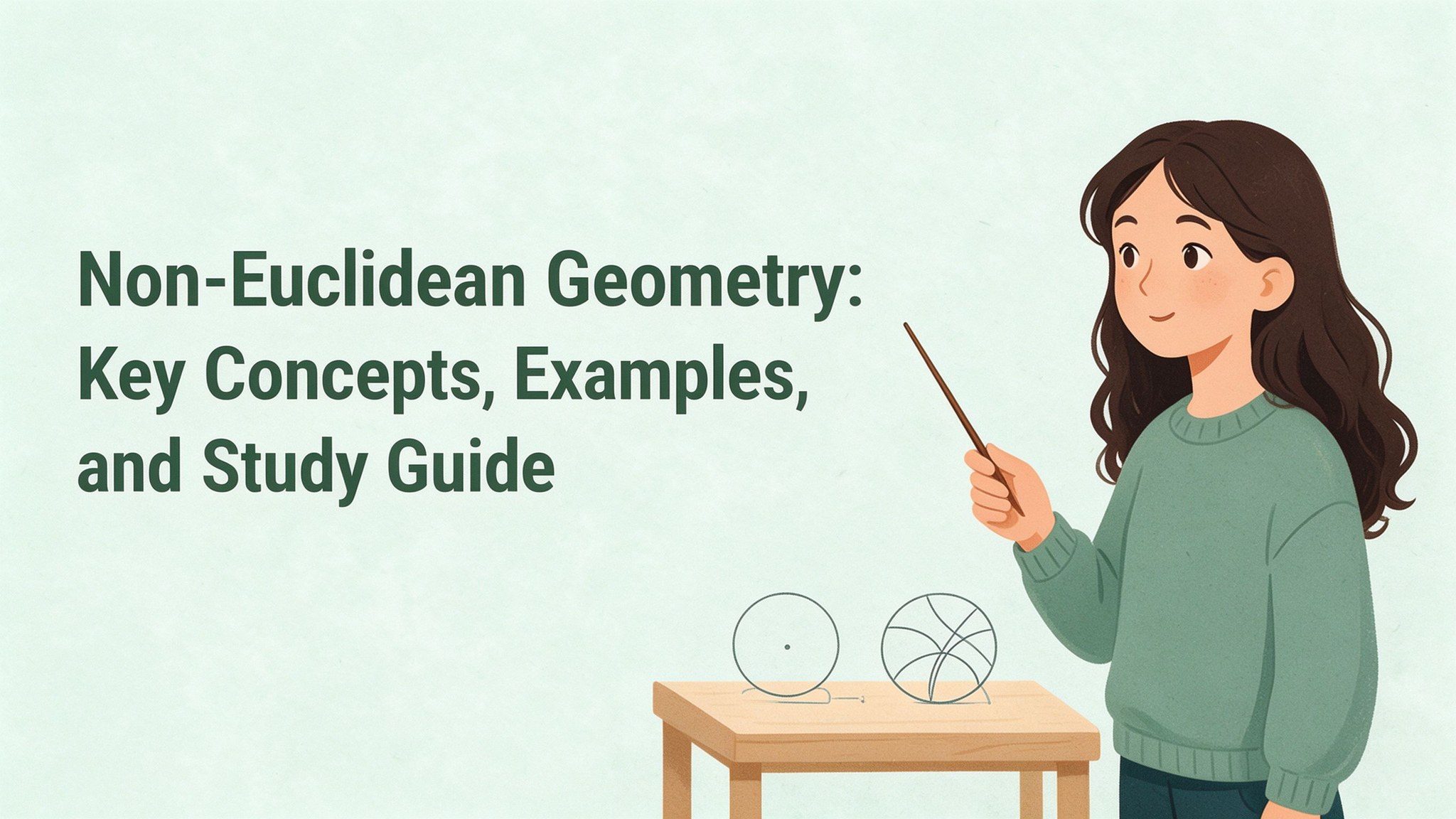
Non-Euclidean geometry studies systems that do not follow the ordinary flat-plane parallel rule. In spherical geometry, paths are great-circle arcs on a ball, and a triangle’s angles add to more than 180°. In hyperbolic geometry, a point off a line has many nonintersecting lines, and a triangle’s angles add to less than 180°. Start by naming the model, checking how many parallels it allows, then compare its angle sum with the familiar 180° baseline.
 Math
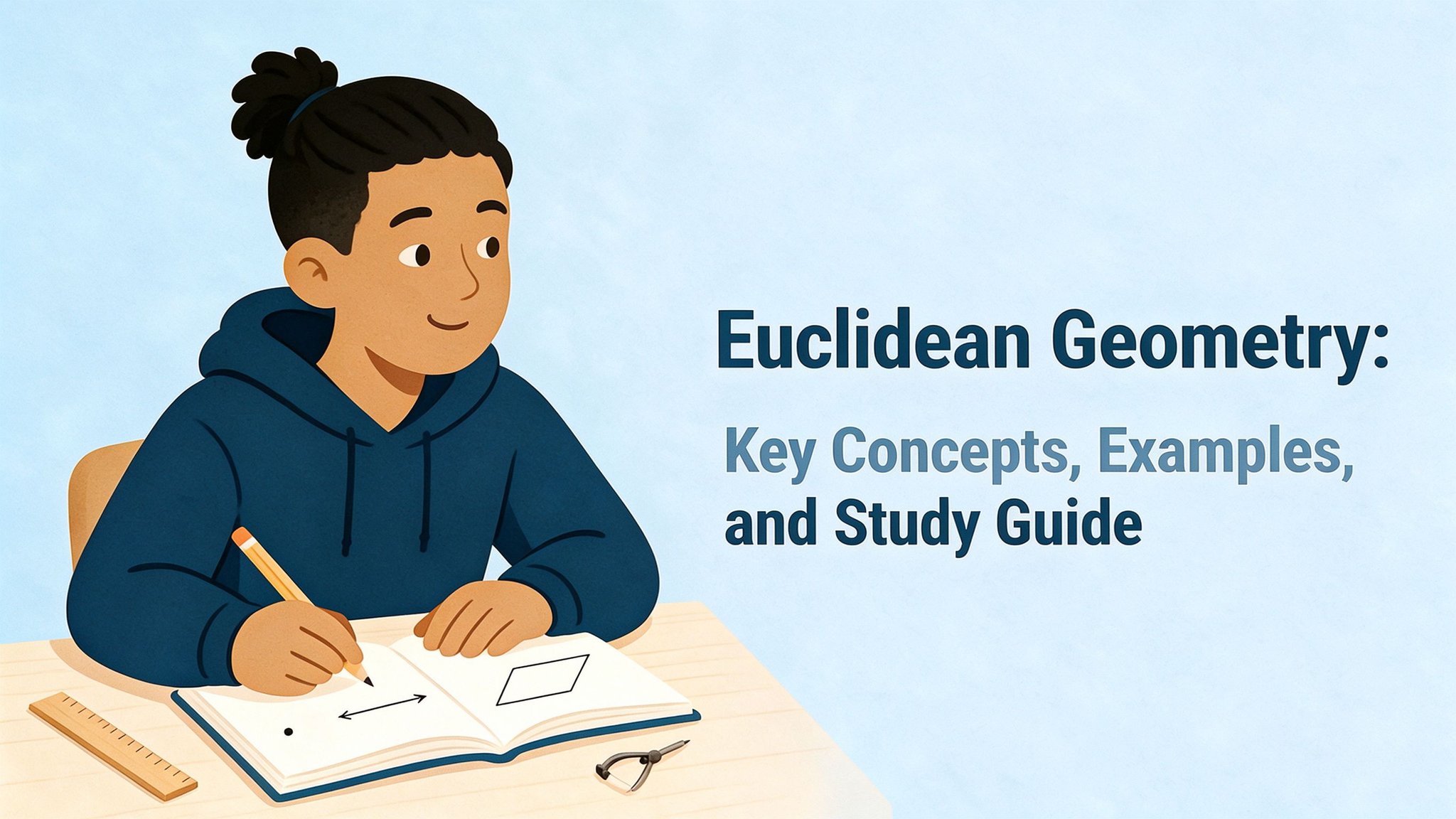
Euclidean geometry starts from a few plain assumptions about points, lines, and planes, then proves theorems about flat and solid figures by logical deduction. Its rules hold on ordinary flat surfaces; on curved surfaces they do not apply. Learn the three basic objects and five postulates first, see how definitions and theorems build on them, then move to proofs and measurements in your class.
 Math
An analytical essay makes a focused, debatable claim about a subject and backs it with evidence plus reasoning. You can point it at a historical decision, a scientific study, a film, a policy, or a text. The work is interpretation: name a pattern, choice, or cause and show how the evidence supports it. Retelling what happened is a separate job. Turn the prompt into a question, gather evidence before fixing the thesis, and build each paragraph around one reason.
 Math
Plane geometry covers flat 2D figures on a plane: what a plane is, the solid-geometry contrast, coordinate point location, and perimeter versus area units.