Alveoli and the Air–Blood Barrier
Gas exchange requires movement across the alveolar air–blood barrier. Identify the thin layers between air and blood and explain why a greater crossing distance can slow diffusion.
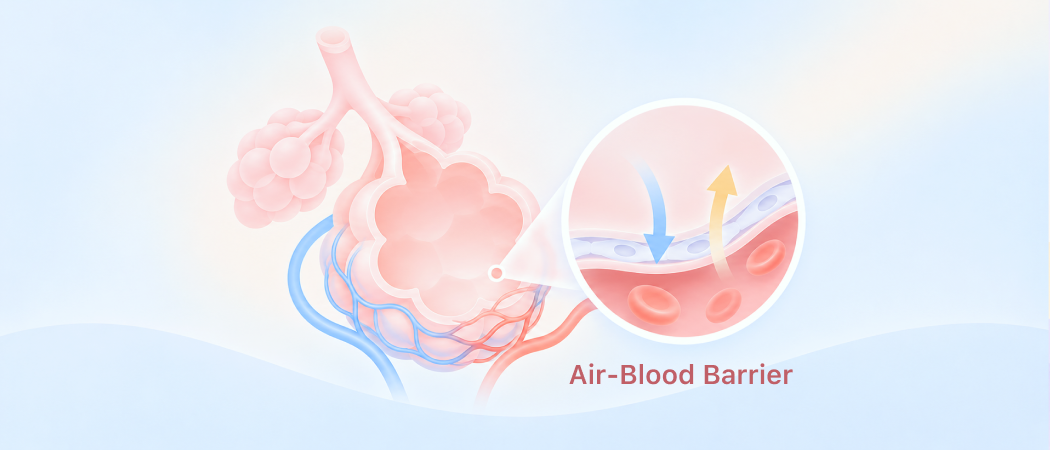
From airways to alveoli
Airways
3D model of the branching airways that deliver air into the lungs
Transport and exchange
Airways carry air into the lungs. At the alveoli, oxygen enters the blood
| Item | Properties |
|---|---|
| Airways | Carry air |
| Alveoli | Exchange gases |
Alveoli
3D model of alveoli, the small air sacs where gas exchange occurs
Alveoli
An alveolus is a tiny air sac. A thin tissue barrier separates its air from the blood. Capillaries are small blood vessels beside the sac
| Item | Properties |
|---|---|
| Alveolus | Air inside the sac |
| Barrier | Thin tissue |
| Capillary | Blood beside the sac |
Cross a thin barrier
Cell membrane
3D model of a cell membrane at the boundary between cell regions
Cell membrane
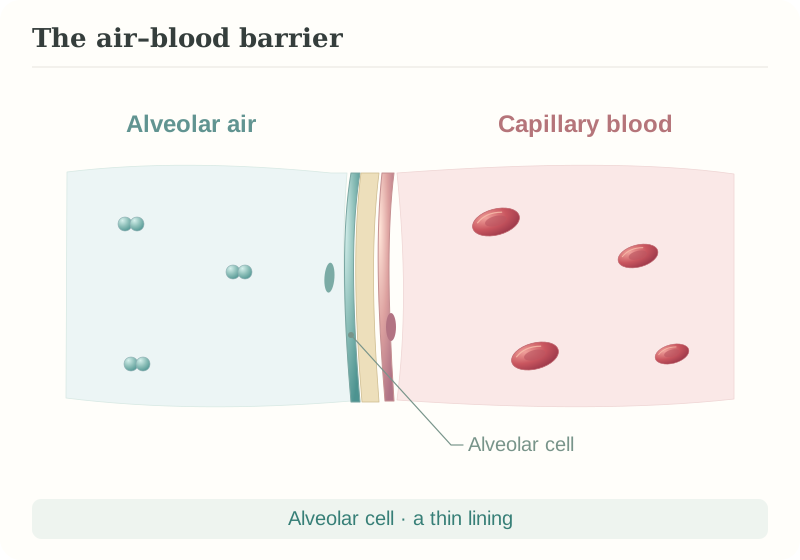
1. Air side: A thin alveolar cell lines the air sac
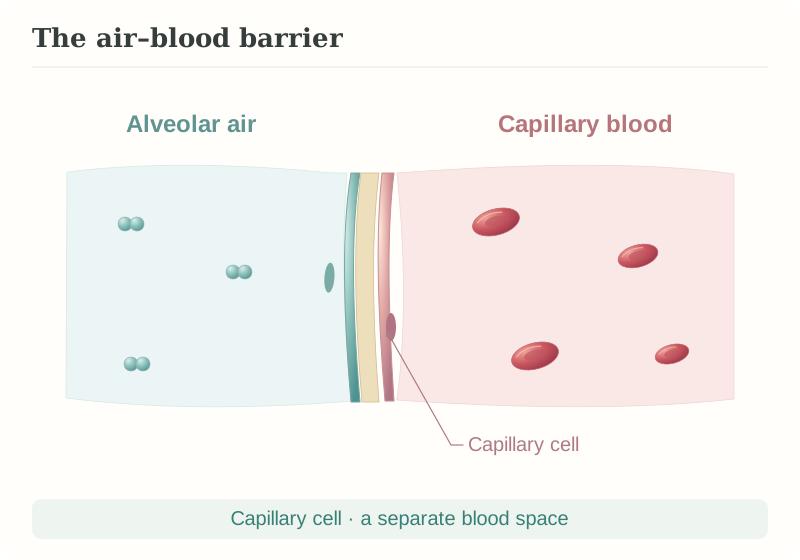
2. Blood side: A thin capillary cell lines the nearby blood vessel
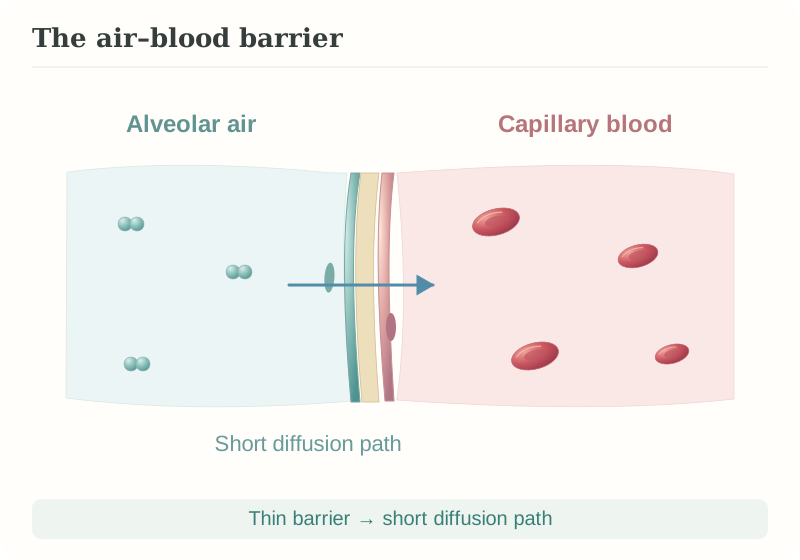
3. Short path: Oxygen crosses the thin barrier. Red blood cells stay inside the capillary
Why crossing distance matters
1. Thicker barrier: A thicker barrier makes the crossing longer
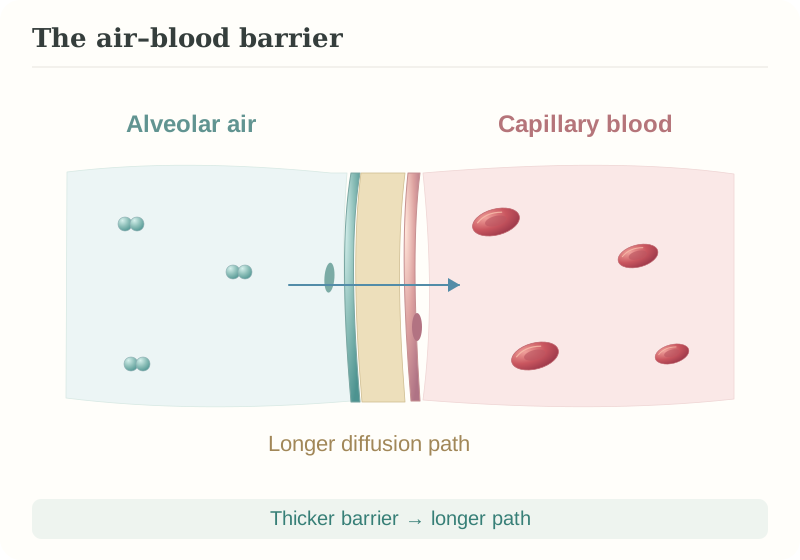
2. Slower transfer: With the same area and pressure difference, a longer crossing means slower oxygen transfer
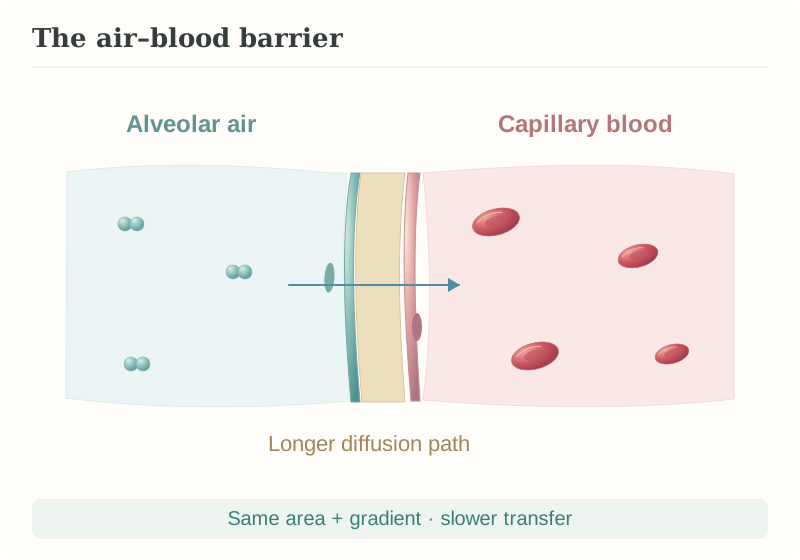
Crossing distance
A thin barrier gives oxygen a short crossing. A thicker barrier slows transfer when area and pressure difference stay the same
| Item | Properties |
|---|---|
| Thin barrier | Short crossing |
| Thicker barrier | Slower oxygen transfer |
Same area and pressure difference