Partial Pressure and Gas Diffusion
Oxygen and carbon dioxide each follow their own partial-pressure difference. Compare their directions across an alveolus and explain why equal partial pressures remove net diffusion.

Two gases, two directions
Alveoli
3D model of alveoli where oxygen and carbon dioxide are exchanged
Each gas has its own direction
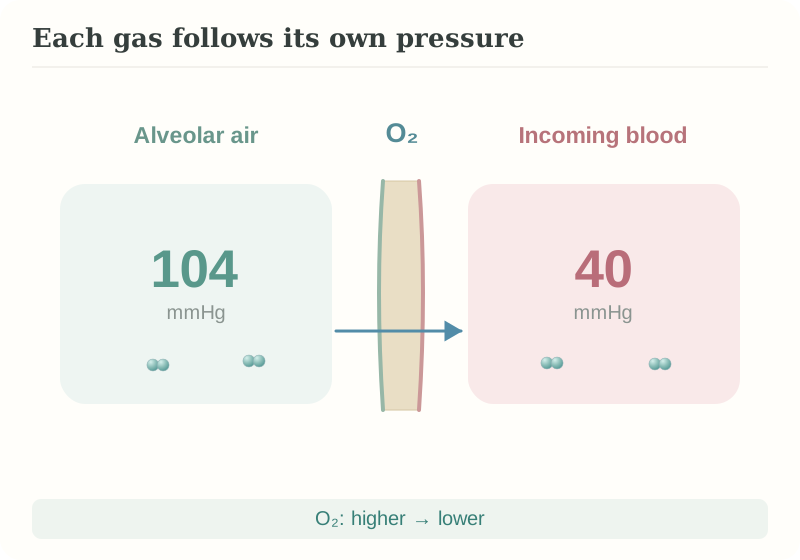
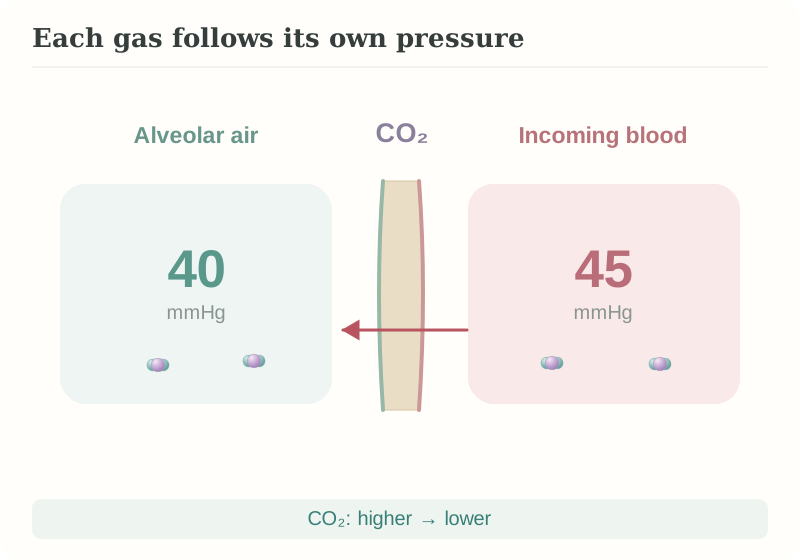
Oxygen moves from alveolar air into blood. Carbon dioxide moves from blood into alveolar air
| Item | Properties |
|---|---|
| Oxygen | Air → blood |
| Carbon dioxide | Blood → air |
Read each pressure difference
Cell membrane
3D model of a cell membrane across which gases can diffuse
Cell membrane
A cell membrane forms part of the air-blood barrier. Each gas follows its own partial-pressure difference
Membrane forms part of the barrier
Each gas follows its own pressure difference
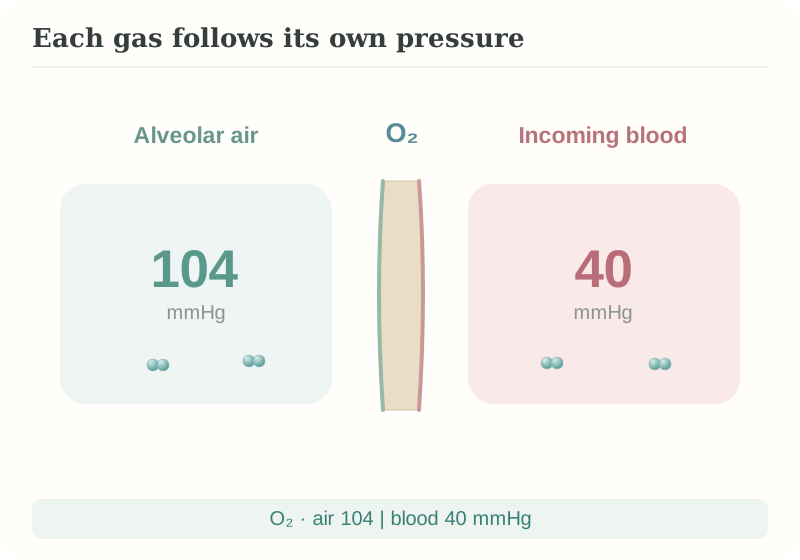
- Oxygen pressure: Partial pressure is one gas's share of pressure. Here, oxygen measures one hundred four millimeters of mercury in air and forty in incoming blood
2. Oxygen direction: Oxygen therefore diffuses overall from air into blood
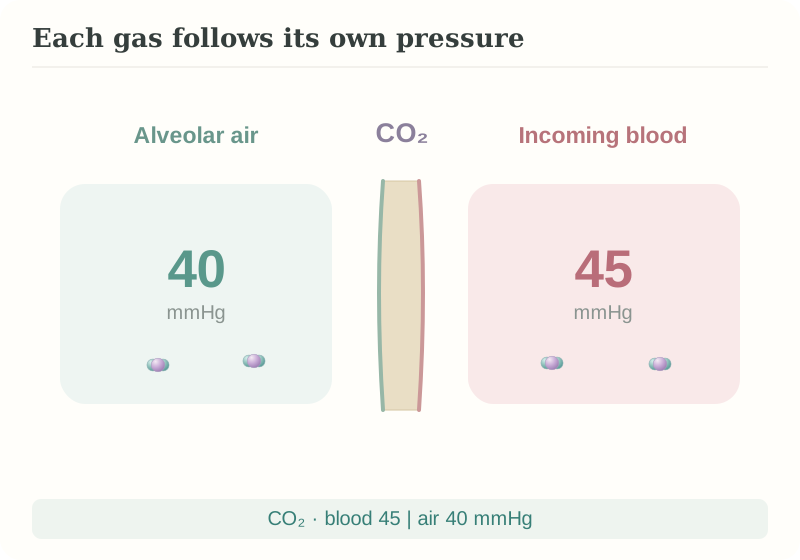
3. Carbon dioxide pressure: Carbon dioxide measures forty-five millimeters of mercury in incoming blood and forty in alveolar air
Equal pressure and net flow
1. Carbon dioxide direction: Carbon dioxide therefore diffuses overall from blood into air
2. Equal pressure: If oxygen pressure becomes equal on both sides, the net driving difference disappears
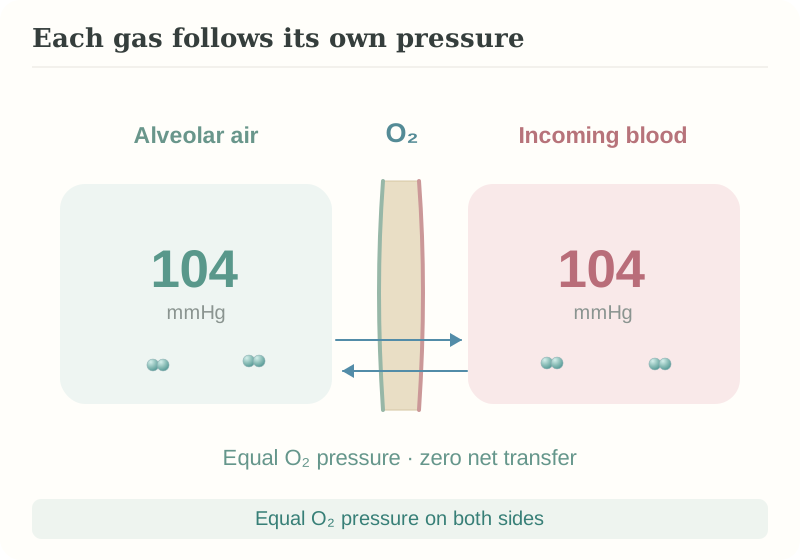
3. No net transfer: Oxygen still moves both ways, but equally on average. There is no net transfer
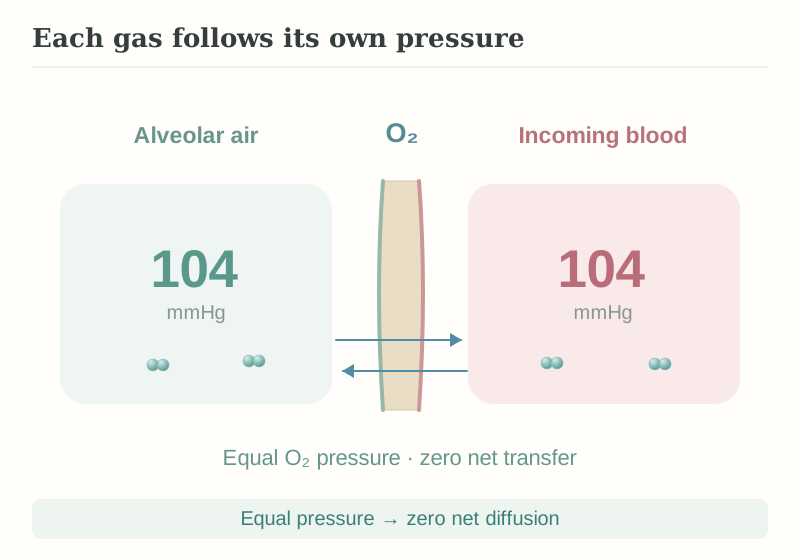
What sets net diffusion?
Oxygen diffuses overall from higher to lower partial pressure. Equal oxygen pressures mean no net oxygen transfer
| Item | Properties |
|---|---|
| Unequal O₂ pressure | Net diffusion |
| Equal O₂ pressure | No net transfer |