Hemoglobin and Oxygen Transport
Hemoglobin carries oxygen through reversible binding. Follow loading in the lungs and release in tissues, and distinguish oxygen carried on hemoglobin from oxygen dissolved in plasma.
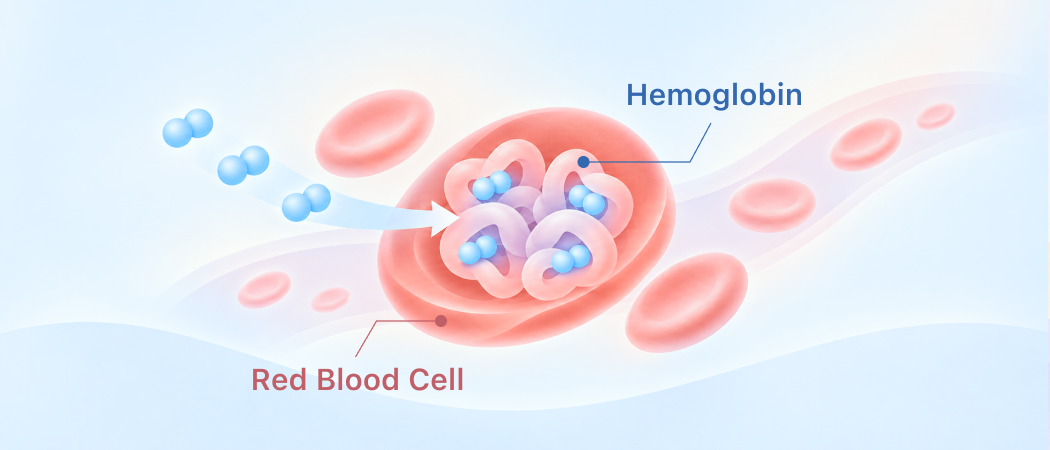
Why oxygen needs a carrier
Alveoli
3D model of alveoli where oxygen enters the blood
Two ways to carry oxygen
A small amount of oxygen travels dissolved in blood. Most travels bound to hemoglobin
| Item | Properties |
|---|---|
| Dissolved | Small oxygen share |
| Hemoglobin-bound | Most oxygen |
Load oxygen in the lungs
Hemoglobin
3D model of a hemoglobin molecule that can carry oxygen
Hemoglobin
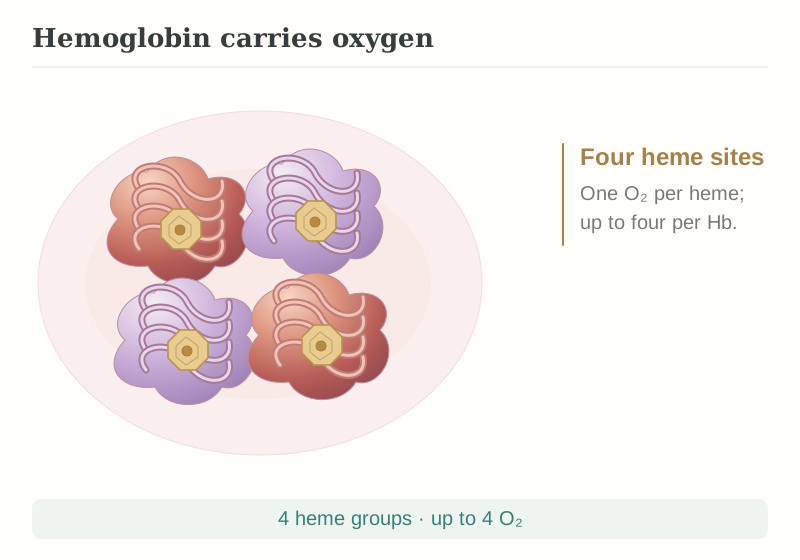
Hemoglobin is a protein in red blood cells. It has four heme groups for binding oxygen. It can bind oxygen and later release it
| Item | Properties |
|---|---|
| Hemoglobin | Protein in red cells |
| Four heme sites | Bind oxygen |
| Reversible binding | Load and release |
1. Binding sites: Each heme group binds one oxygen molecule, so one hemoglobin can carry up to four
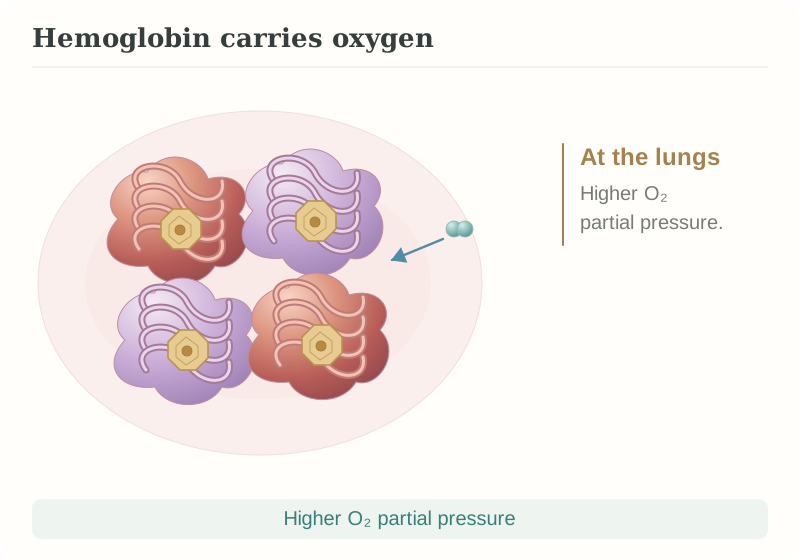
2. Lungs: Higher oxygen partial pressure in the lungs favors oxygen binding
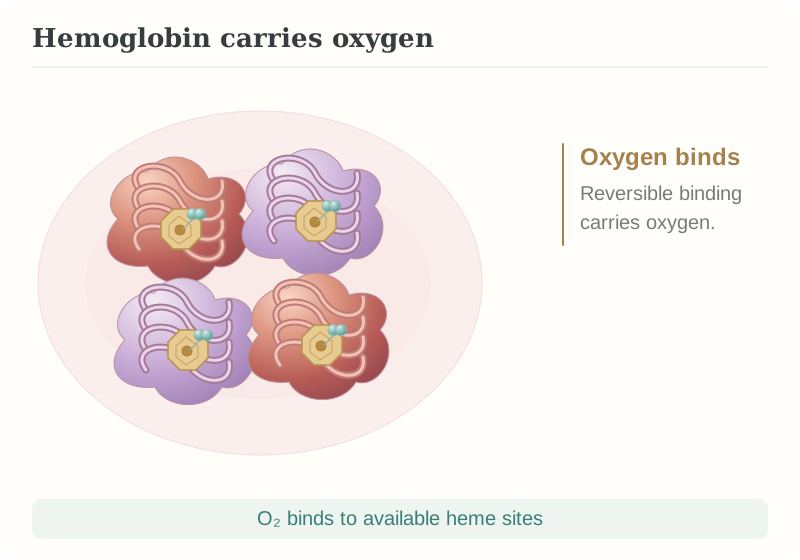
3. Load: Oxygen binds to available heme sites for transport in the blood
Release oxygen to tissues
1. Tissues: Cells use oxygen, helping keep oxygen partial pressure lower in the tissues
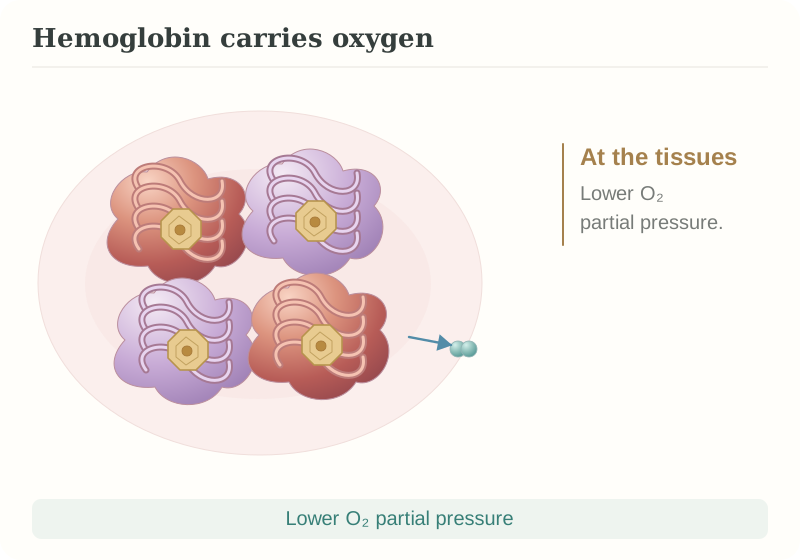
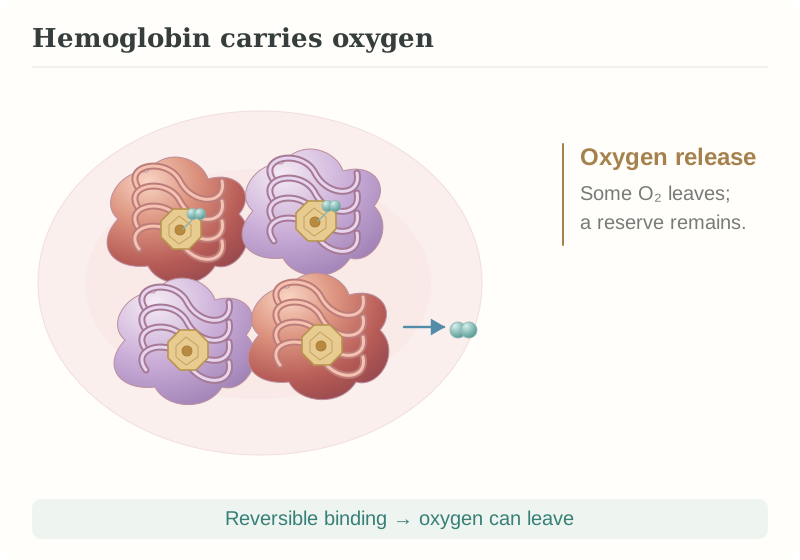
2. Release: Some oxygen leaves hemoglobin and diffuses into tissues. The returning blood still carries some oxygen
Load and release
Hemoglobin loads oxygen in the lungs. It releases some oxygen in body tissues
| Item | Properties |
|---|---|
| Lungs | Load oxygen |
| Tissues | Release oxygen |