Coronary Blood Supply
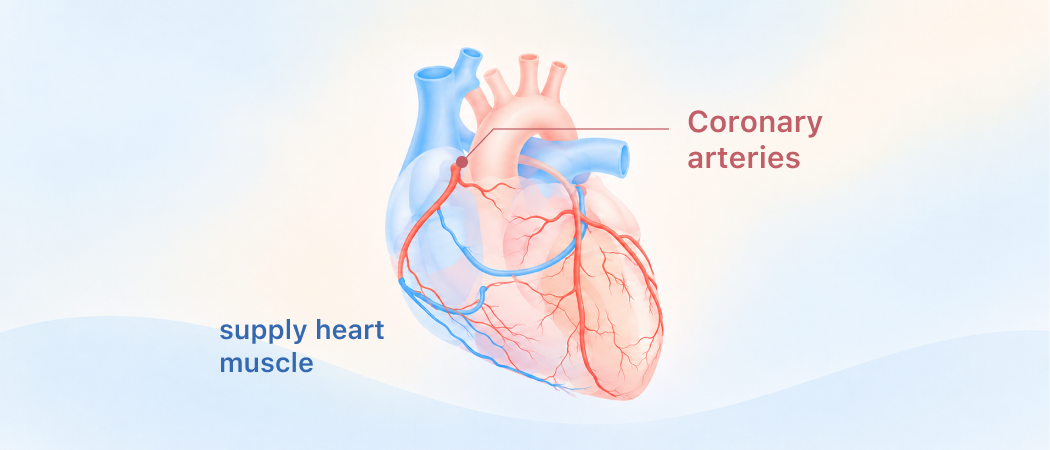
Heart muscle needs local oxygen delivery, not just blood passing through its chambers. Coronary arteries carry oxygen-rich blood toward the muscle, capillaries bring it close to muscle cells, and cardiac veins collect blood after oxygen delivery. Reduced coronary flow can therefore reduce the muscle’s oxygen supply even when the chambers remain full.
Full of blood. Still needs blood.
One idea to chase
The heart is full of blood, yet its own muscle can run short of oxygen. That sounds impossible until you separate blood passing through a chamber from oxygen actually delivered into muscle. The pump has its own supply route
Passing through is not local delivery
The pump needs a supply
The pump needs a supply
3D heart model showing the coronary circulation around heart muscle
The myocardium, or heart muscle, needs oxygen for its own work even while blood is passing through the chambers beside it
Myocardium is working heart muscle
Coronary arteries
Coronary arteries
3D heart model highlighting the coronary arteries
Coronary arteries branch from the aorta, the main artery leaving the heart, and carry oxygen-rich blood toward the working muscle
Branching arteries deliver blood toward the muscle
Cardiac veins
Cardiac veins
3D heart model highlighting the cardiac veins
Cardiac veins collect blood after oxygen delivery and return much of it toward the right atrium, completing the local route
Veins collect blood after tissue exchange
A separate delivery route.
1. Passing through: Blood inside a chamber is mostly traveling somewhere else, so its presence alone does not supply the whole thick muscle wall

2. A local delivery route: Coronary arteries bring oxygen-rich blood through a separate route that branches toward the heart muscle rather than just passing through a chamber

3. Close to the cells: Tiny thin-walled vessels called capillaries bring blood close to muscle cells, reducing the distance that oxygen must cross through tissue

4. Finish the delivery: Oxygen moves from capillary blood into nearby muscle cells, completing the local delivery that a full chamber cannot provide by itself
