Heart Sounds and Valve Closure
The familiar lub and dub sounds accompany closure of different heart valves. Place inlet and outlet closure in the pressure changes of a heartbeat to explain the sequence of the sounds.
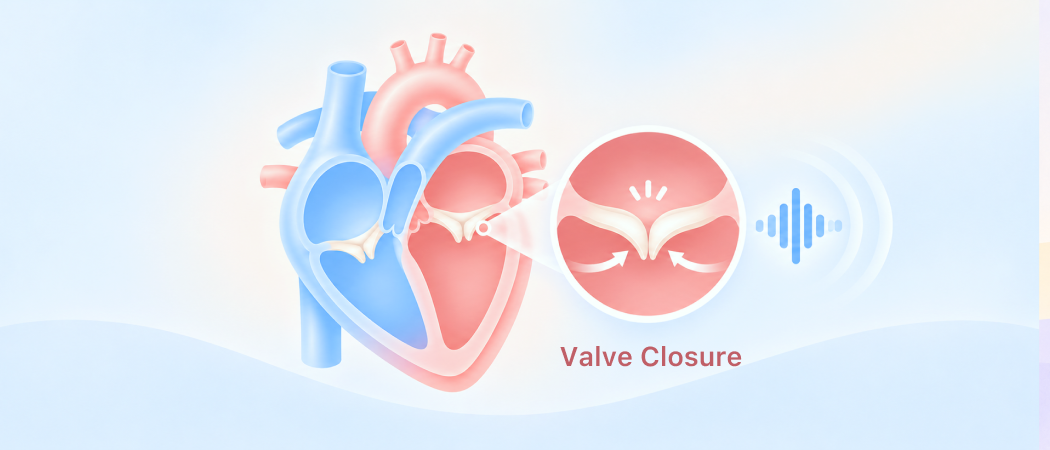
Two sounds in one beat
Four valves
3D heart model showing the four heart valves
Four valves
The atria receive blood and the ventricles pump it. Four valves help keep blood moving forward
Atria receive; ventricles pump
Four valves guide forward flow
Two sounds, one beat
Lub is the first main heart sound. Dub is the second sound in the same heartbeat
| Item | Properties |
|---|---|
| Lub | First sound |
| Dub | Second sound; same beat |
Inlet closure: lub
The inlet pair
3D heart model highlighting the two atrioventricular valves
The inlet pair
The mitral and tricuspid valves are the inlet pair. They lie between the atria and ventricles
Mitral + tricuspid valves
Between atria and ventricles
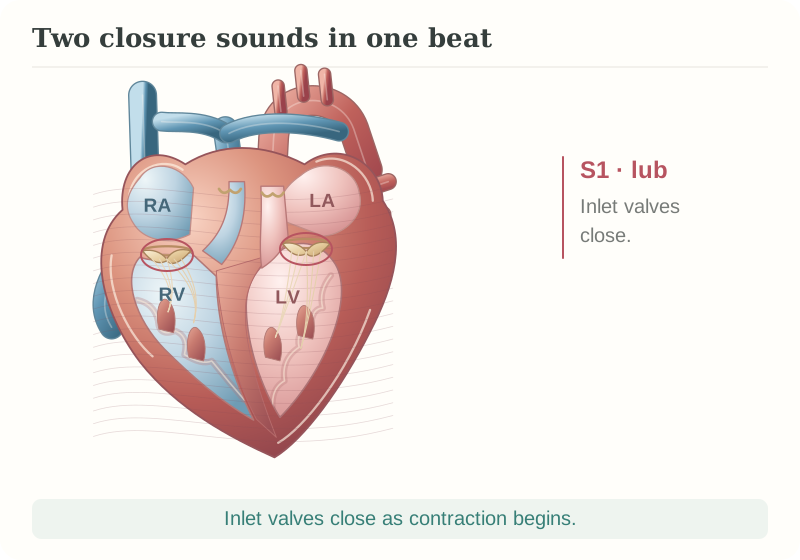
- Lub: Lub comes from vibrations linked to inlet-valve closure as the ventricles start contracting
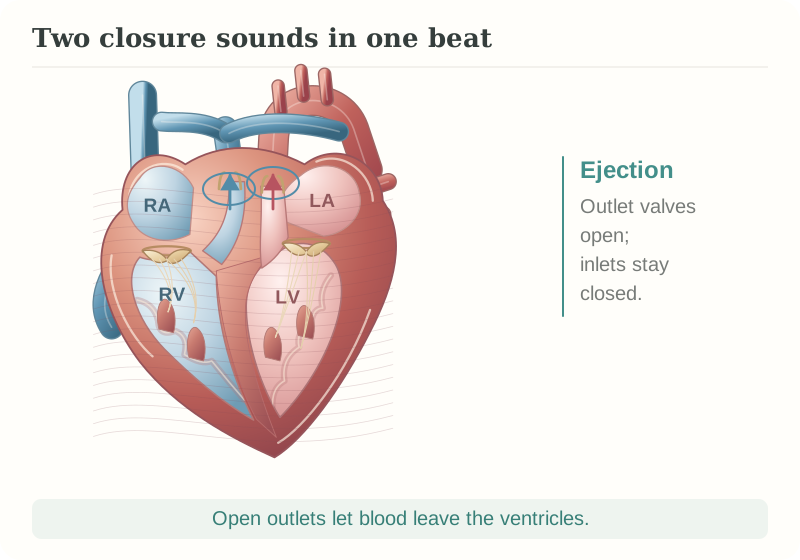
2. Ejection: The outlets open and blood leaves the ventricles. The inlets stay closed
Outlet closure: dub
The outlet pair
3D heart model highlighting the two semilunar valves
The outlet pair
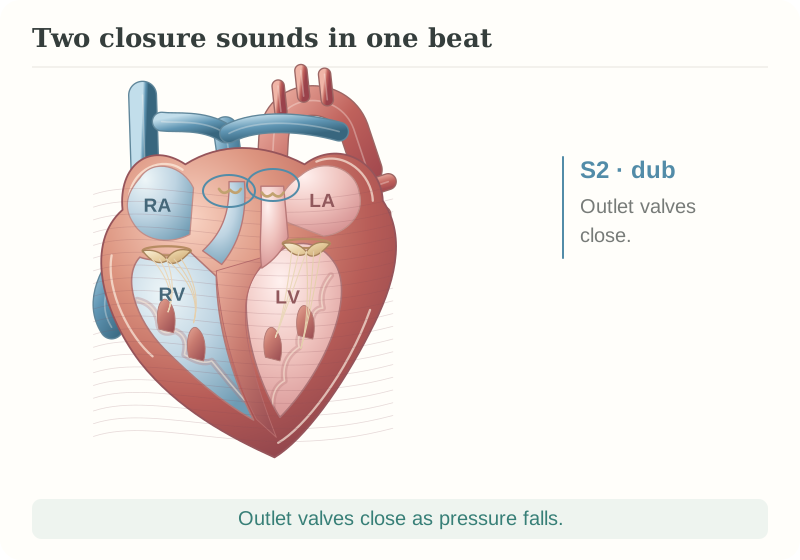
The aortic and pulmonary valves are the outlet pair. They lead from the ventricles into the large arteries
Aortic + pulmonary valves
Ventricles → arteries
- Dub: As the ventricles relax, outlet-valve closure creates vibrations linked to dub
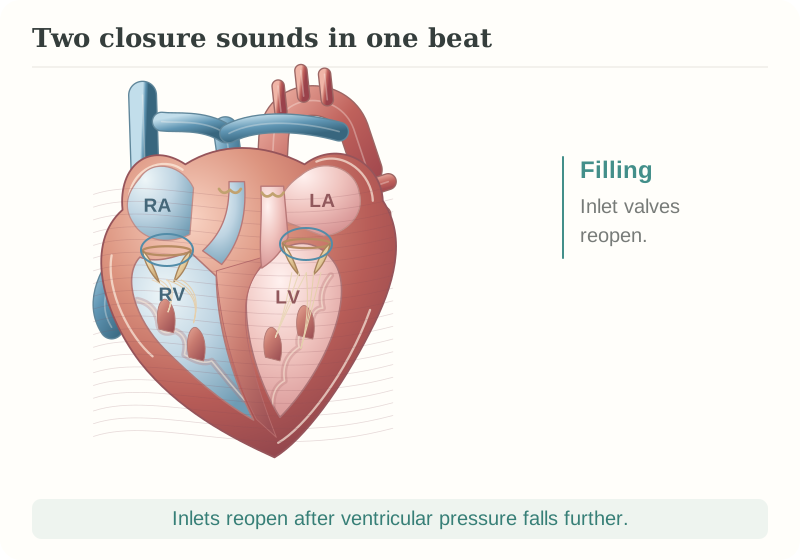
2. Filling: Ventricular pressure falls further, the inlets reopen, and filling begins again