Diaphragm Movement and Inhalation
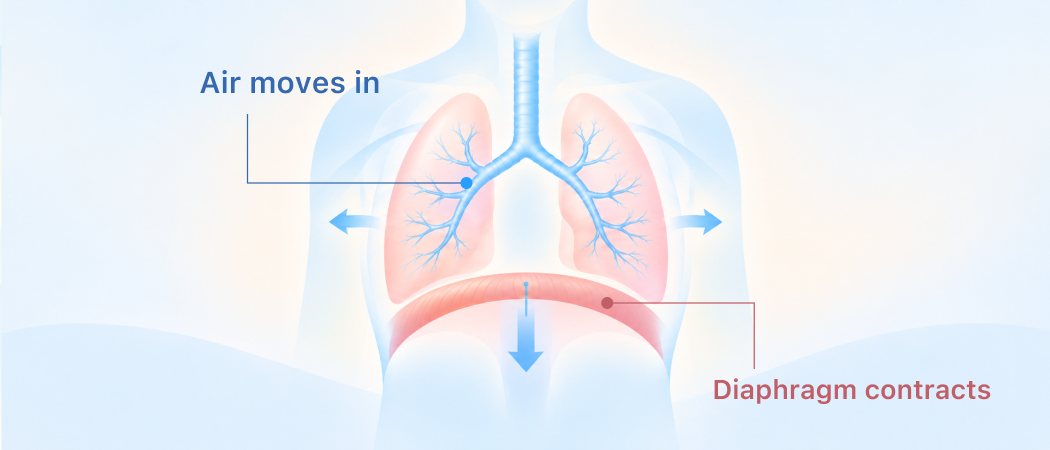
Diaphragm contraction changes thoracic volume and pressure during inhalation. Follow the movement of the breathing structures and the pressure difference that brings air into the lungs.
Meet the breathing structures
Diaphragm
3D model of the thorax with the diaphragm below the lungs
Diaphragm
The diaphragm is a dome-shaped muscle. It lies below the lungs and helps expand the chest
Dome-shaped muscle
Below the lungs
Branching airways
3D model of the branching airways inside the lungs
Branching airways
Open airways connect outside air to the lungs
Airways carry air to the lungs
Alveoli
3D model of alveoli at the ends of the airways
Alveoli
Alveoli are tiny air sacs. Here, oxygen crosses into nearby blood
Alveoli = tiny air sacs
Oxygen enters nearby blood
How air enters
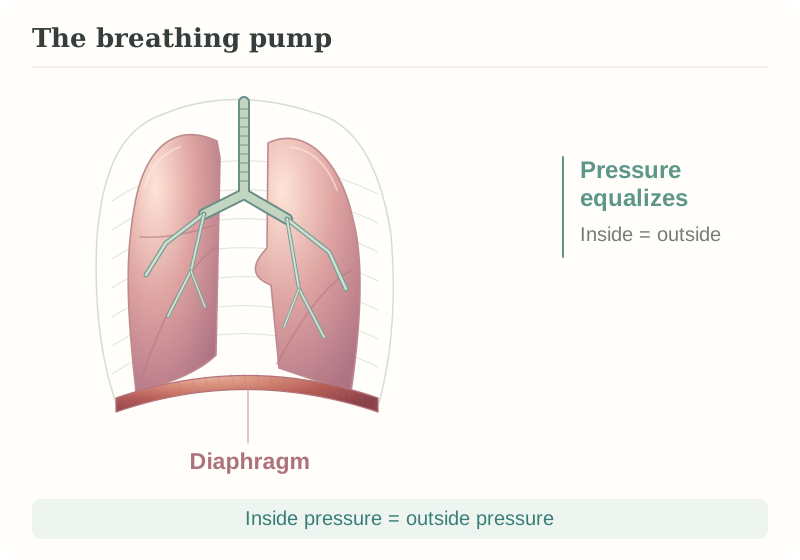
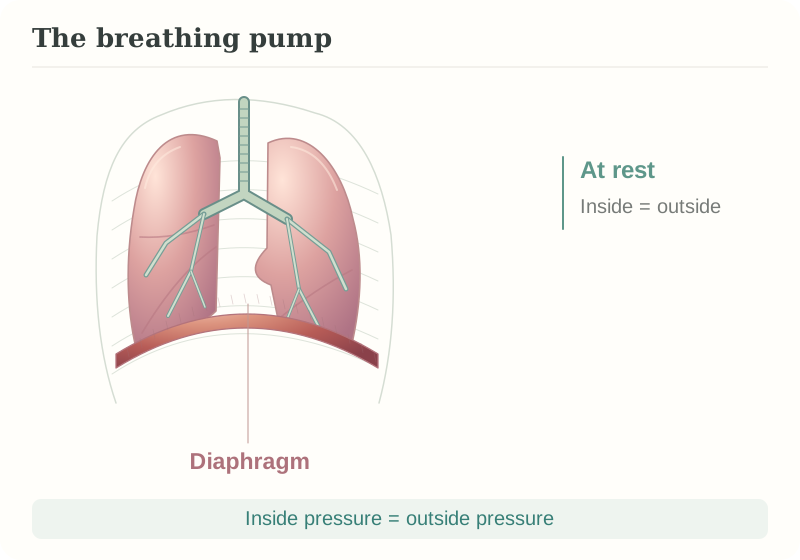
1. Rest: Before inhaling, air pressure inside matches outside. There is no net airflow
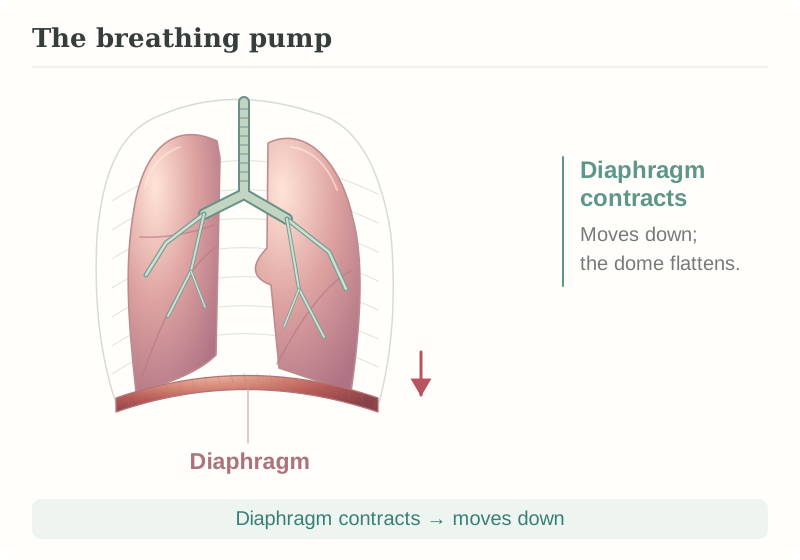
2. Down: The diaphragm contracts, flattens, and moves downward
3. Expand: The chest expands. Thin, moist pleural layers help the lungs follow the chest wall
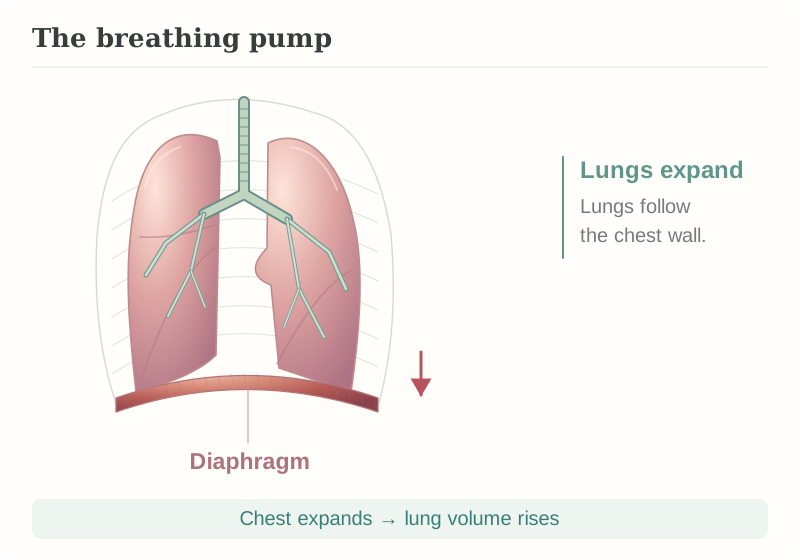
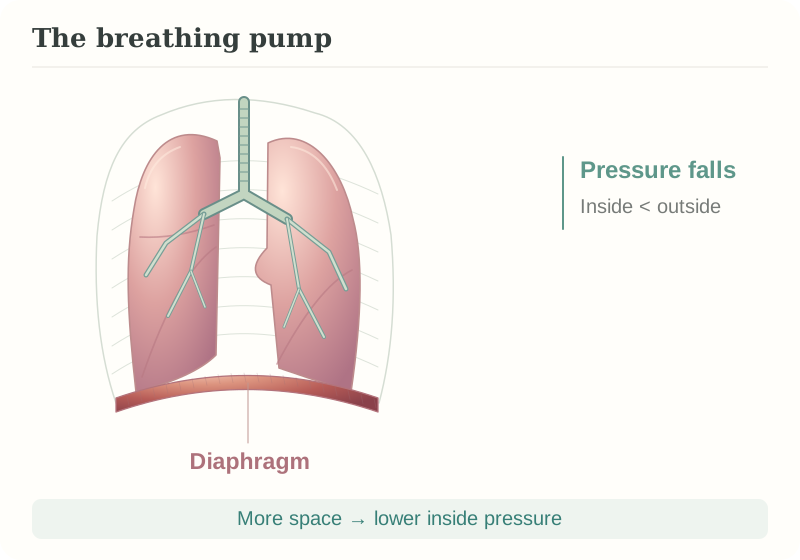
4. Pressure: As lung volume rises, air pressure inside briefly drops below outside pressure
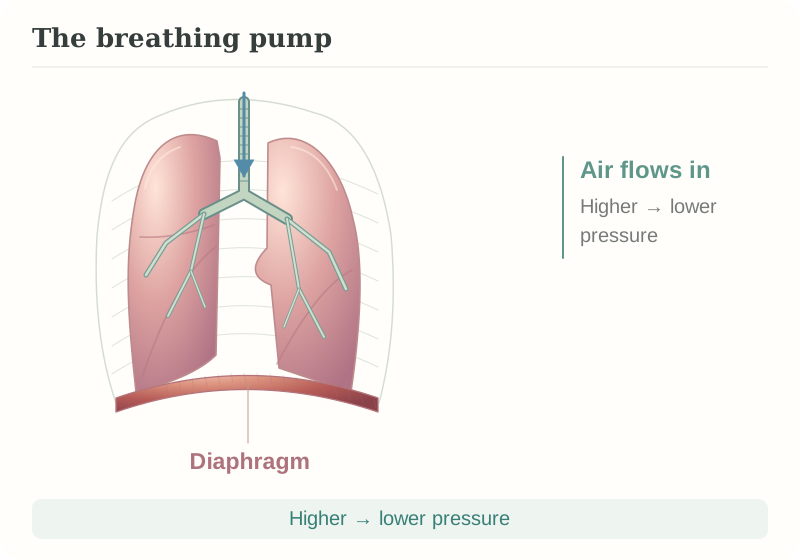
5. Air in: Air moves through open airways from higher pressure outside to lower pressure inside
6. Pause: At the end of a quiet inhale, the pressures match. Net airflow pauses