Heart Pumps and Blood Circulation
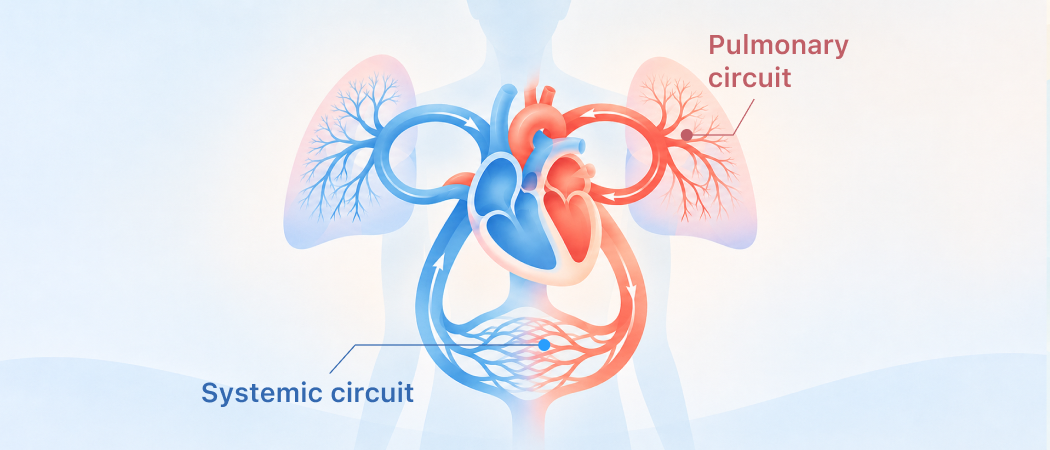
The right and left sides of the heart act as two pumps in one connected blood loop. The right ventricle sends blood to the lungs to gain oxygen; the left ventricle sends it to the body. Following this route explains why blood visits the heart twice and why the two pumps must match their average flow.
Why visit the heart twice?
One idea to chase
Imagine you are a drop of blood leaving a leg muscle. You need more oxygen, but getting back to that leg requires two very different pushes. First, find why your heart is really two pumps in one loop
Body → heart → lungs → heart → body
Four chambers
Four chambers
3D heart model showing all four chambers
Inside your heart, the upper chambers, called atria, receive blood, while the lower chambers, called ventricles, pump it out
Atria receive. Ventricles pump out
Right heart
Right heart
3D heart model highlighting the right atrium and right ventricle
The right ventricle sends blood to your lungs; this blue teaching color means less oxygen, although real blood is always red
Right ventricle sends blood to the lungs
Left heart
Left heart
3D heart model highlighting the left atrium and left ventricle
The left ventricle sends blood around your body, so one drop visits both pumps during a complete trip
Left ventricle sends blood to the body
Lungs first. Then the body.
1. Back from the body: After delivering oxygen around the body, blood returns through veins to the right heart, ready for another trip

2. A push toward the lungs: The right ventricle gives that blood a push toward the lungs, where the next part of the journey happens

3. Oxygen enters the blood: Inside the lungs, oxygen moves from tiny air sacs into the blood, adding oxygen rather than another pumping push

4. Another heart visit: Blood now returns from the lungs to the left heart, because it needs another push before serving the body

5. The loop closes: The left ventricle sends blood to the body, completing one connected loop whose two pumps must match their average flow
