Heart Valves and Pressure Differences
Heart valve leaflets respond to pressure differences across them. Apply the same one-way-flow rule to inlet and outlet valves instead of treating valves as pumps that actively pull blood.
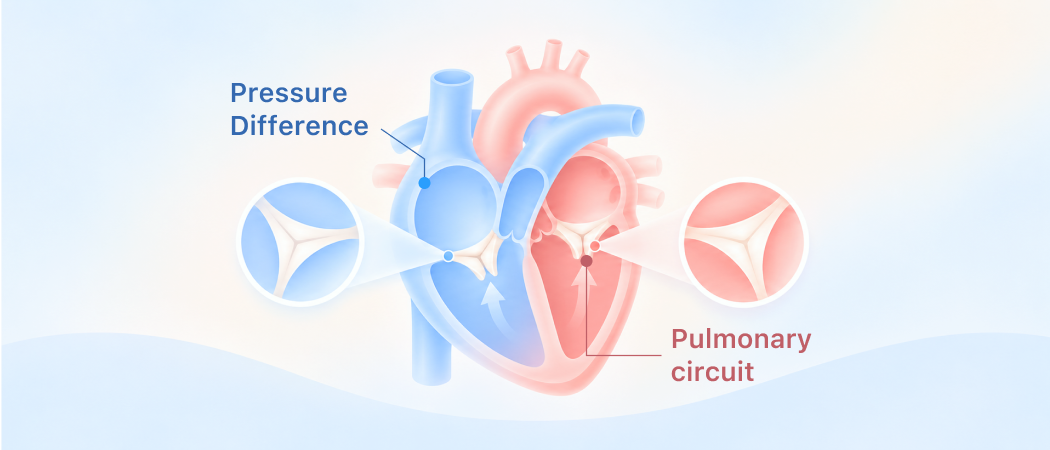
One-way routes through the heart
Between two chambers
3D heart model showing valves between chambers and at the exits
Between two chambers
The left atrium receives blood. The left ventricle pumps it out
| Item | Properties |
|---|---|
| Left atrium | Receives blood |
| Left ventricle | Pumps blood |
One-way flow
Pressure moves the leaflets
Flexible leaflets
3D model highlighting the flexible leaflets of the mitral valve
Flexible leaflets
The mitral valve has two flexible leaflets. Pressure differences move them
Mitral valve: two leaflets
Pressure differences move them
- Filling: During filling, pressure in the left atrium is higher than in the relaxed left ventricle
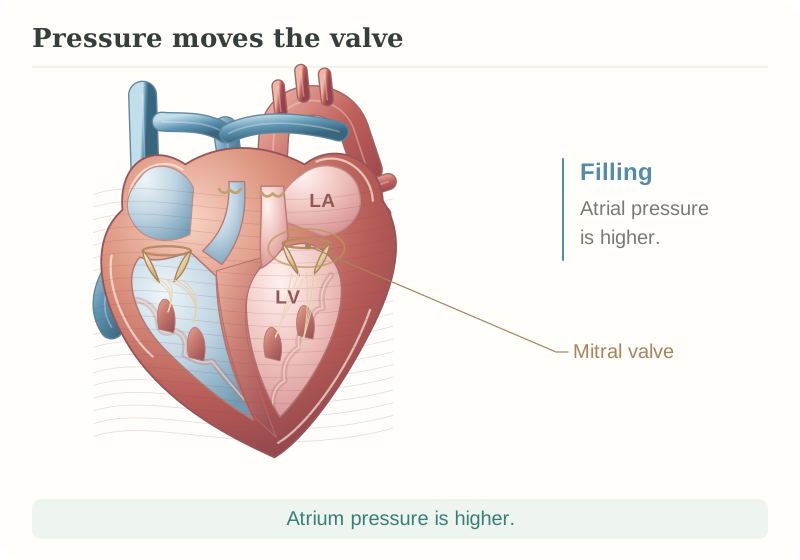
2. Open: That pressure difference pushes the mitral valve open
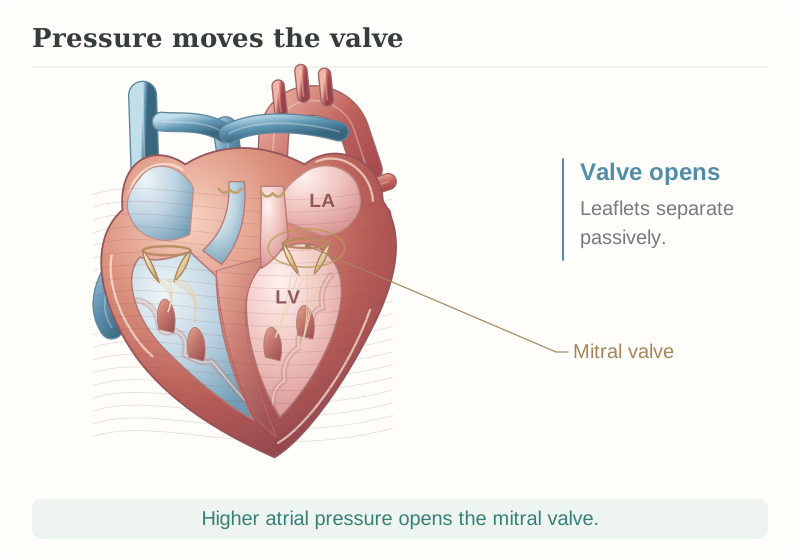
3. Forward flow: Blood flows through the open valve into the ventricle
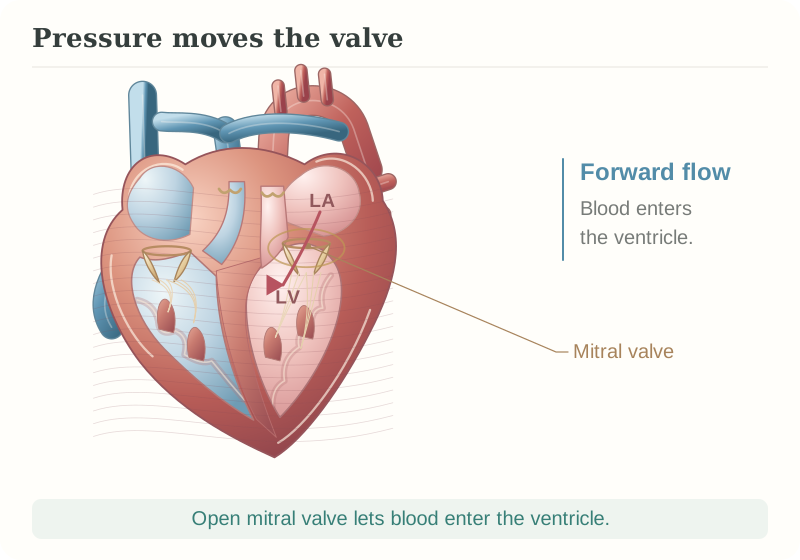
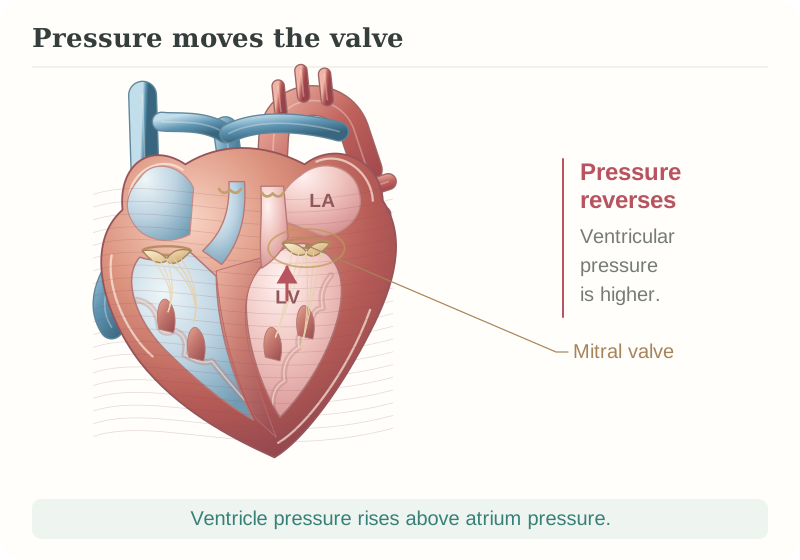
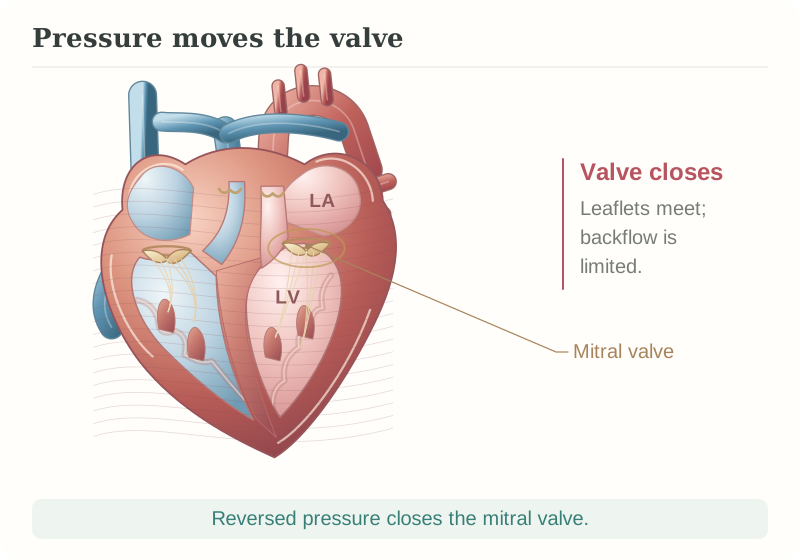
4. Contraction: When the ventricle contracts, its pressure rises above atrial pressure
5. Close: The reversed pressure difference closes the valve and limits flow back into the atrium
Apply the same rule at the exit
Valves at the exits
3D heart model showing the valves that control forward blood flow
Valves at the exits
The aortic valve leads into the body's main artery. It also opens and closes in response to pressure differences
Aortic valve leads to the main artery
The same pressure rule applies