Ventricular Walls and Pumping Pressure
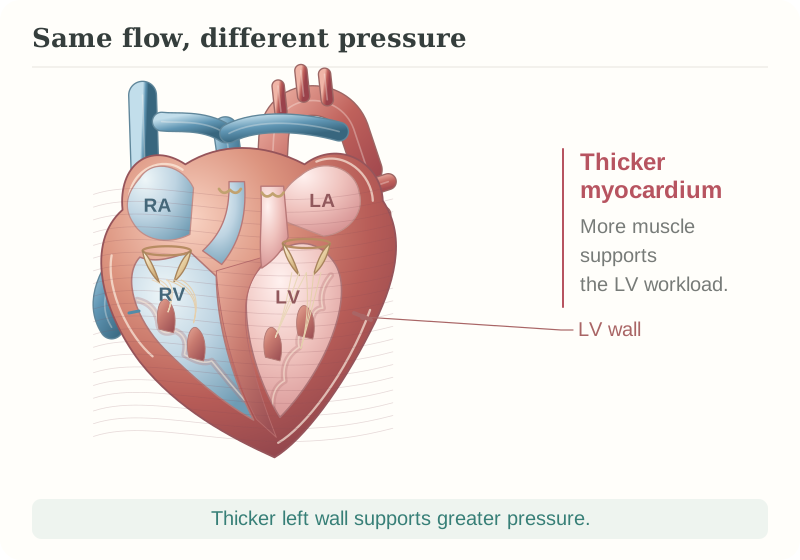
The two ventricles move comparable blood flow through circuits with different resistance. Connect pressure generation to the thicker left ventricular wall and distinguish pressure from flow.
Muscle, flow and pressure
Myocardium
3D heart model highlighting the myocardium, the muscular heart wall
Myocardium
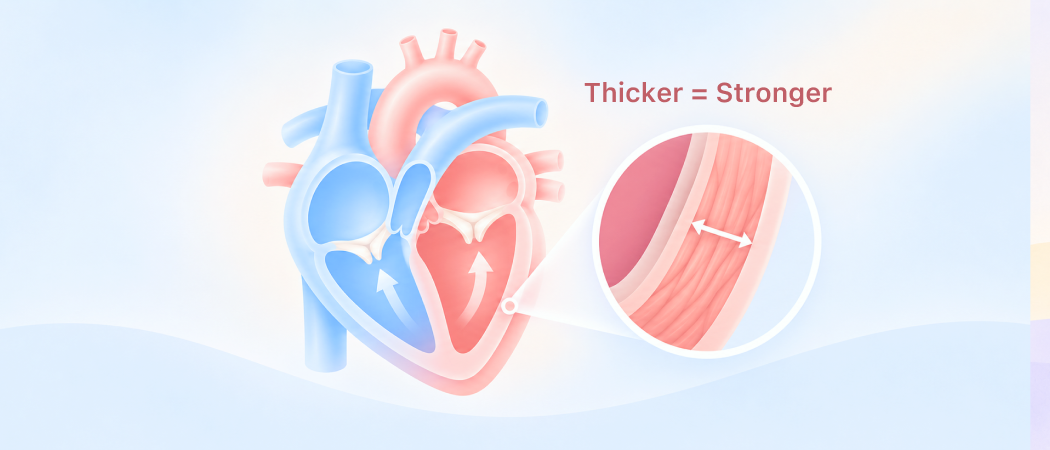
The myocardium is the heart's muscle wall. Its contraction raises pressure and pushes blood out
Myocardium is the muscle wall
Contraction raises pressure
Flow and driving pressure
Flow is the volume of blood moved per unit of time. Pressure difference provides the push that drives it
| Item | Properties |
|---|---|
| Flow | Volume per time |
| Pressure difference | Driving push |
Same flow, different resistance
Wall versus space
3D heart model comparing ventricular walls with the chamber spaces
Wall versus space
A cavity cast shows the space that holds blood. Muscle forms the wall around that space
| Item | Properties |
|---|---|
| Cavity cast | Blood-filled space |
| Muscle wall | Surrounding tissue |
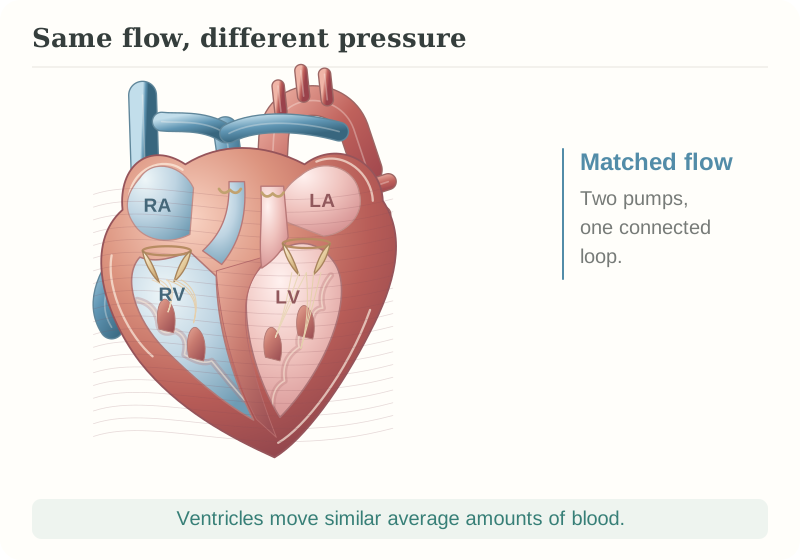
1. Same average flow: Both ventricles normally move about the same volume of blood over time
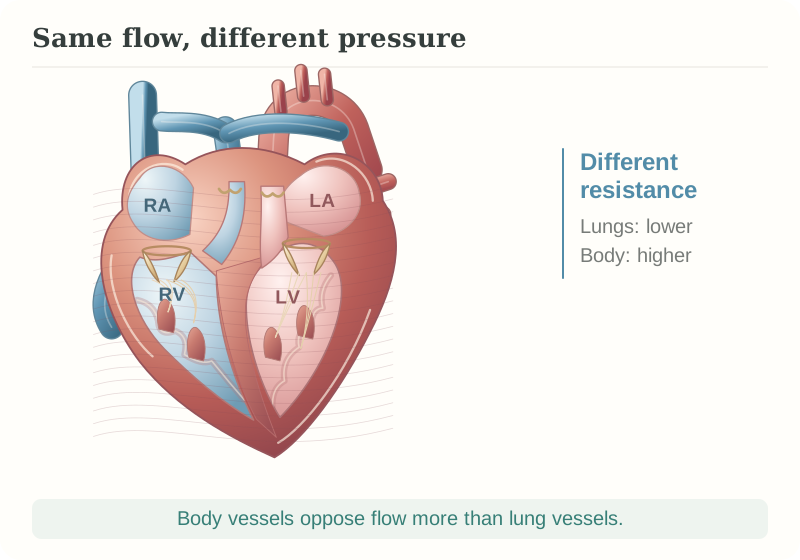
2. Different resistance: Body vessels normally oppose flow more than lung vessels do
Why the left wall is thicker
Muscle around the chamber
3D cutaway model showing muscle surrounding a heart chamber
Muscle around the chamber
1. Higher pressure: The left ventricle needs higher pressure to maintain flow through the body circuit
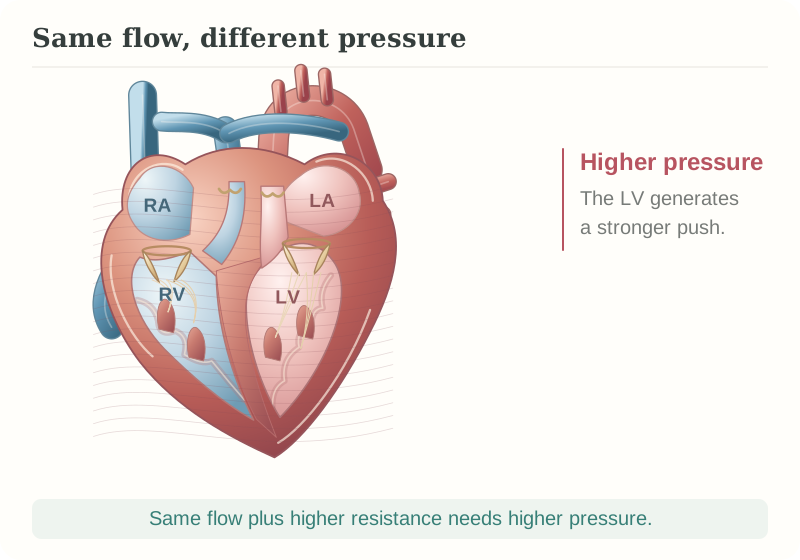
2. Thicker wall: Its thicker muscle wall supports this greater pressure workload