A Bite, a Journey
Follow a bite through the digestive tract and distinguish mechanical processing, chemical digestion and absorption. Compare bile with lipase and trace the contributions of the liver, gallbladder and pancreas.
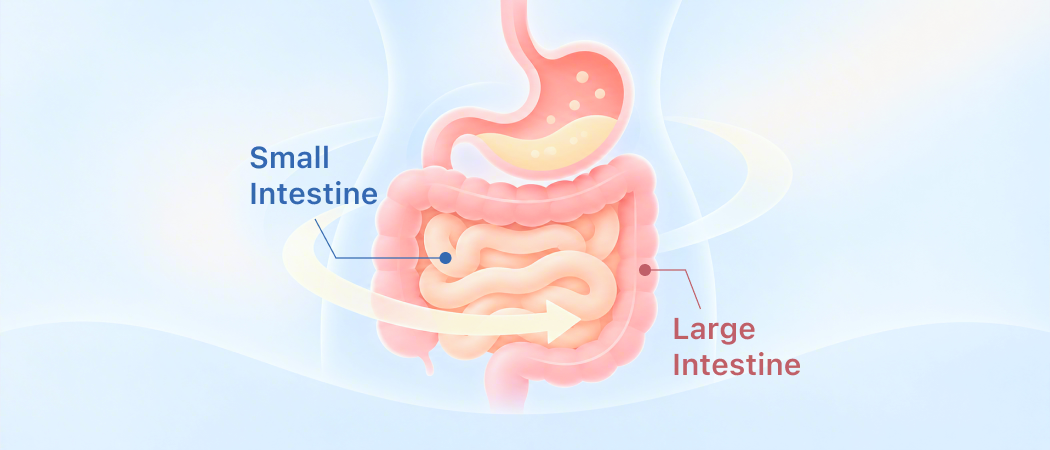
A bite, a journey
How does a bite of toast become nutrients your cells can use? Follow the digestive tract
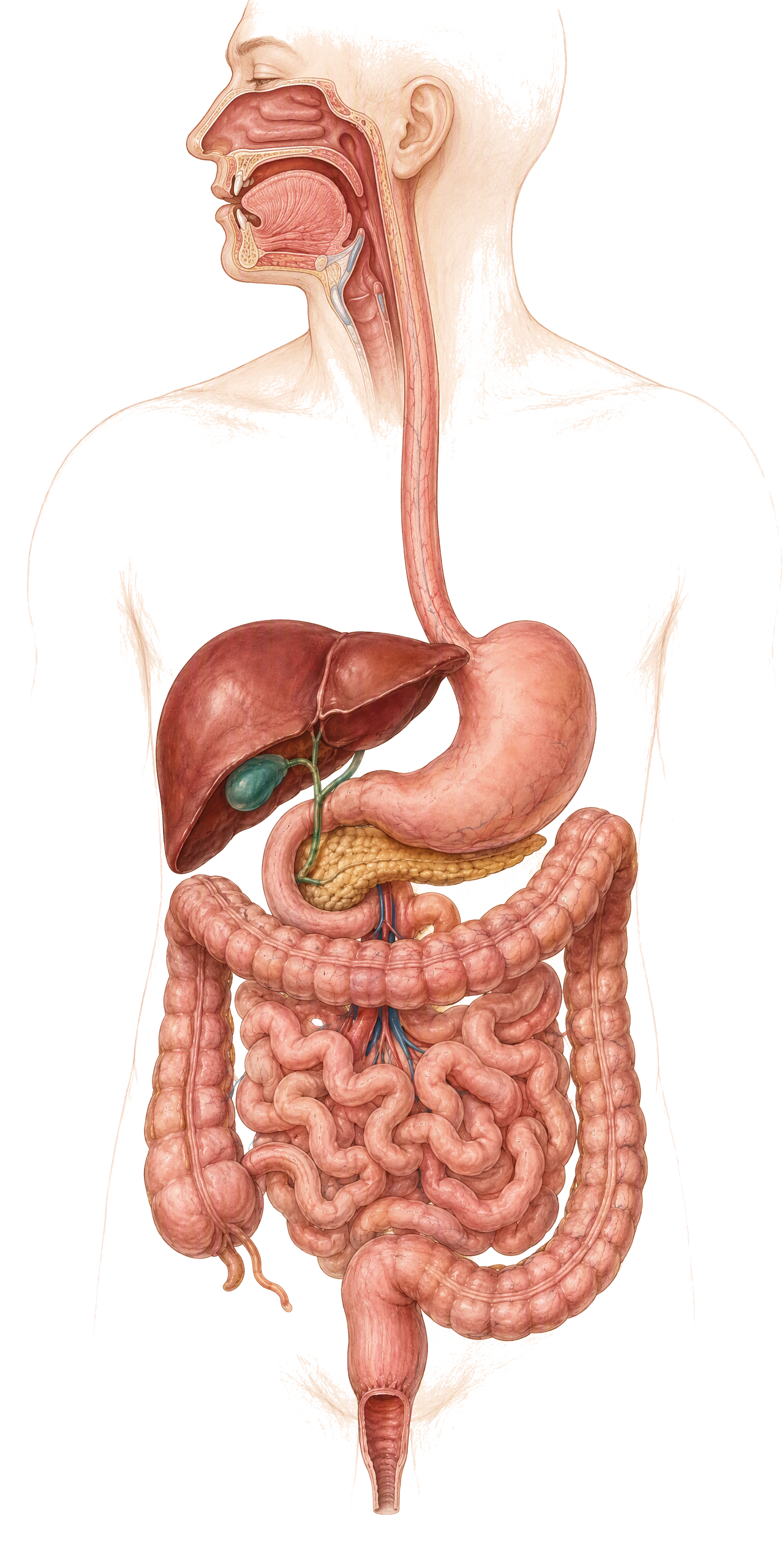
From food to fuel
Three jobs: break food down, move it along, and absorb nutrients
| Item | Properties |
|---|---|
| Break down | Digest food. |
| Move along | Transport food. |
| Take in | Absorb nutrients. |
Mouth
First, make smaller pieces
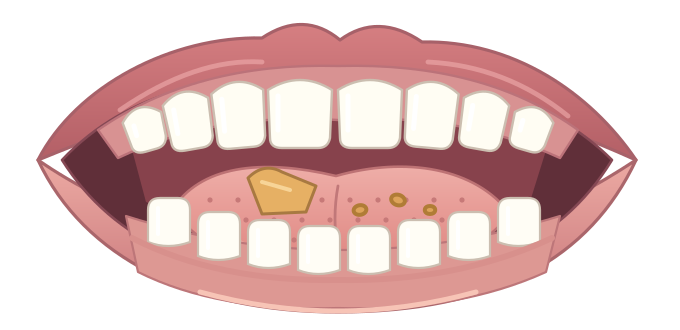
Teeth make food into smaller pieces. This is mechanical digestion: chewing itself does not break chemical bonds
Mechanical digestion: Chewing makes smaller pieces
No chemical bonds are broken
Smaller pieces give saliva more surface to reach
More surface: More contact with saliva
While you chew, salivary amylase starts breaking bonds in starch. This is chemical digestion
Chemical digestion: Amylase starts breaking
bonds in starch
Esophagus
Push, don’t just drop
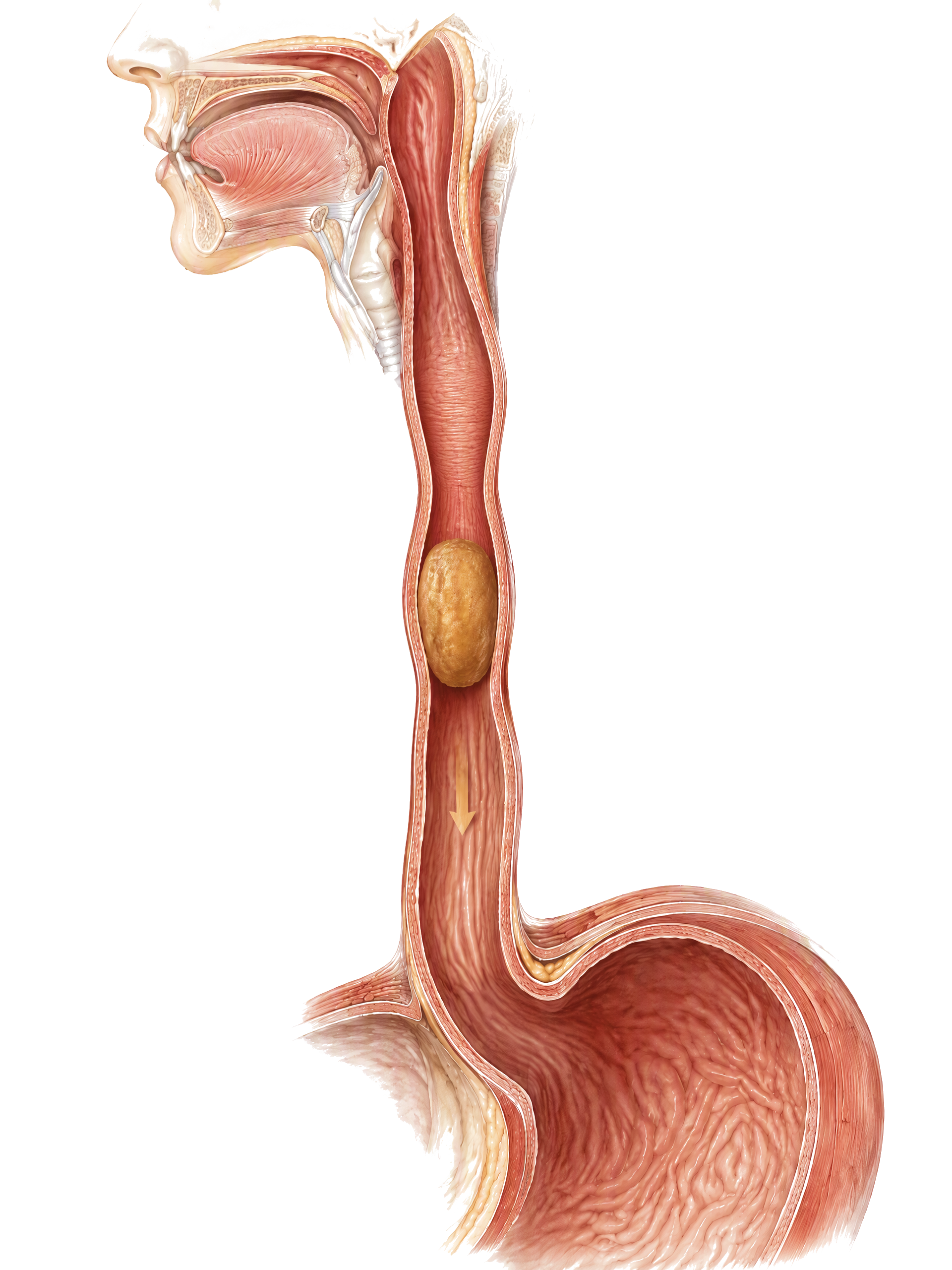
Swallowed food forms a bolus. Muscle contracts behind it, pushing it along the esophagus
Behind: contract: Push the food bolus forward
Muscle ahead relaxes. This coordinated wave is peristalsis: it moves the bolus toward the stomach
Ahead: relax: Let food pass
Peristalsis moves the bolus
Stomach
A mixer with chemistry
The stomach’s muscular wall churns food and mixes it with gastric juice
Stomach
Stomach anatomical specimen, not to scale
Stomach acid creates low pH, helps convert pepsinogen to pepsin, and limits many microbes
Acid · low pH: Pepsinogen → pepsin
Limits many microbes
Pepsin cuts proteins into shorter peptides. Churning mixes food and gastric juice into chyme
Pepsin + churning: Pepsin → shorter peptides
Churning → mixing into chyme
Inside the stomach wall
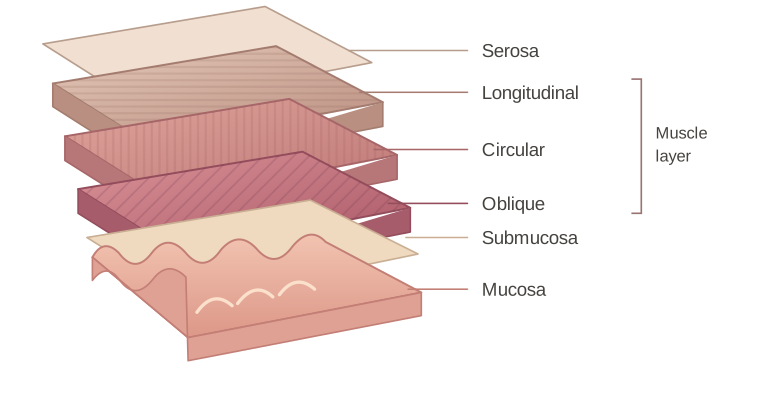
The muscle layer has three directions: outer longitudinal, middle circular, and inner oblique
Three muscle directions: One muscular layer
Three fiber directions
Mucosa lines the lumen. Beneath it are the submucosa, muscle layer, and outer serosa
Inner lining: Mucosa faces the lumen
Submucosa lies beneath
Liver & gallbladder
A helper, not a stop
The liver makes bile. Food travels through the digestive tract, not through the liver
Liver
Liver anatomical specimen, not to scale
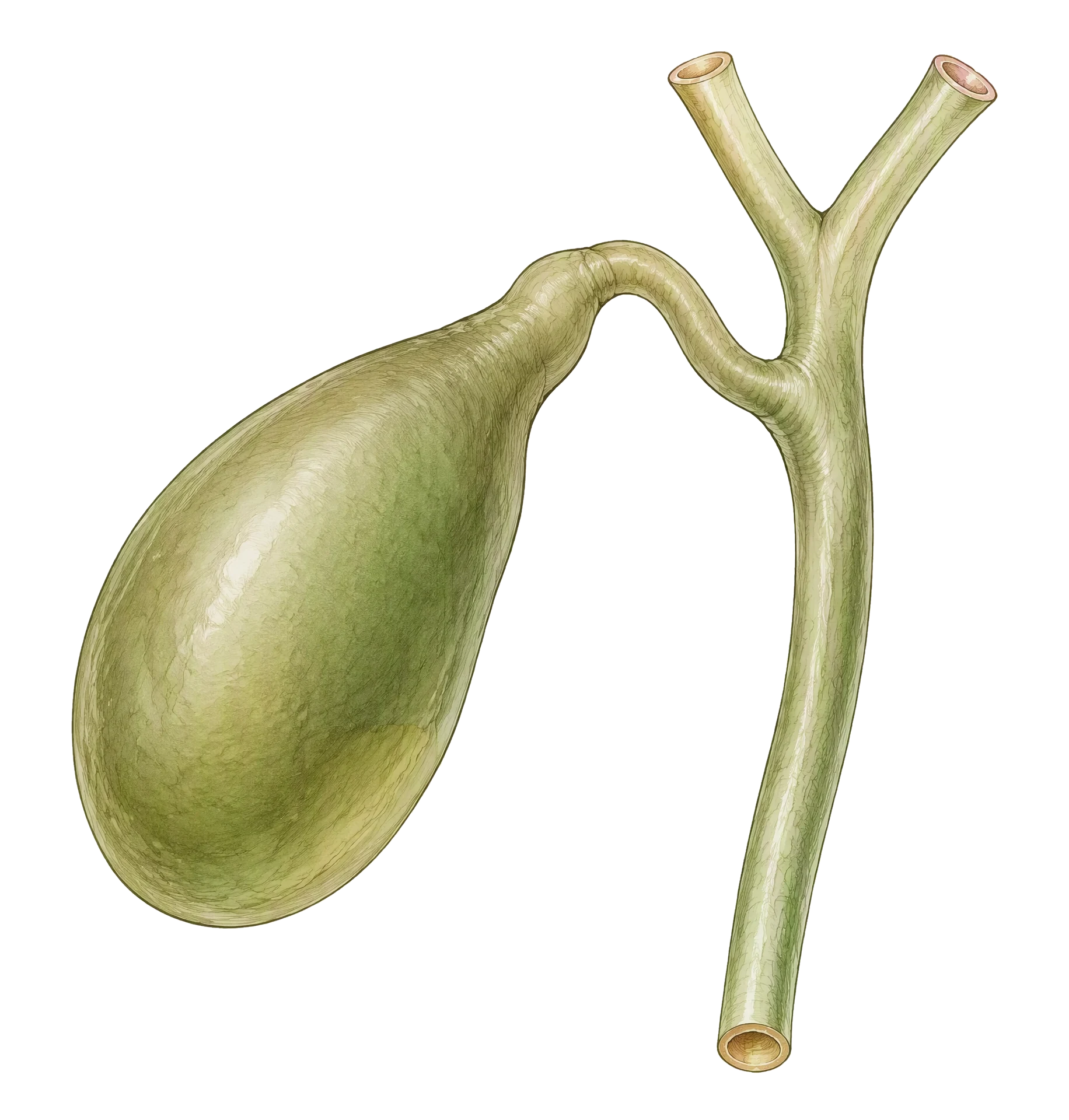
The gallbladder stores and concentrates bile, then releases it into the duodenum
Store → release: Stores and concentrates bile
Releases it into the duodenum
Break a droplet, not a bond
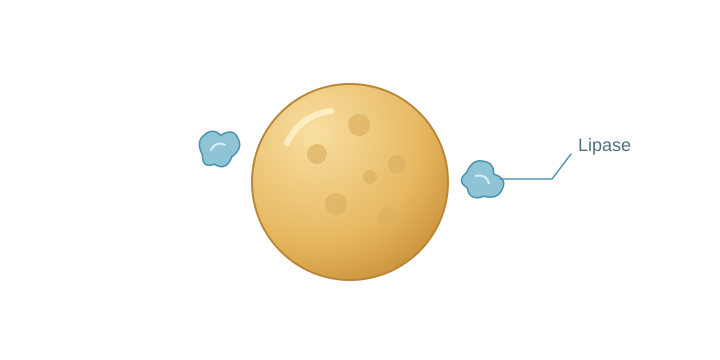
1. Large droplet: Bile helps disperse large fat droplets into smaller ones. This is emulsification
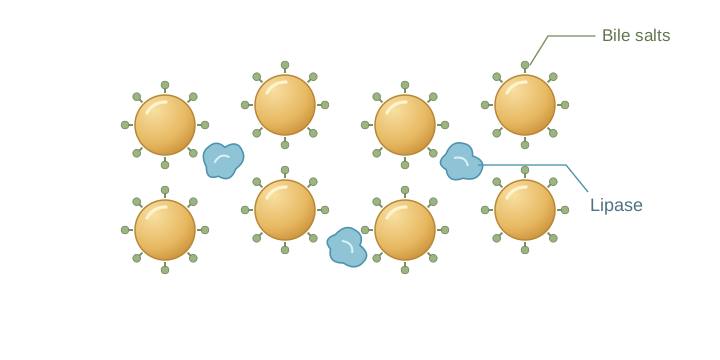
2. More surface: Emulsification gives lipase more surface. Bile is not an enzyme and does not break chemical bonds
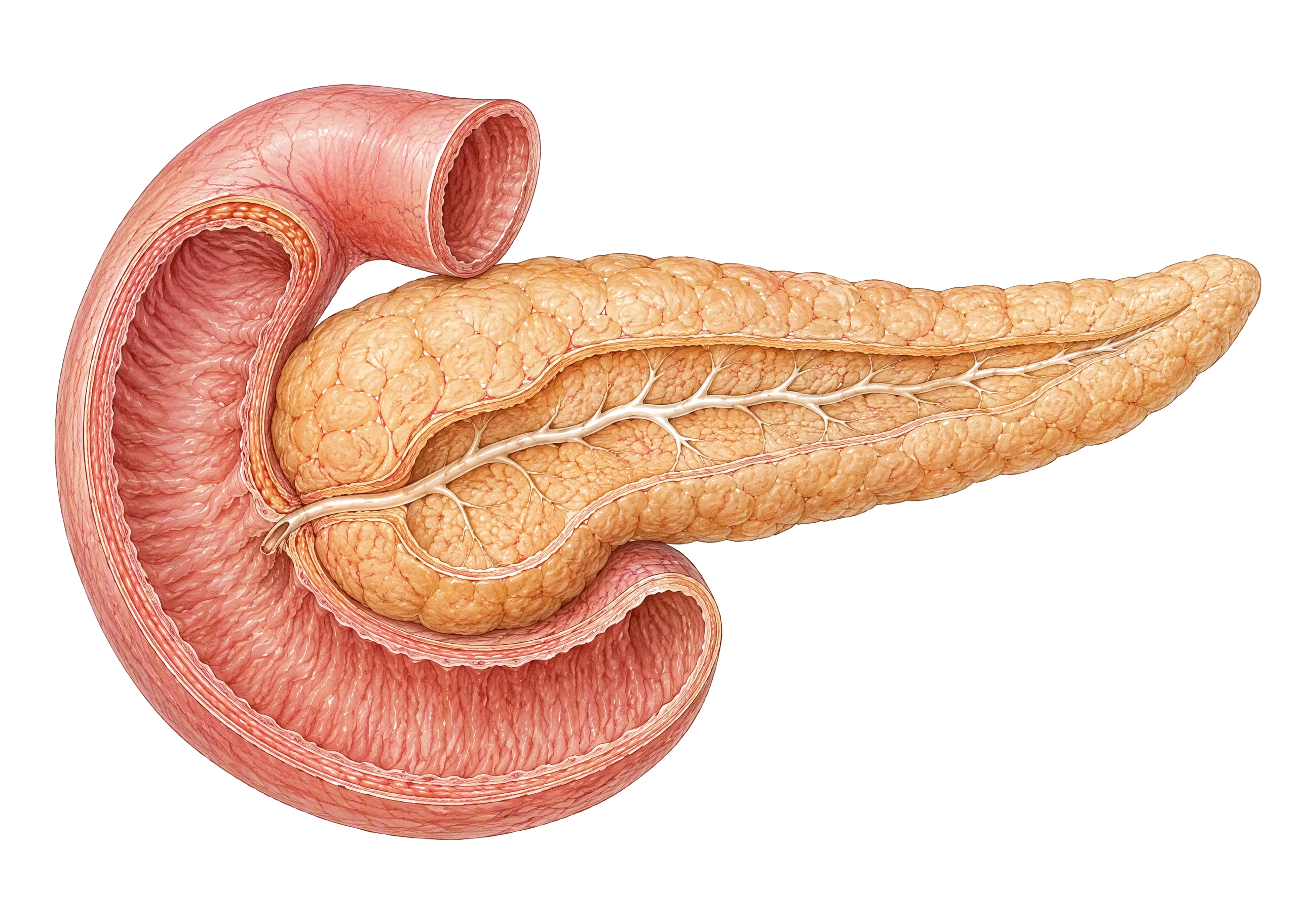
Pancreas
Bring in the enzyme team
The pancreas sends bicarbonate into the duodenum to help neutralize acidic chyme
Bicarbonate: Helps neutralize acidic chyme
in the duodenum
It also supplies amylase for starch, proteases for proteins, and lipase for fats
Digestive enzymes: Amylase acts on starch
Proteases act on proteins
Lipase acts on fats
Small intestine
Small intestine, big job
The small intestine is the main site of chemical digestion and nutrient absorption. Absorption moves nutrients across the lining
| Item | Properties |
|---|---|
| Chemical digestion | Make smaller molecules. |
| Absorption | Cross the intestinal lining. |
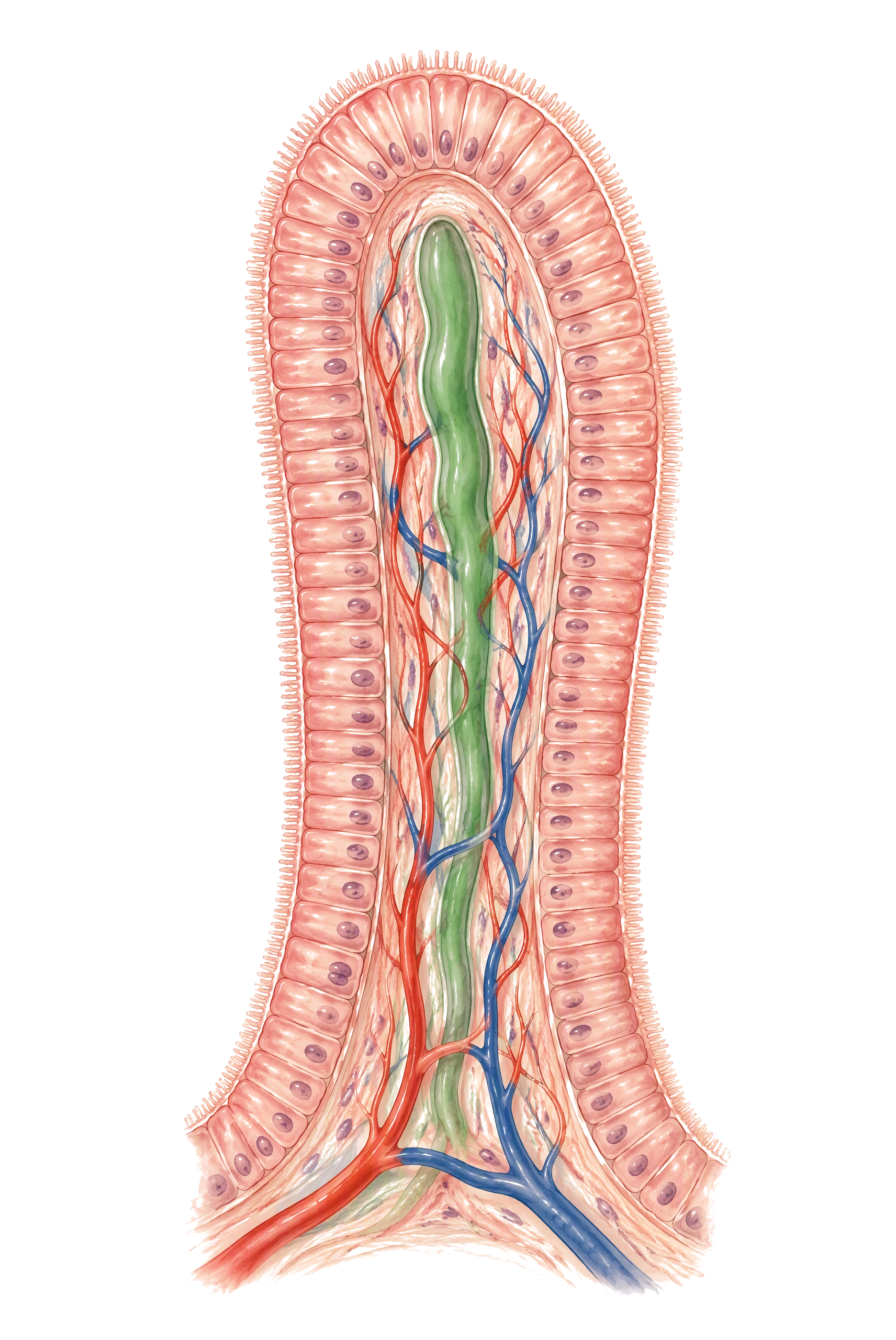
Villi increase the absorption area. Their lining cells have tiny projections called microvilli
More surface: Villi + cell microvilli
increase absorption area
Monosaccharides, or simple sugars, and amino acids enter blood capillaries
Into blood: Monosaccharides + amino acids
→ blood capillaries
Most long-chain fats are digested first. Intestinal cells rebuild the fats and package them into chylomicrons, which enter lymphatic lacteals
Into lymph: Most long-chain fats: digested
→ intestinal cells
→ chylomicrons → lacteals
Large intestine
Recover what remains
The colon recovers remaining water and electrolytes and helps form stool
Large intestine
Large intestine anatomical specimen, not to scale
The small intestine absorbs most water. The colon recovers more of what remains
Recover water: Small intestine absorbs most
Colon recovers what remains
The rectum stores stool; the anus is the exit
Store → exit: Rectum → storage
Anus → exit
Check your thinking
Bile or lipase?
The whole journey
From a bite to fuel
Food is digested and moved along. Helper organs supply secretions; the intestine absorbs nutrients
| Item | Properties |
|---|---|
| Break down | Digest food. Helper organs add secretions. |
| Move along | Muscles move food through the tract. |
| Take in | Intestine absorbs nutrients. |