Heart Pumps and Blood Circulation
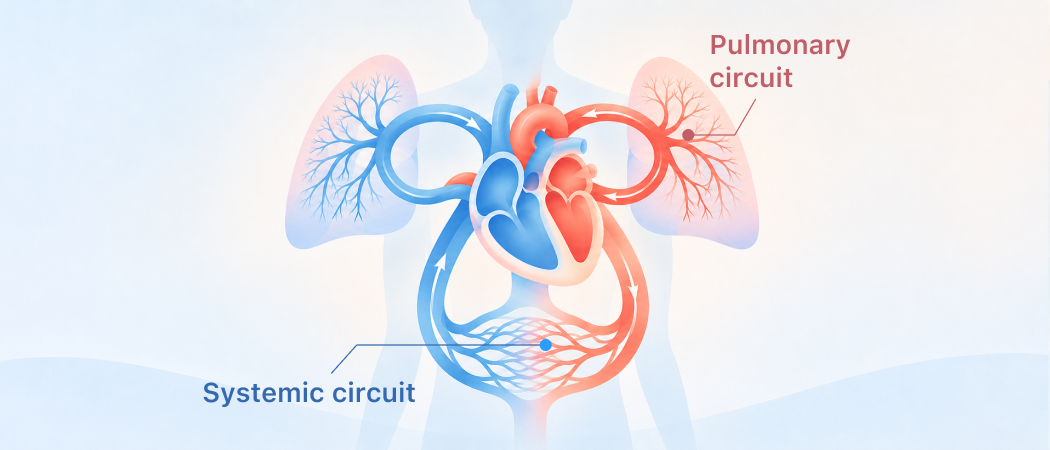
Follow one connected blood loop: the right heart pumps to the lungs, and the left heart pumps to the body. Trace the chambers and vessels without confusing model colours with real blood.
Meet the two pumps
The heart has four chambers
Four chambers
The upper chambers, called atria, receive blood. The lower chambers, called ventricles, pump it out
| Structure | Property |
|---|---|
| Atria | Receive blood |
| Ventricles | Pump blood out |
One connected loop

The two sides of the heart form one connected blood loop
Heart and lungs
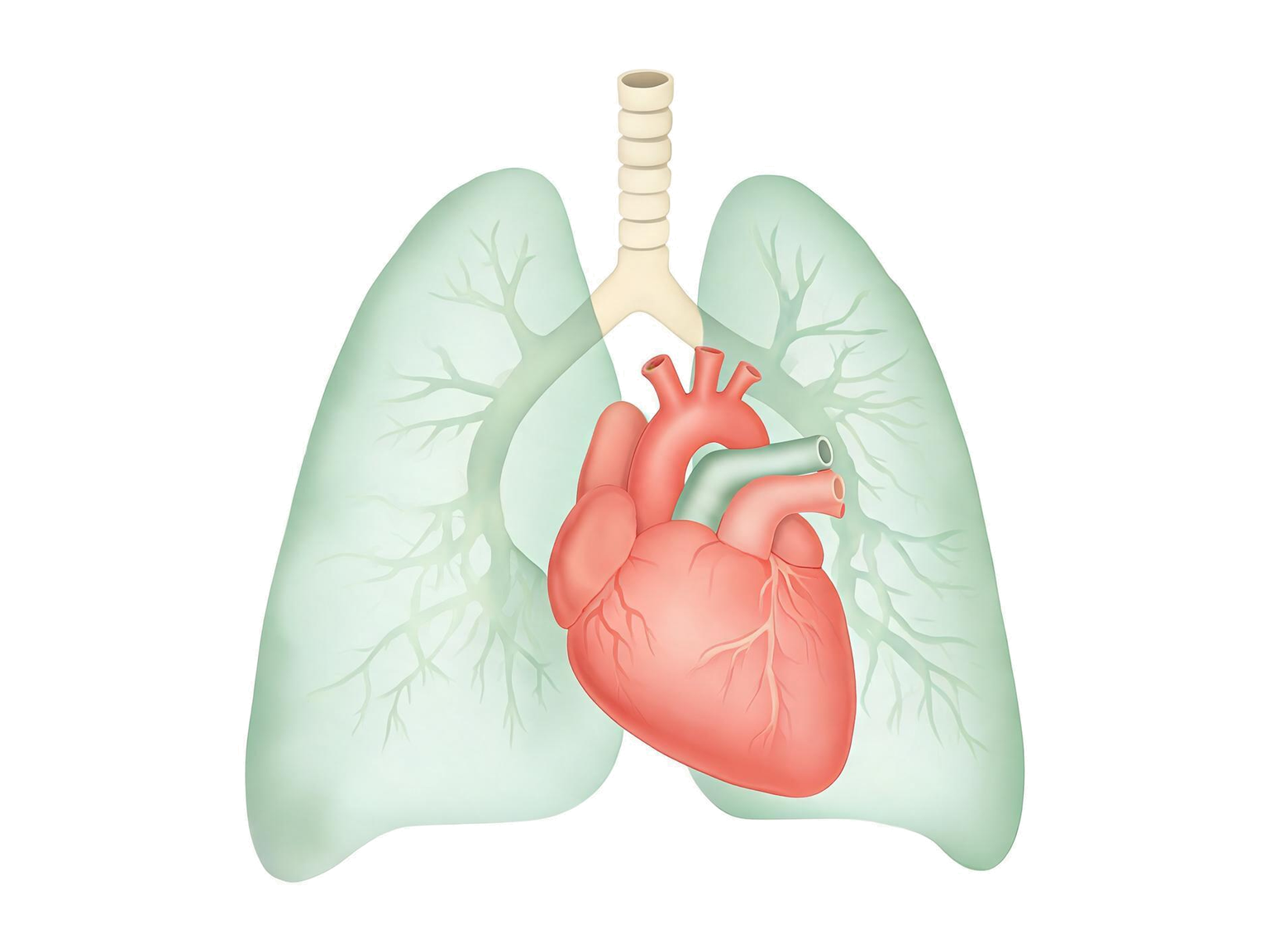
The right side contains the right atrium and right ventricle
Right heart
The right ventricle pumps blood to the lungs. Blue marks less oxygen in this model; real blood is red. Right ventricle → lungs Blue = less oxygen; real blood is red
The left side contains the left atrium and left ventricle
Left heart
The left ventricle pumps blood to the body. Both pumps move blood around one loop. Left ventricle → body Both pumps share one loop
Follow one blood loop
Body → right heart → lungs → left heart → body
1. Return. Blood returns from the body through veins to the right atrium

2. To lungs. The right ventricle pumps it through the pulmonary arteries to the lungs

3. Oxygen. Oxygen crosses from the lungs' air sacs into the blood

4. To heart. The pulmonary veins bring this blood back to the left atrium

5. To body. The left ventricle pumps it through the aorta to the body. Over time, both pumps move about the same volume

Quick check
Takeaway
The right heart pumps to the lungs. The left heart pumps to the body