The Calvin Cycle (Light-Independent Reactions)
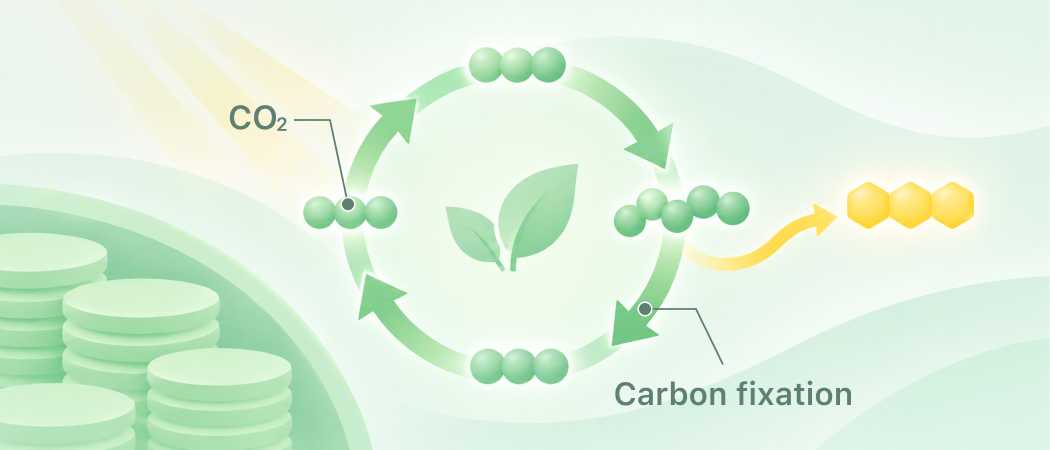
The Calvin cycle fixes carbon, uses energy to reduce it, and regenerates the carbon acceptor. Track the small exported share alongside the material recycled to keep the cycle operating.
Add one new carbon
Rubisco
Rubisco
RCSB PDB 1RCX biological assembly 1. Smoothed C-alpha backbone with bound RuBP: eight large green and eight small gold subunits. Non-activated state; not a catalytic-motion model
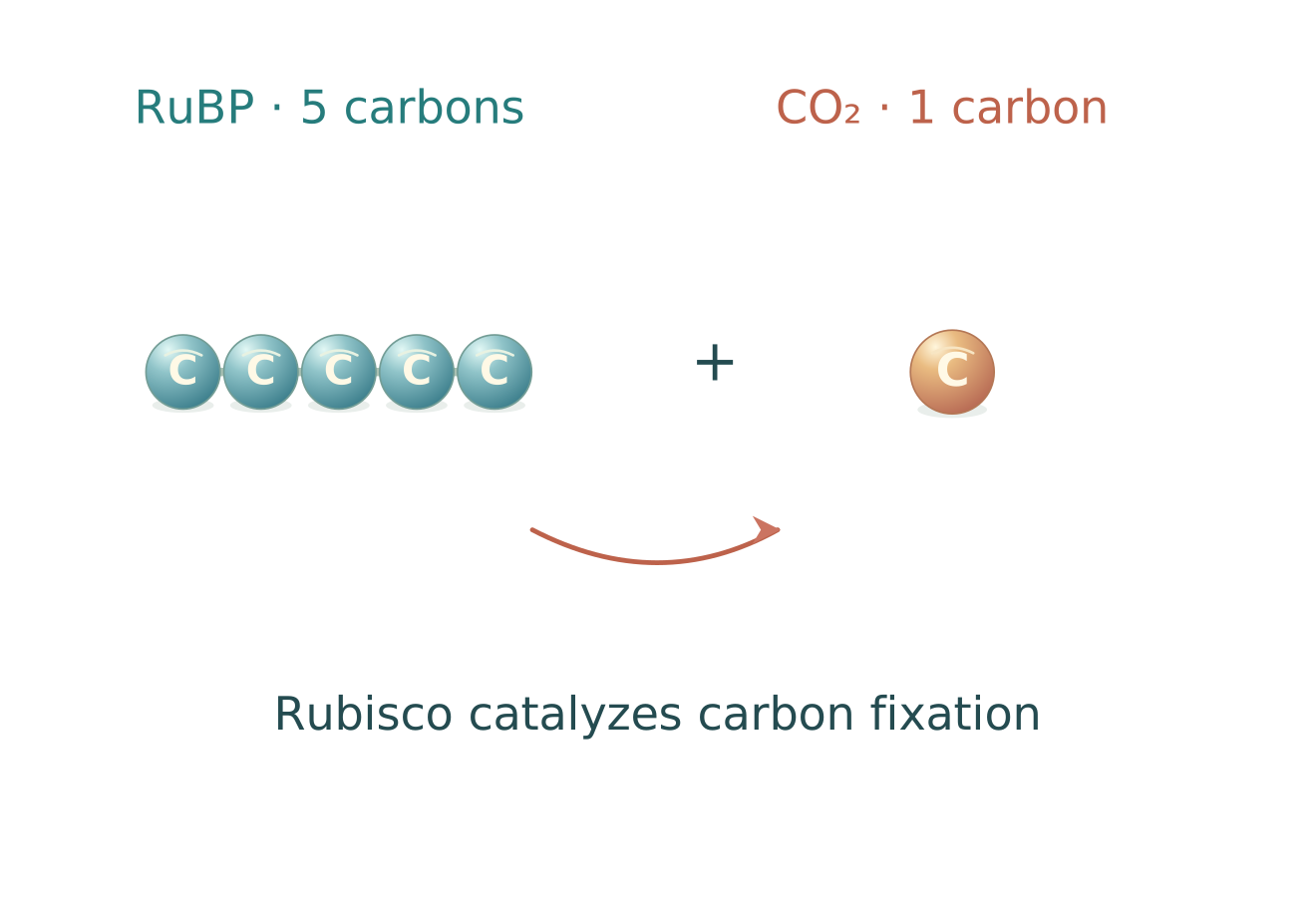
Carbon building begins with a catch. Rubisco in the chloroplast stroma adds carbon dioxide to RuBP, a five-carbon acceptor. The acceptor already contains carbon; only the carbon dioxide brings a new atom into this step
RuBP: Five-carbon acceptor
CO₂: One incoming carbon
Track the highlighted atom
1. Five plus one: Count five carbons in the acceptor and one arriving carbon. Rubisco brings them into a six-carbon intermediate. The highlighted atom marks the new carbon
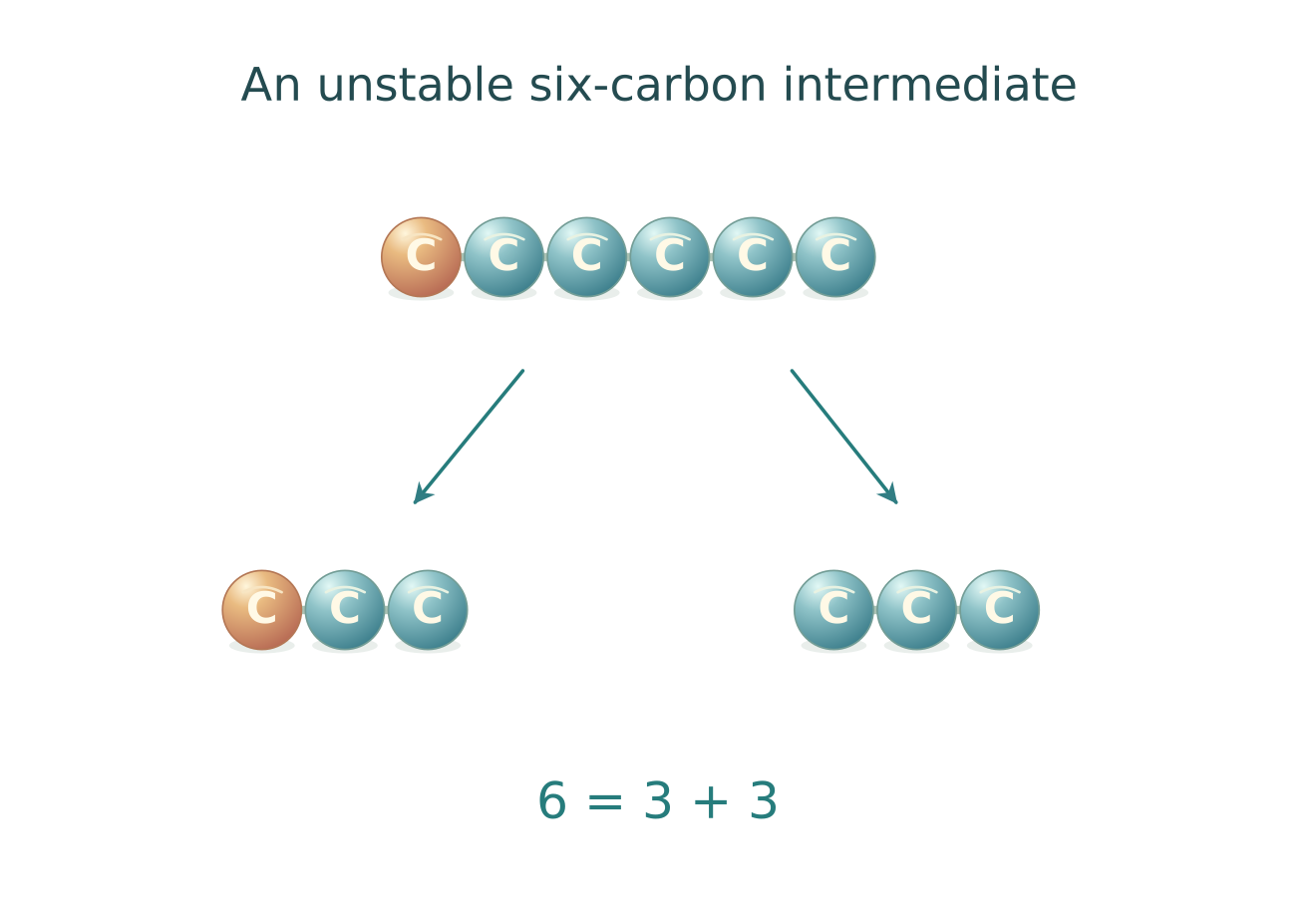
2. Two groups of three: That intermediate is unstable and splits into two three-carbon molecules. Six becomes three plus three. No carbon has disappeared, and the new atom remains among the products
Fix and reduce
Scale up to three carbon dioxide molecules
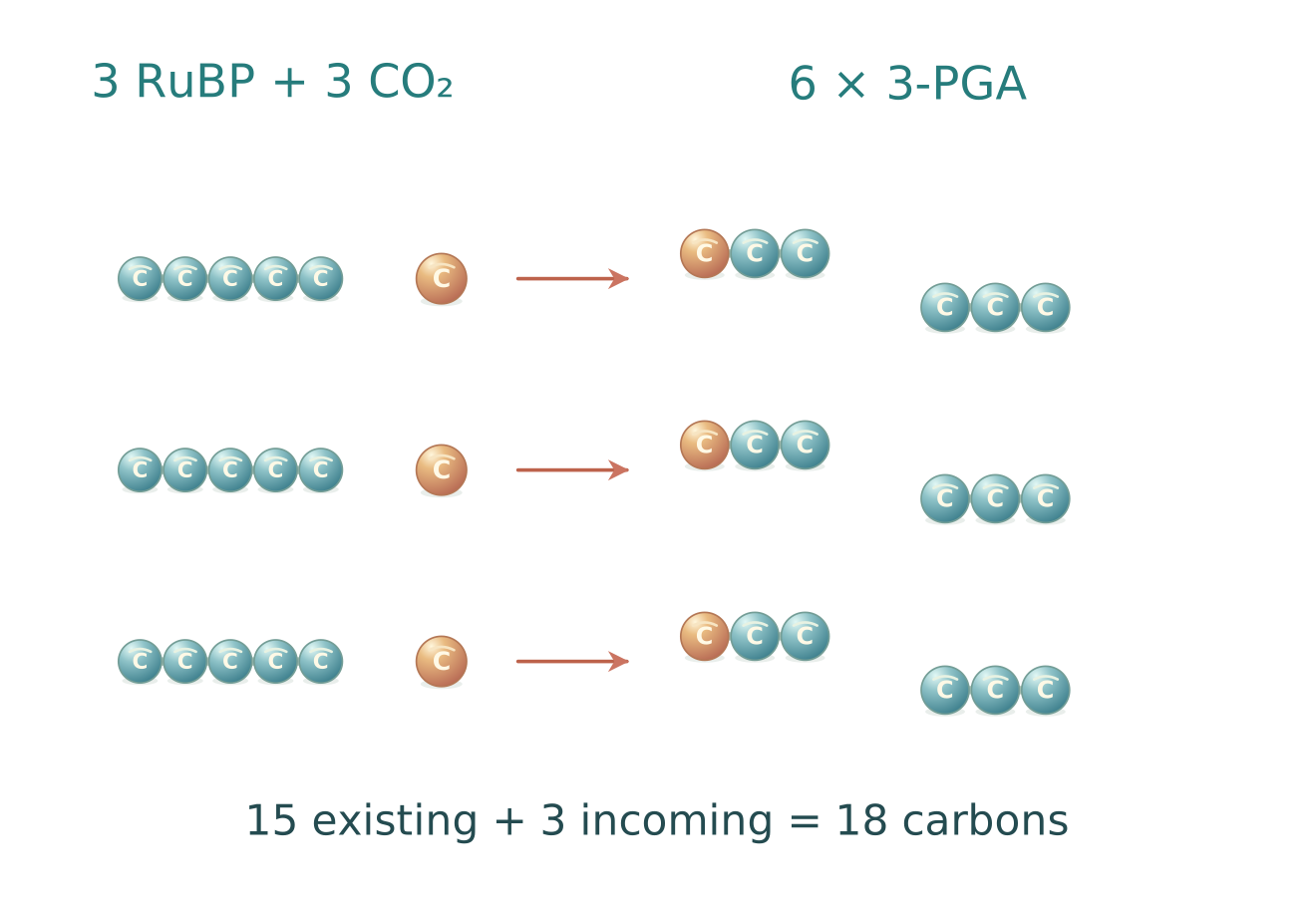
1. Fix: Three carbon dioxide molecules join three RuBP acceptors. The intermediates split into six molecules of 3-PGA. Count the carbons: fifteen already in the acceptors, plus three new ones, gives eighteen
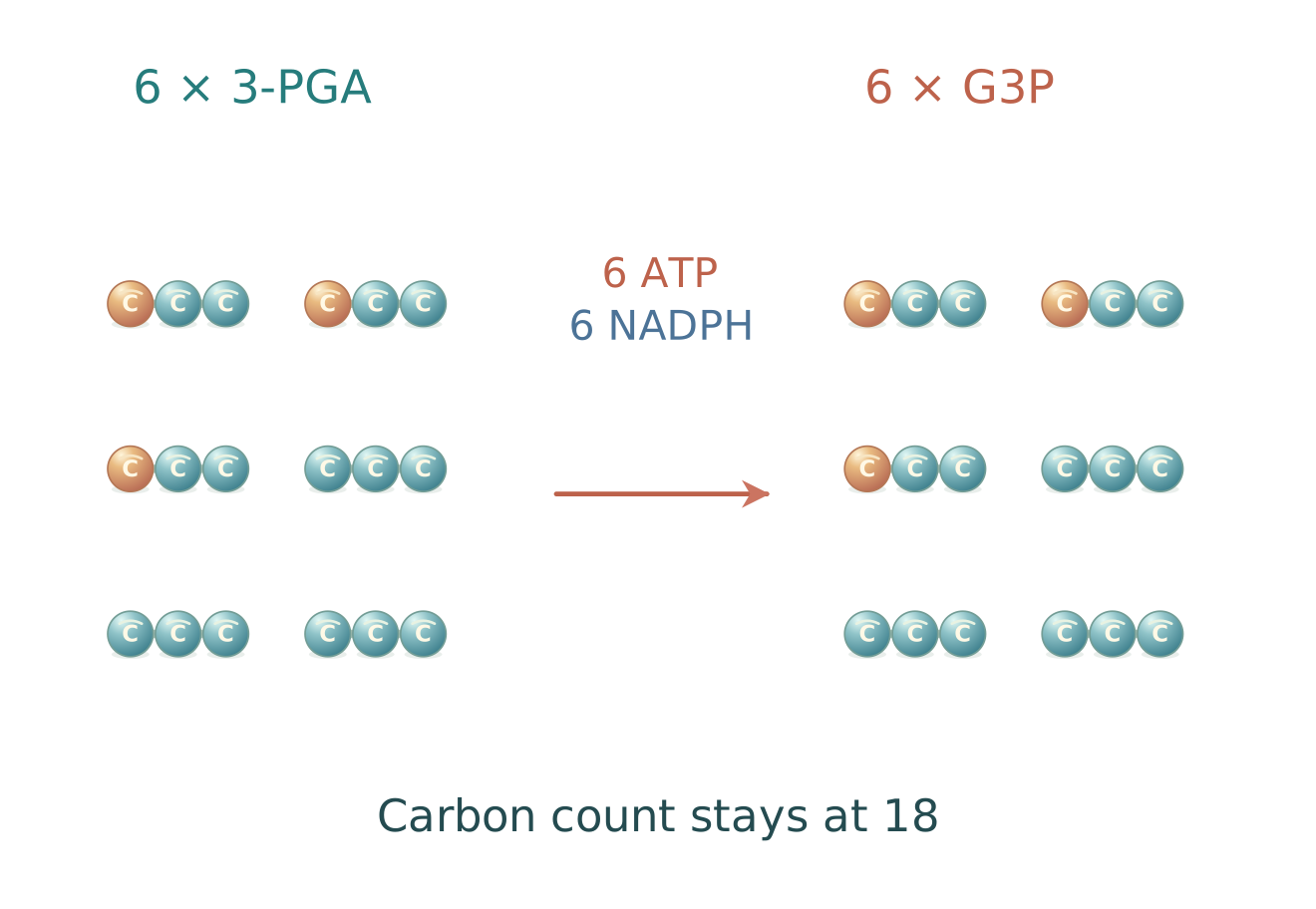
2. Reduce: Six ATP and six NADPH support conversion into six G3P molecules. All eighteen carbons remain, but their chemical form changes. Reduction prepares a product that can contribute to sugar synthesis
Energy and electrons have different jobs
ATP supplies energy; NADPH supplies reducing electrons. These resources come from the light reactions. The cycle does not directly absorb light, but it depends on the chemistry that light powers
| Item | Properties |
|---|---|
| ATP | Supports energy-requiring steps |
| NADPH | Supplies reducing electrons |
Export a little, recycle the rest
Keep the cycle running
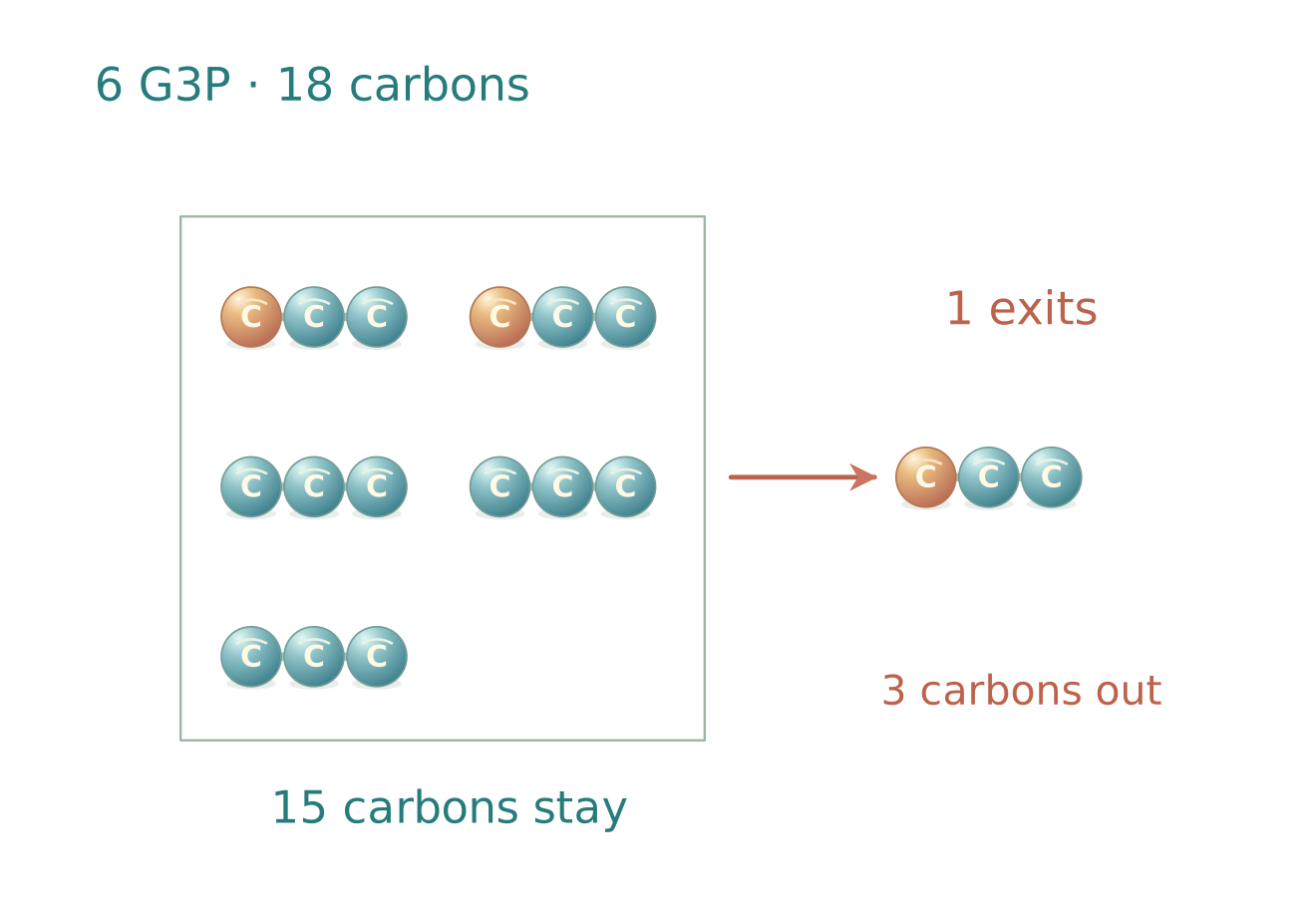
1. Export: One G3P leaves as the net three-carbon product. Five G3P stay behind, holding fifteen carbons for rebuilding the acceptors
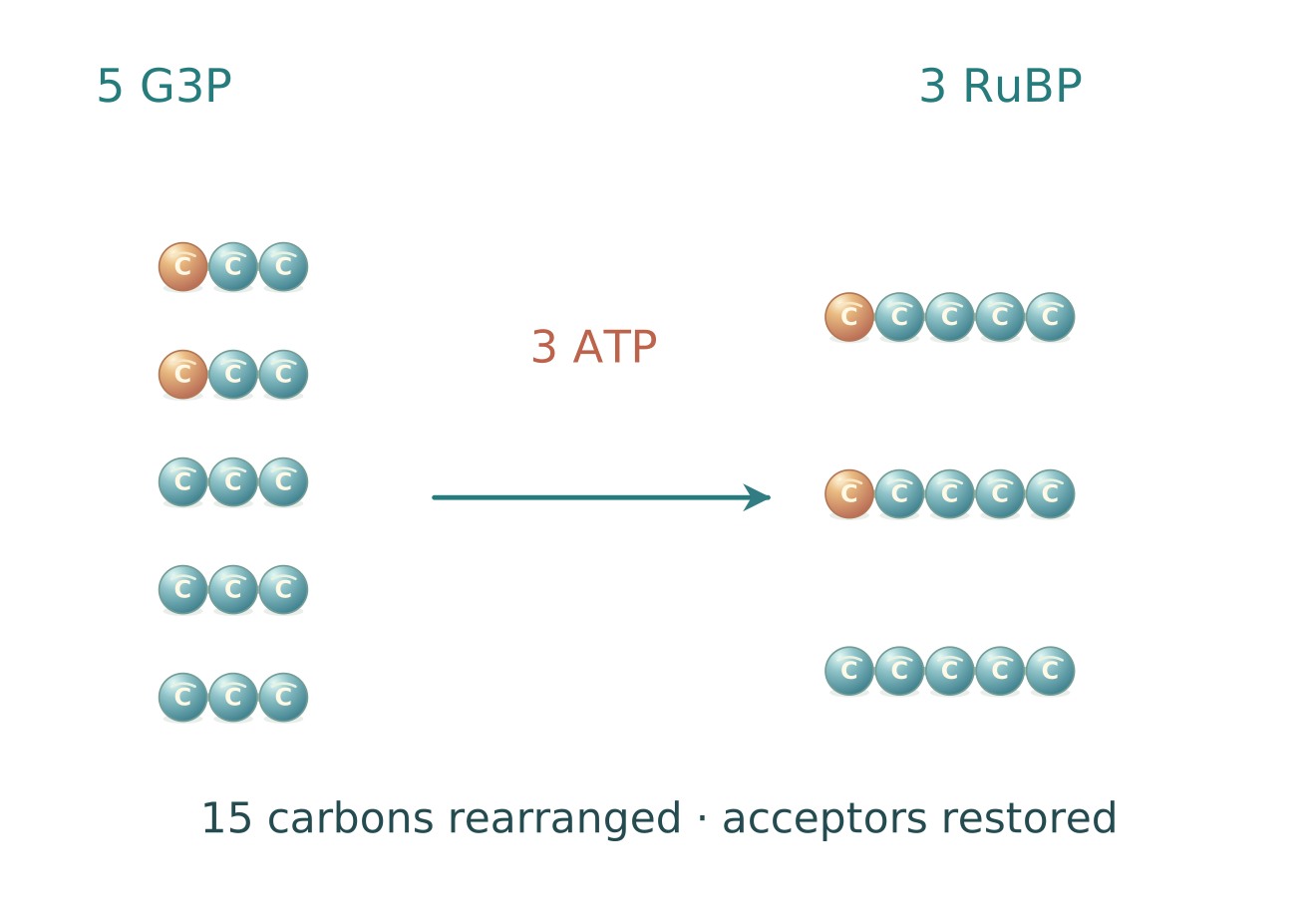
2. Regenerate: Three more ATP support rearranging those fifteen carbons into three RuBP molecules. The cycle can now catch three more carbon dioxide molecules
Account for all eighteen carbons
Exporting every G3P would empty the cycle of its acceptors. Recycling fifteen carbons prevents that. Per net G3P, the full cycle uses nine ATP and six NADPH