The Eukaryotic Nucleus and Transcription
DNA stays in the nucleus while a working RNA copy can carry information elsewhere. Follow transcription, complementary base pairing and strand direction to work out a new RNA sequence.
Keep the template, send a copy
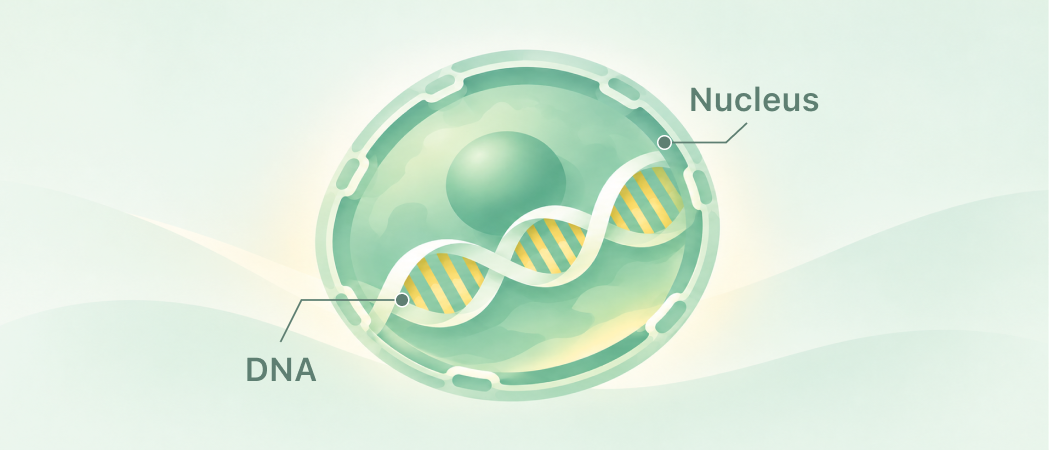
Nucleus
Nucleus
Structural view of a cell nucleus that stores genetic information
A cell needs instructions outside the nucleus, but its chromosomes stay inside. The solution is to make a working copy. DNA wrapped with proteins forms chromatin. A gene is a selected region of that DNA, and transcription copies its information into RNA without sending the chromosome away
Information changes location
Think of the gene as a reusable recipe. The cell copies the needed section, usually processes the messenger RNA, and exports that message through a nuclear pore. Another copy can be made later from the same unchanged DNA sequence
Selected gene copied · DNA retained → Prepared mRNA exported through a nuclear pore
Copy a short stretch
RNA polymerase
RNA polymerase
RNA polymerase complex · molecular detail
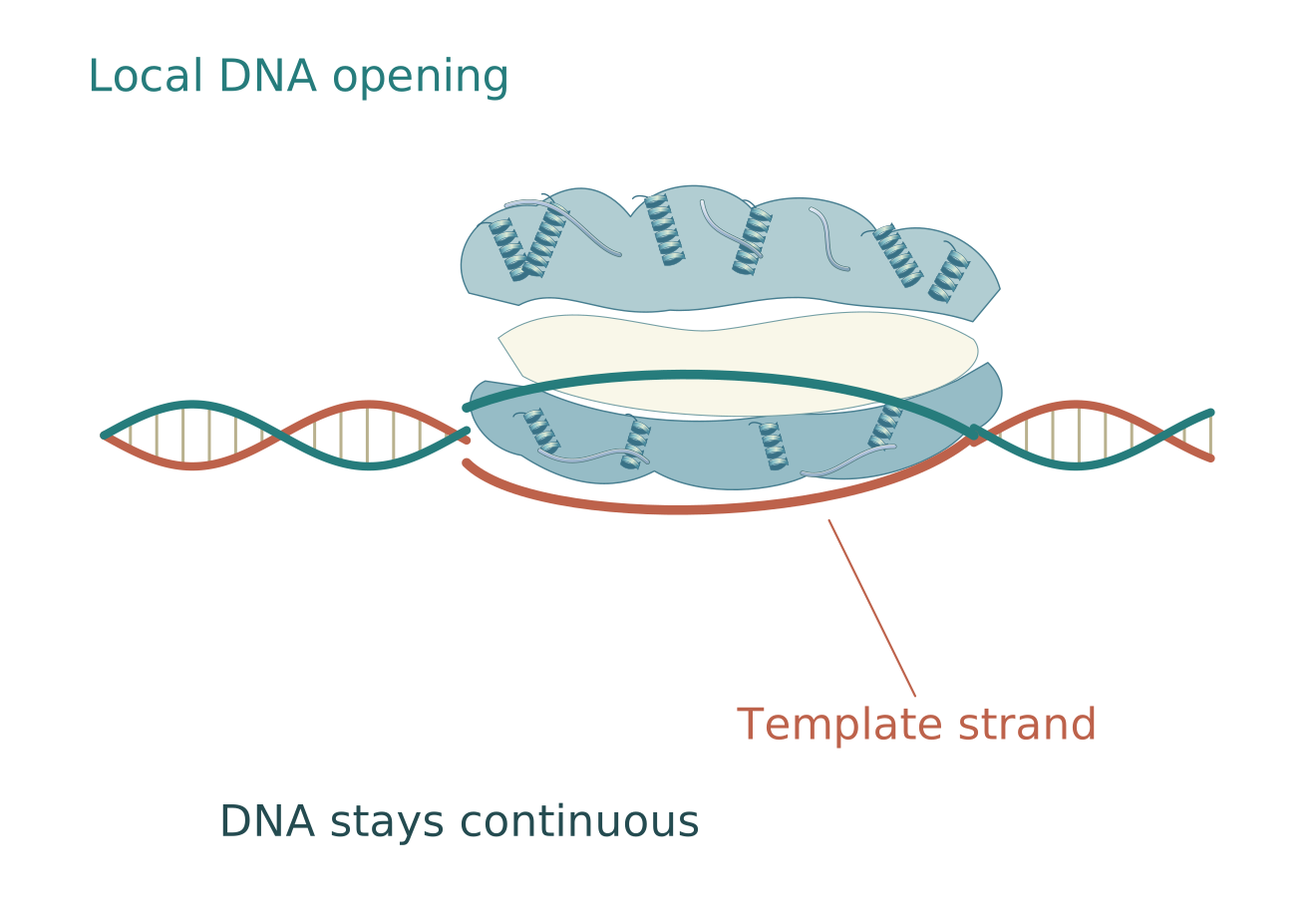
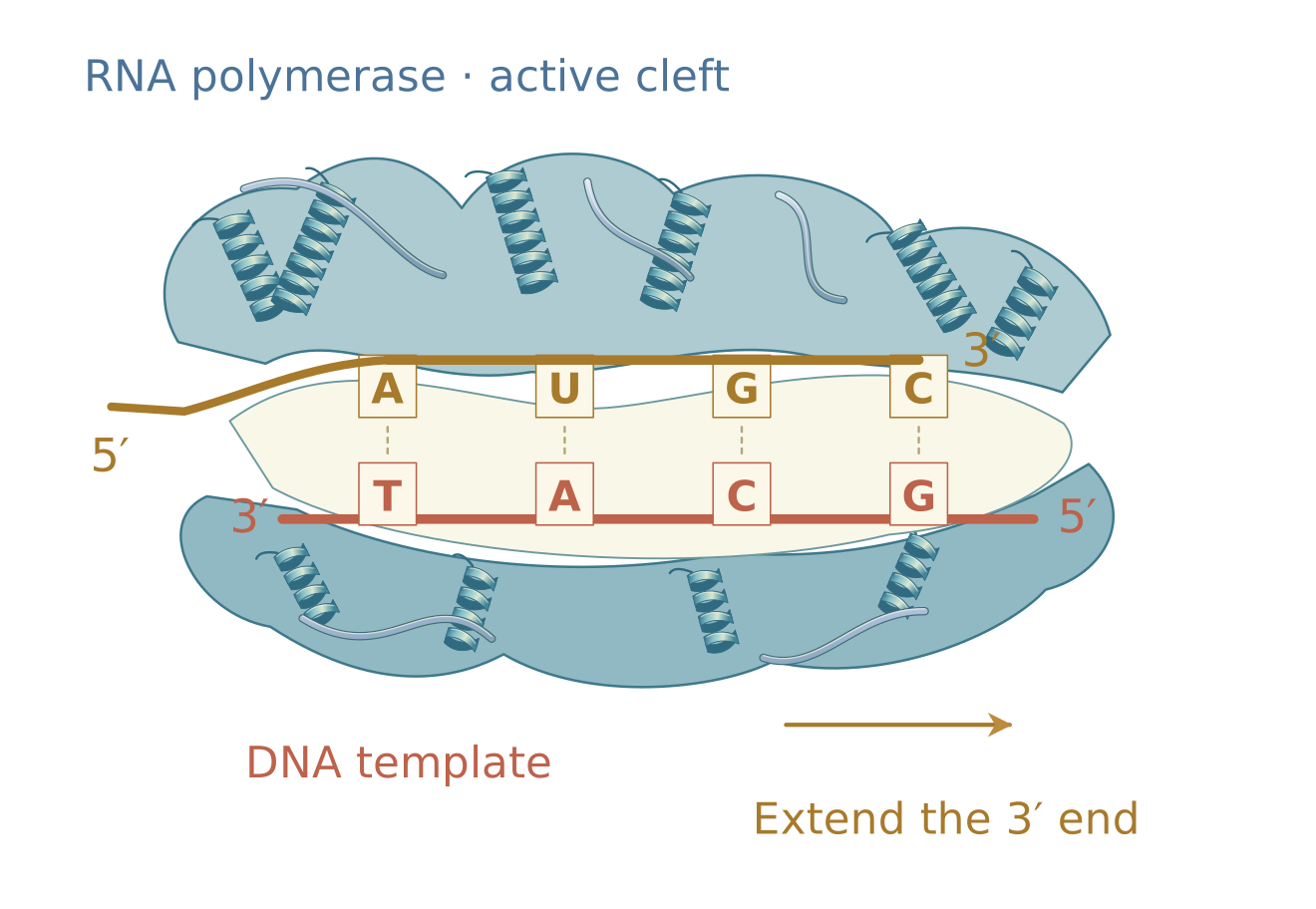
RNA polymerase brings the template and RNA building blocks together. Only a short DNA region opens at once
Expose a template
Pair RNA building blocks
Join the growing strand
Template-directed transcription
1. Open: Transcription machinery positions polymerase at the gene's start. A local opening exposes one DNA strand as the template
2. Pair: RNA bases pair with that template. DNA T takes RNA A; DNA A takes RNA U. Uracil replaces thymine in RNA
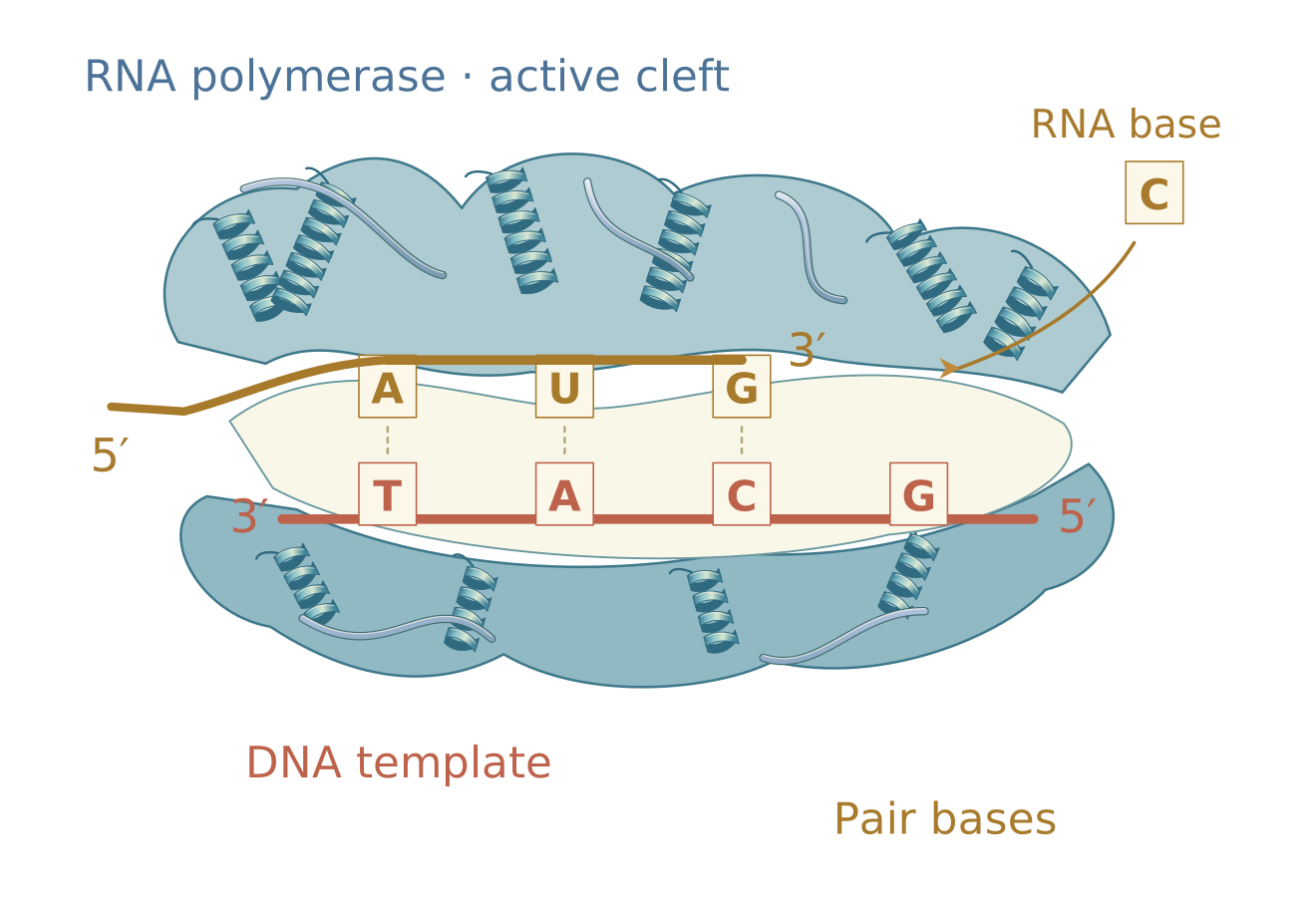
3. Extend: Polymerase adds nucleotides to the RNA's three-prime end, so the message grows five prime to three prime
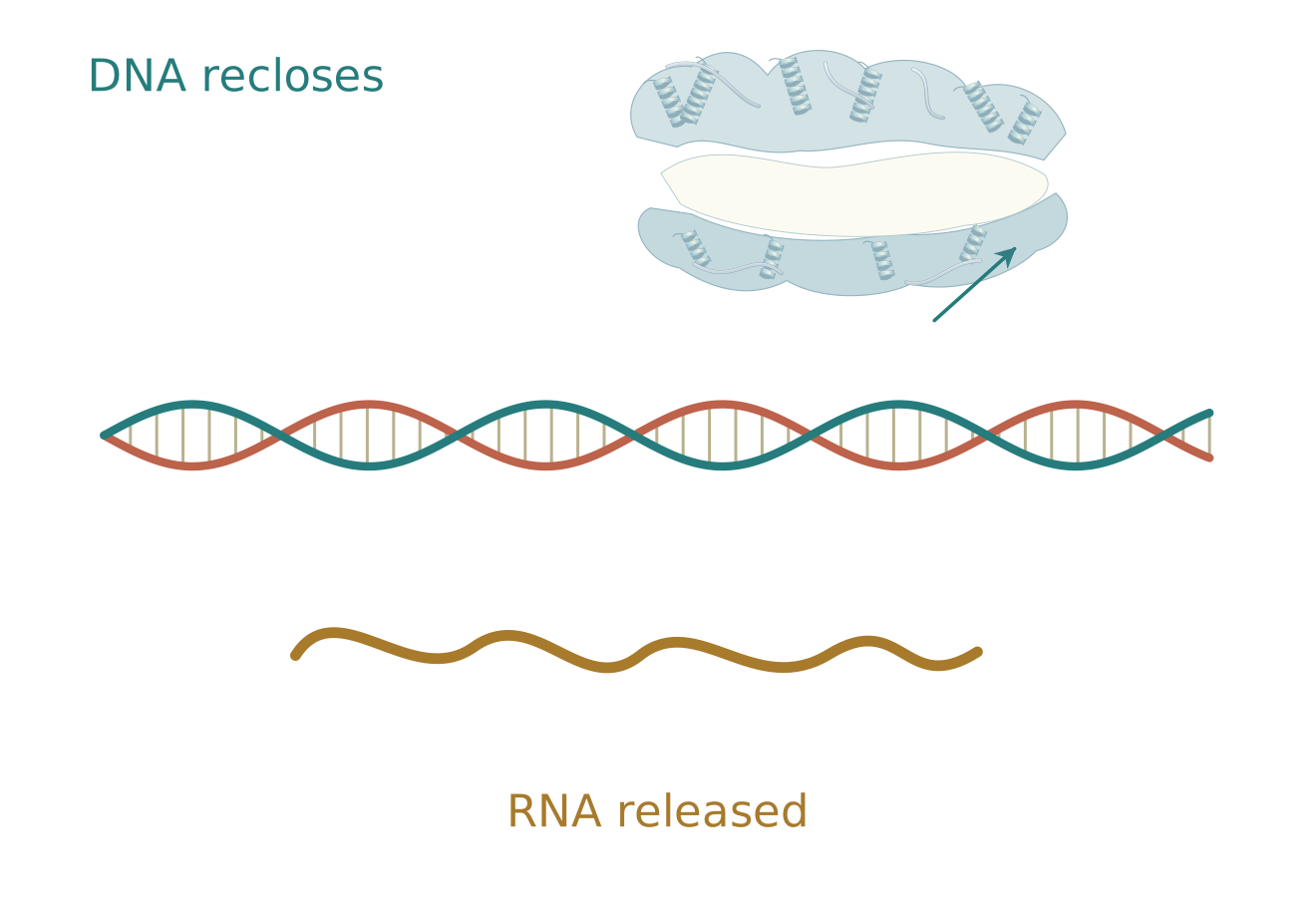
4. Release: The transcript is released, and polymerase eventually disengages. Behind the moving enzyme, the two DNA strands close together again
Work out the new sequence
Pair and extend
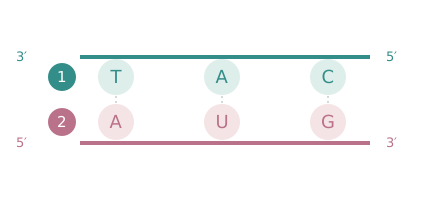
1. Pair bases: Read this template three prime to five prime: T, A, C. Match each position. The new RNA is A, U, G, written five prime to three prime
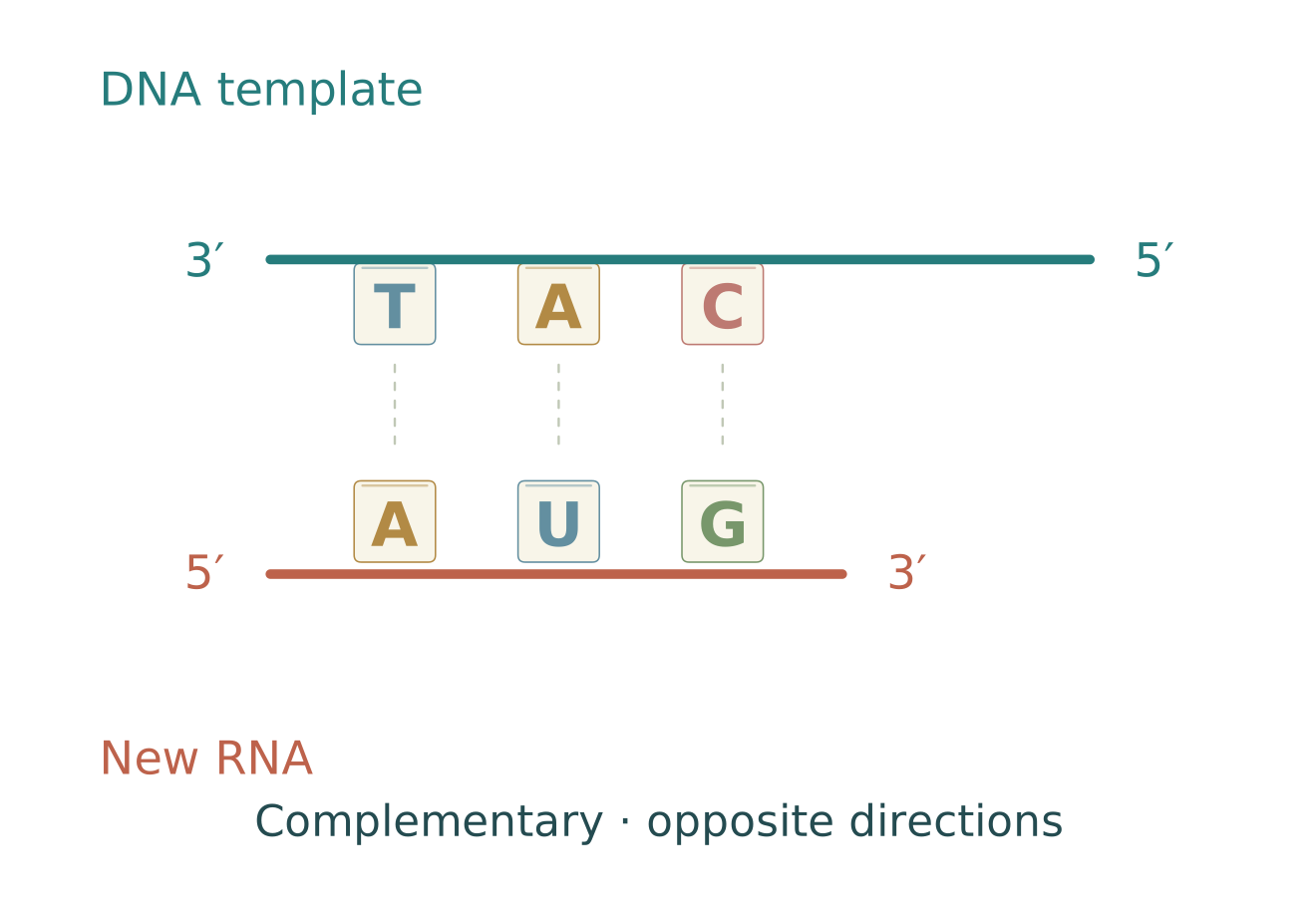
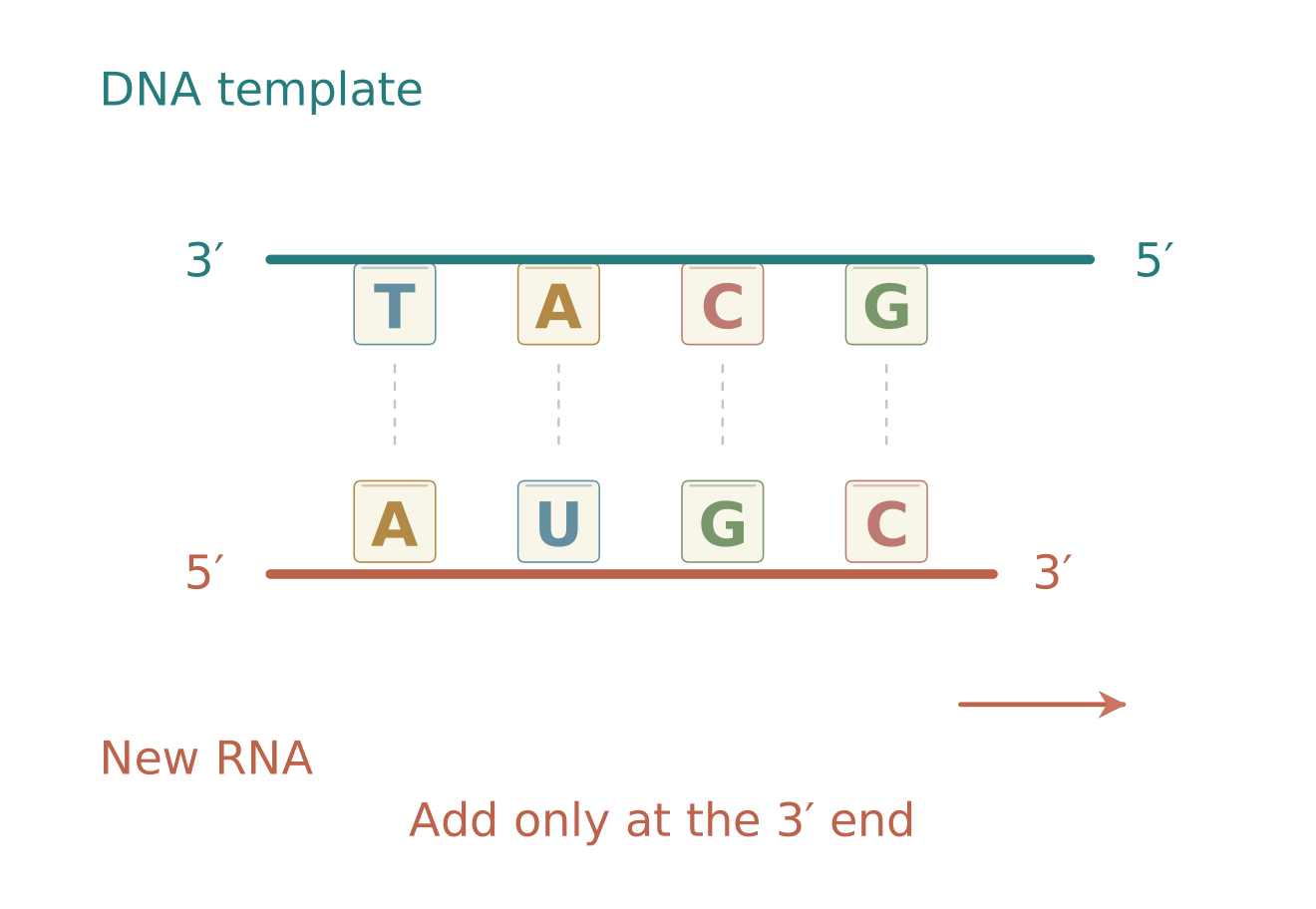
2. One growing end: The next nucleotide joins the RNA's three-prime end. Its five-prime end stays behind. Opposite strand directions are part of the mechanism, not just labels added to the drawing
Keep the directions straight
Use two separate questions: which way is the template read, and which way is the new strand built? Polymerase reads one direction while making the complementary strand in the other
| Action | Direction |
|---|---|
| Read DNA template | 3′ → 5′ |
| Build new RNA | 5′ → 3′ |