Why Mitochondria Have Cristae
Cristae fold the mitochondrial inner membrane, increasing the area available for respiratory machinery. Relate membrane area to ATP-producing capacity while keeping capacity distinct from actual demand.
A working muscle needs ATP
Calf muscles
Calf muscles
Posterior calf muscles and Achilles tendon; organ-scale anatomy, not a view inside a muscle fiber
Rise onto your toes and your calf muscles contract. Their force comes from protein machinery inside long cells called muscle fibers. That machinery consumes ATP. Mitochondria within the fibers help replenish the supply, especially during sustained activity
Muscle → Muscle fibers: long cells
Muscle fibers: long cells → Mitochondria inside the cells
Move through the scales
The muscle view shows the organ. To explain its energy supply, we move inside a fiber, then inside a mitochondrion. ATP is continually used and replenished; the cell does not rely on one large permanent stock. At that smaller scale, the shape of a membrane becomes important
ATP is continually used and replenished
Supply must keep pace with cellular work
Fit more working membrane inside
Mitochondrion
Mitochondrion
Structural view of a mitochondrion with folded inner membranes
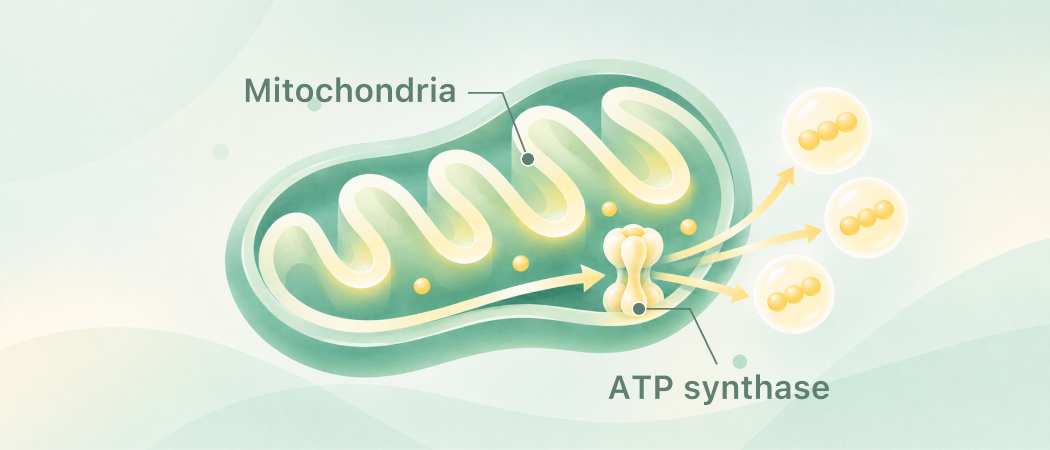
Two membranes surround the mitochondrion. The inner membrane encloses the matrix and folds into cristae. Spaces inside those folds connect to the intermembrane space
Outer membrane: Encloses the organelle
Inner membrane: Folds into cristae
Hold the outer size constant
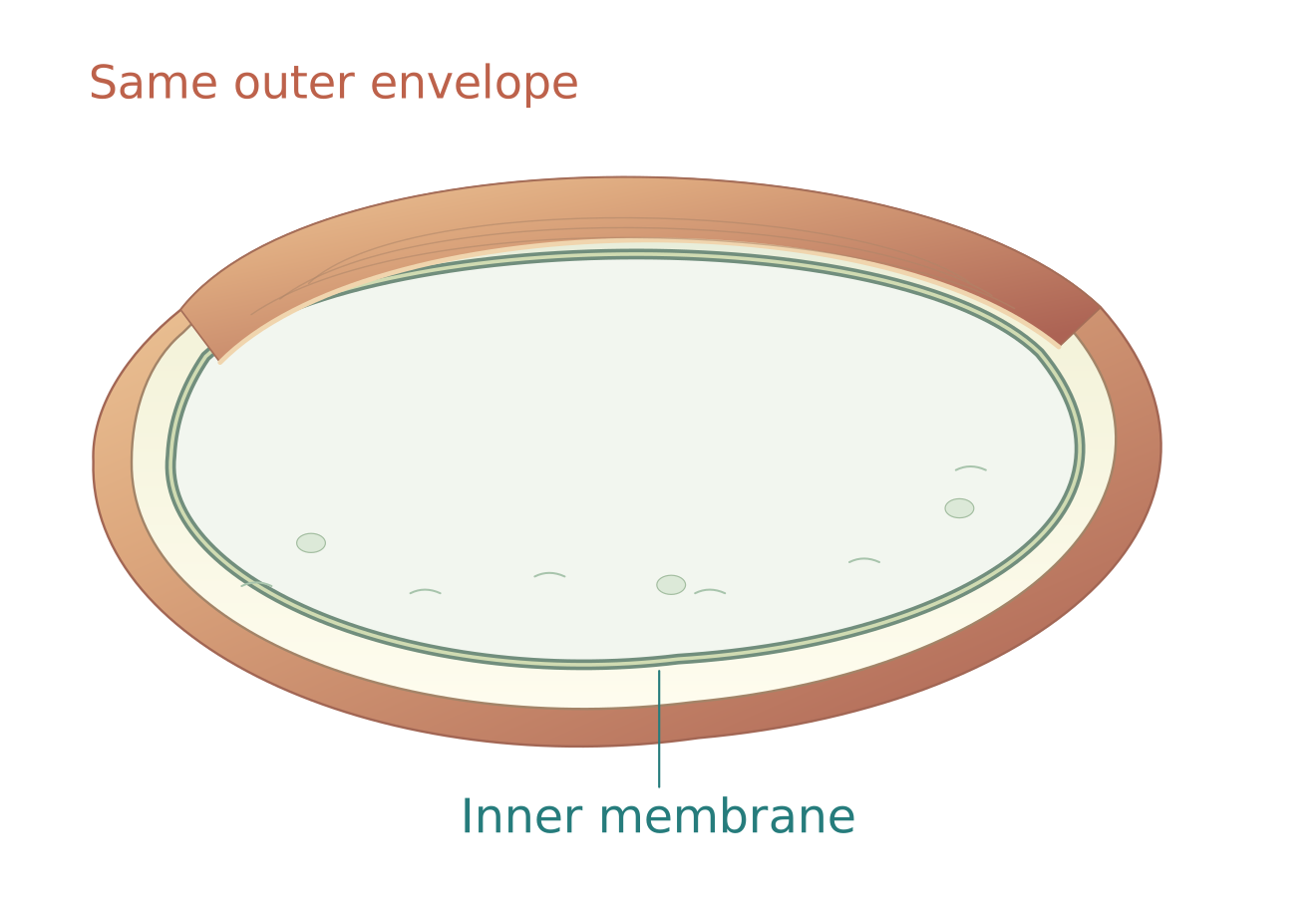
1. Smooth: Start with a nearly smooth inner membrane. It fits inside this envelope but offers relatively little working surface
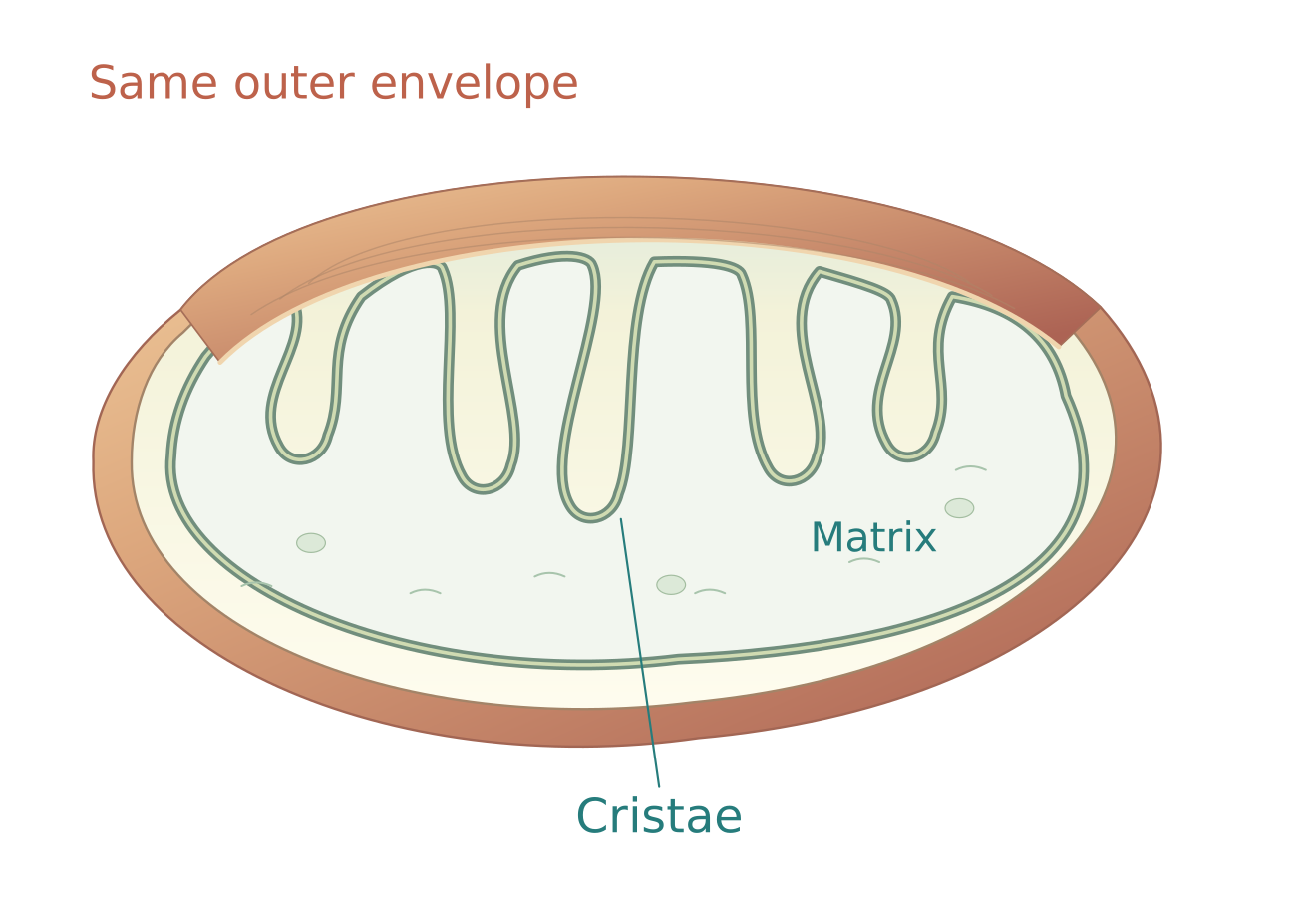
2. Folded: Add inward folds while keeping the same outer size. More inner-membrane surface now fits into the organelle
3. Working proteins: Respiratory complexes and ATP synthase occupy that surface. Extra area gives room for more machinery; folding itself does not provide the energy
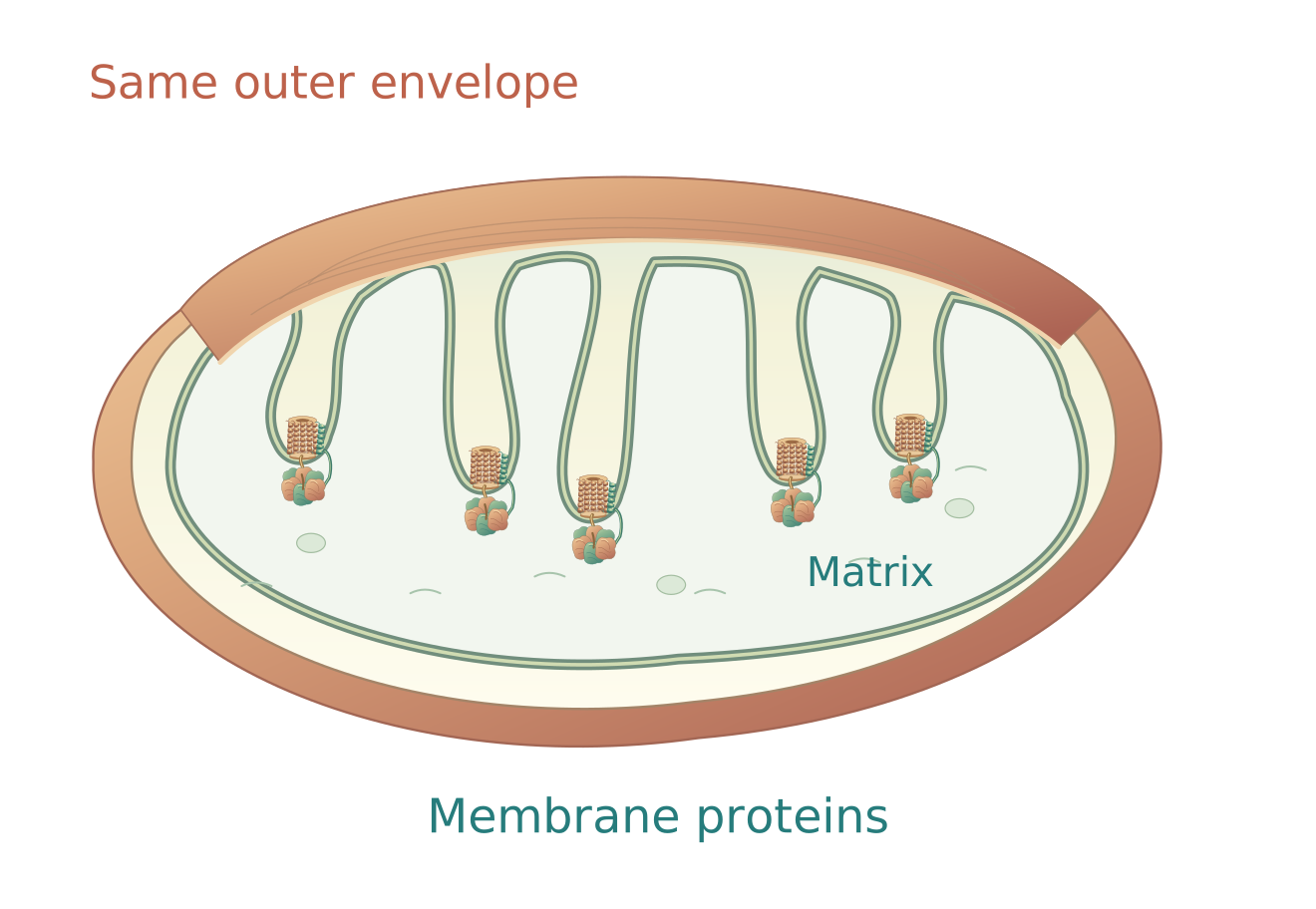
Area changes capacity
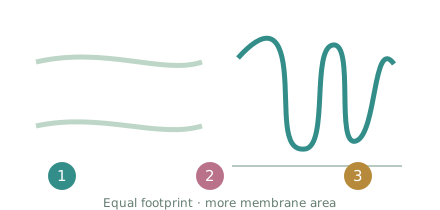
A folded strip makes the area visible
Fold a long strip like an accordion. The strip keeps its area but fits a smaller footprint. Conversely, within one fixed envelope, a folded boundary can hold more surface than a smooth one
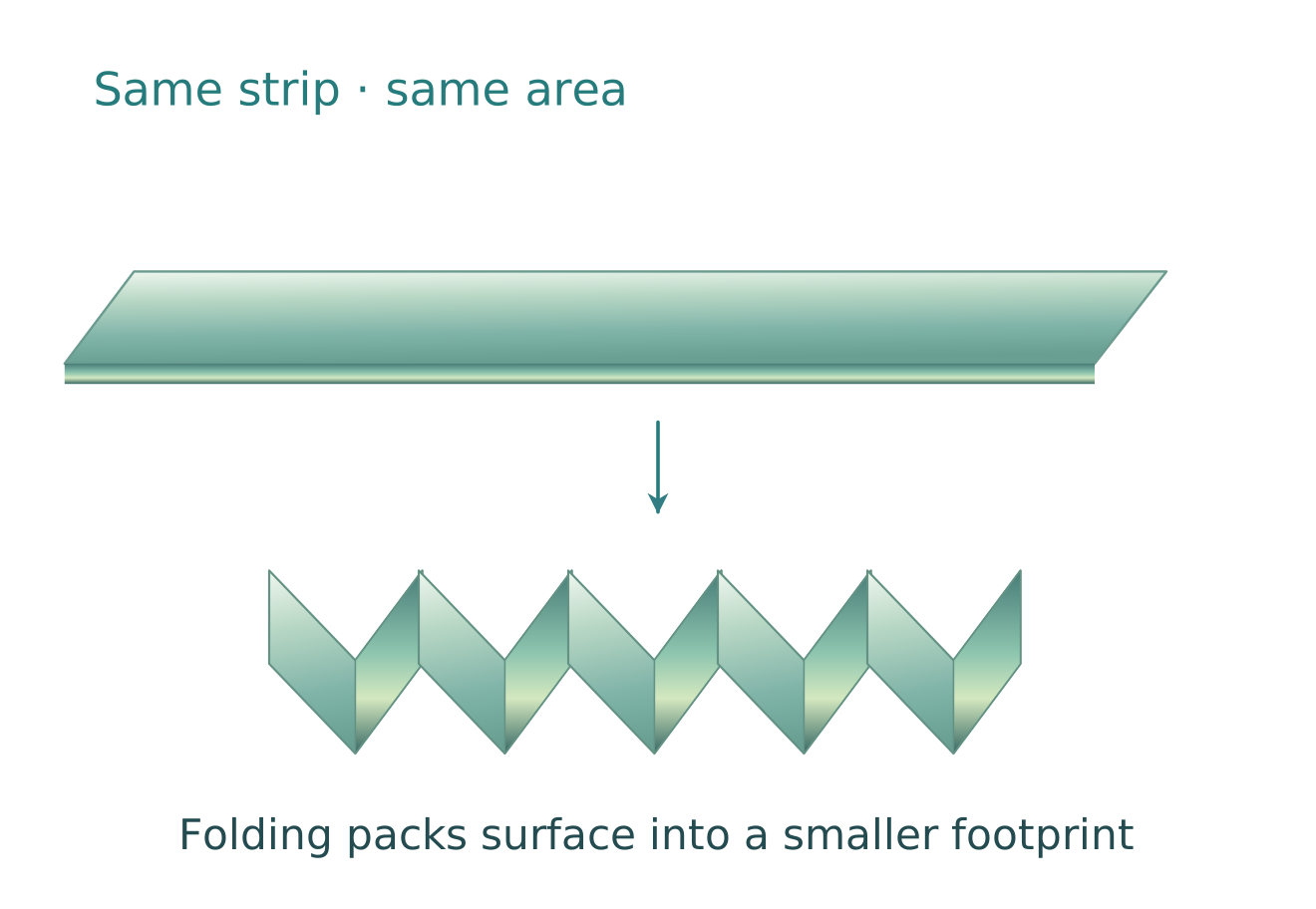
From structure to capacity
More area can accommodate more functioning proteins and raise potential capacity. It does not guarantee a faster ATP output at every moment
Actual output also needs supplies
Actual output also depends on electron donors, oxygen, ADP, and phosphate. A beautifully folded membrane cannot sustain ATP production without the necessary supplies
| Needed | Purpose |
|---|---|
| Electron donors + O₂ | Sustain respiratory electron transfer |
| ADP + Pᵢ | Provide ATP building blocks |