The Light Reactions
The light reactions connect absorbed light, electron transfer and a proton gradient. Follow electrons supplied by water and proton return through ATP synthase to explain how light energy is stored.
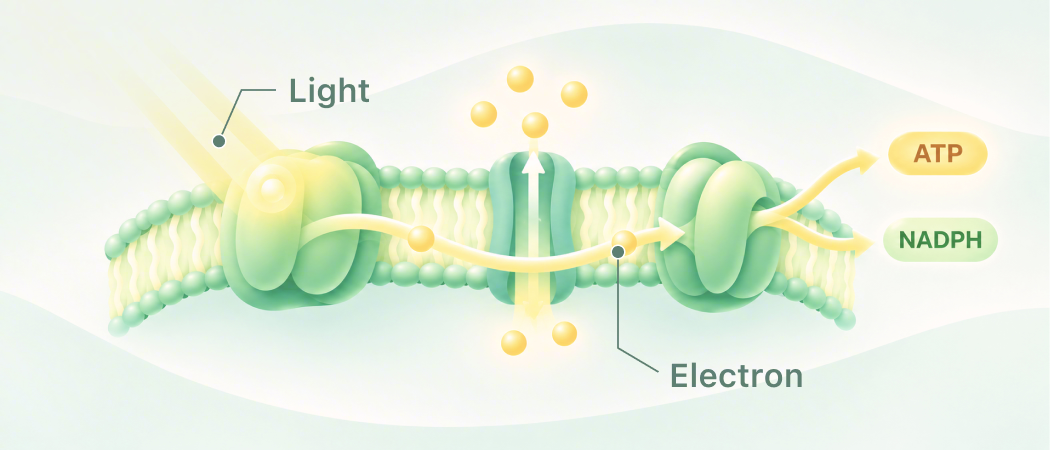
Turn light into stored energy
Thylakoid membrane
Thylakoid membrane
Schematic membrane assembly: green proteins span paired lipid leaflets; the golden ATP synthase head faces the stroma. Dimensions and protein shapes are illustrative
The thylakoid membrane holds photosystems, electron carriers, and ATP synthase. Think of it as a connected energy-converting surface: light excites electrons, electron transfer helps build a proton gradient, and proton return can power ATP formation
Two boosts along one route
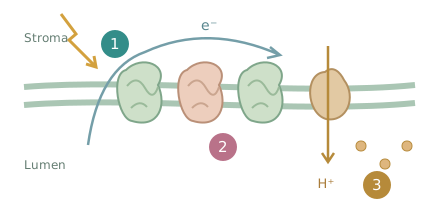
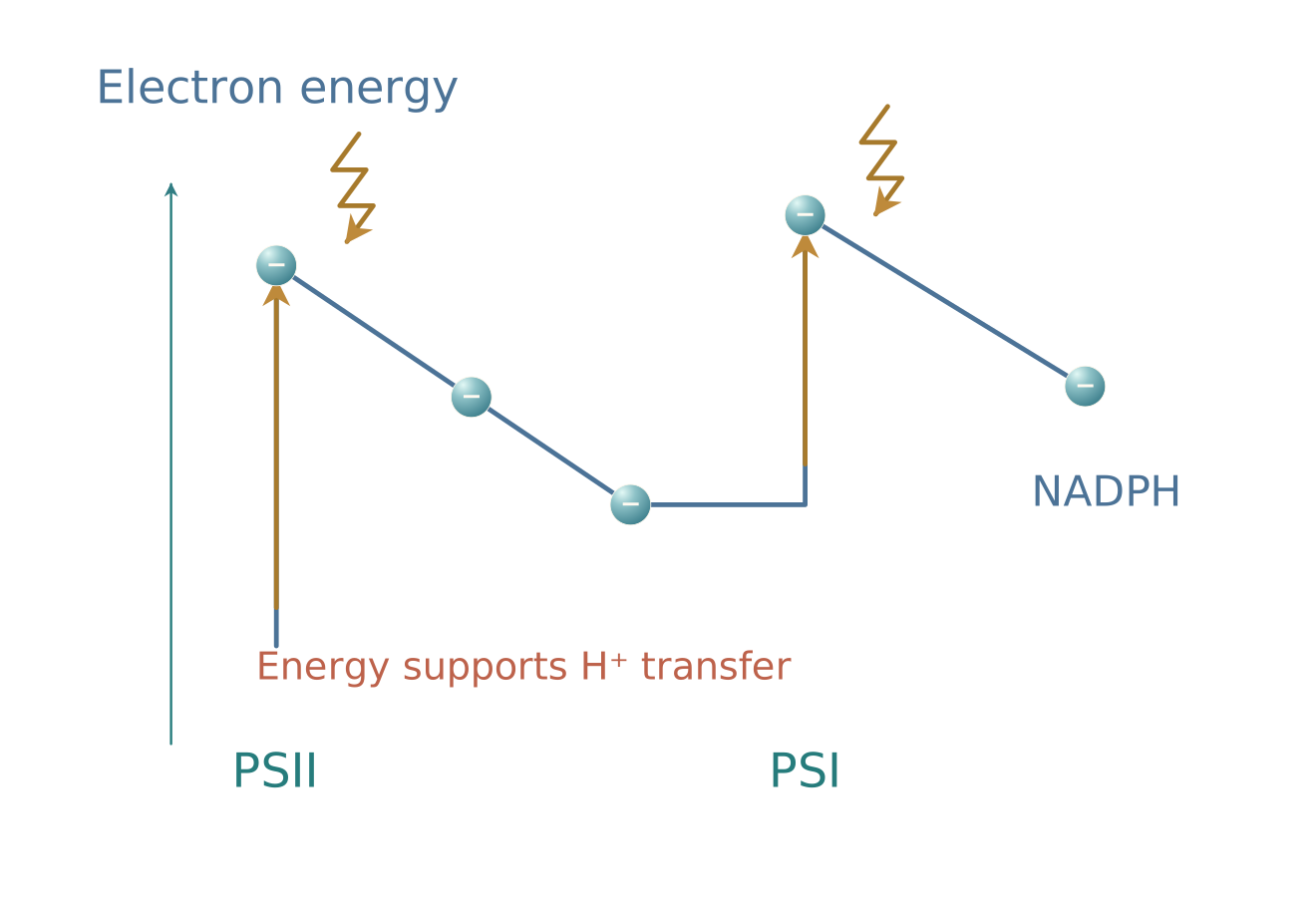
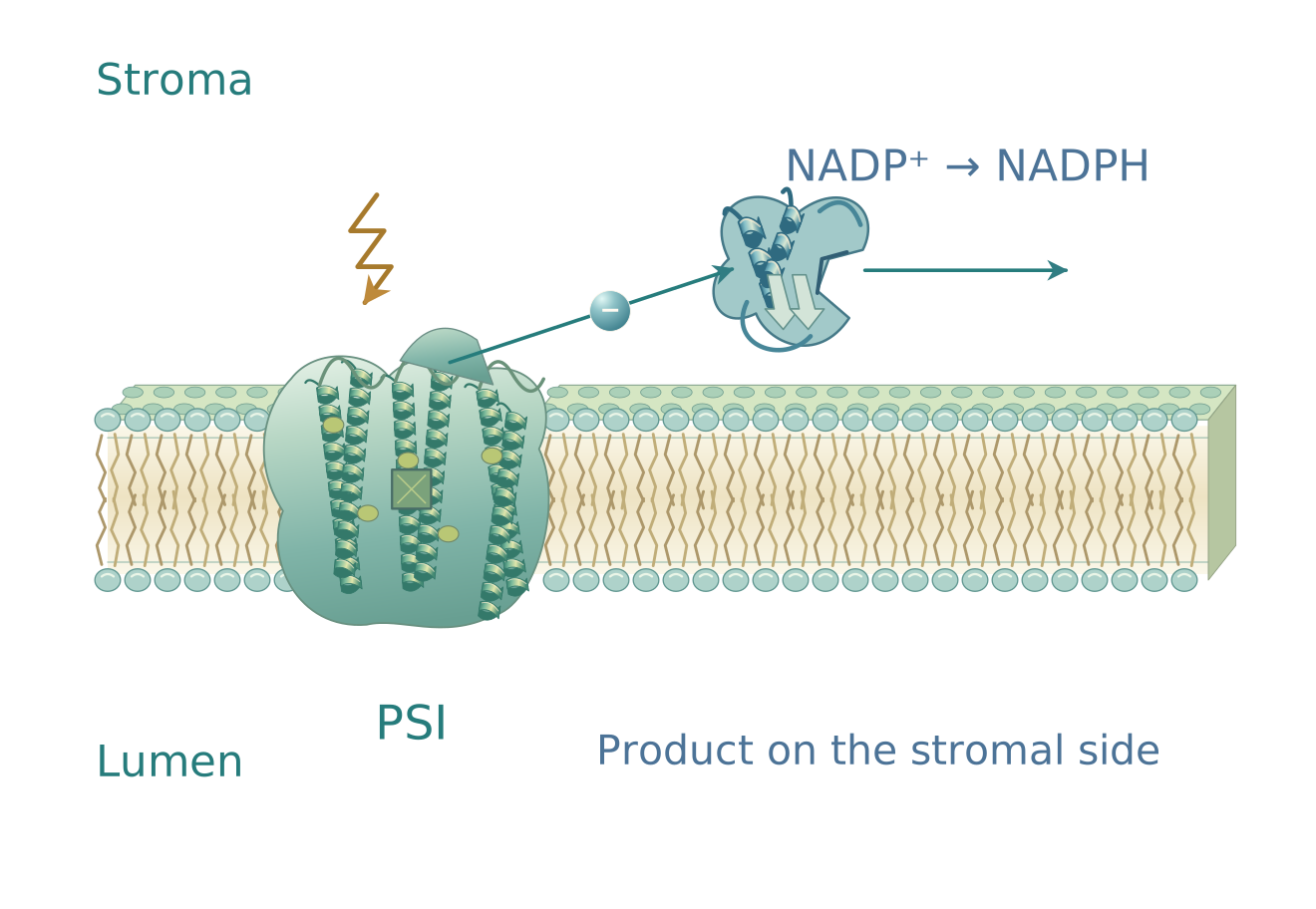
1. Light raises electron energy: An electron receives an energy boost in photosystem two. Transfers between carriers release some of that energy. Photosystem one supplies a second light-driven boost before the electrons help form NADPH
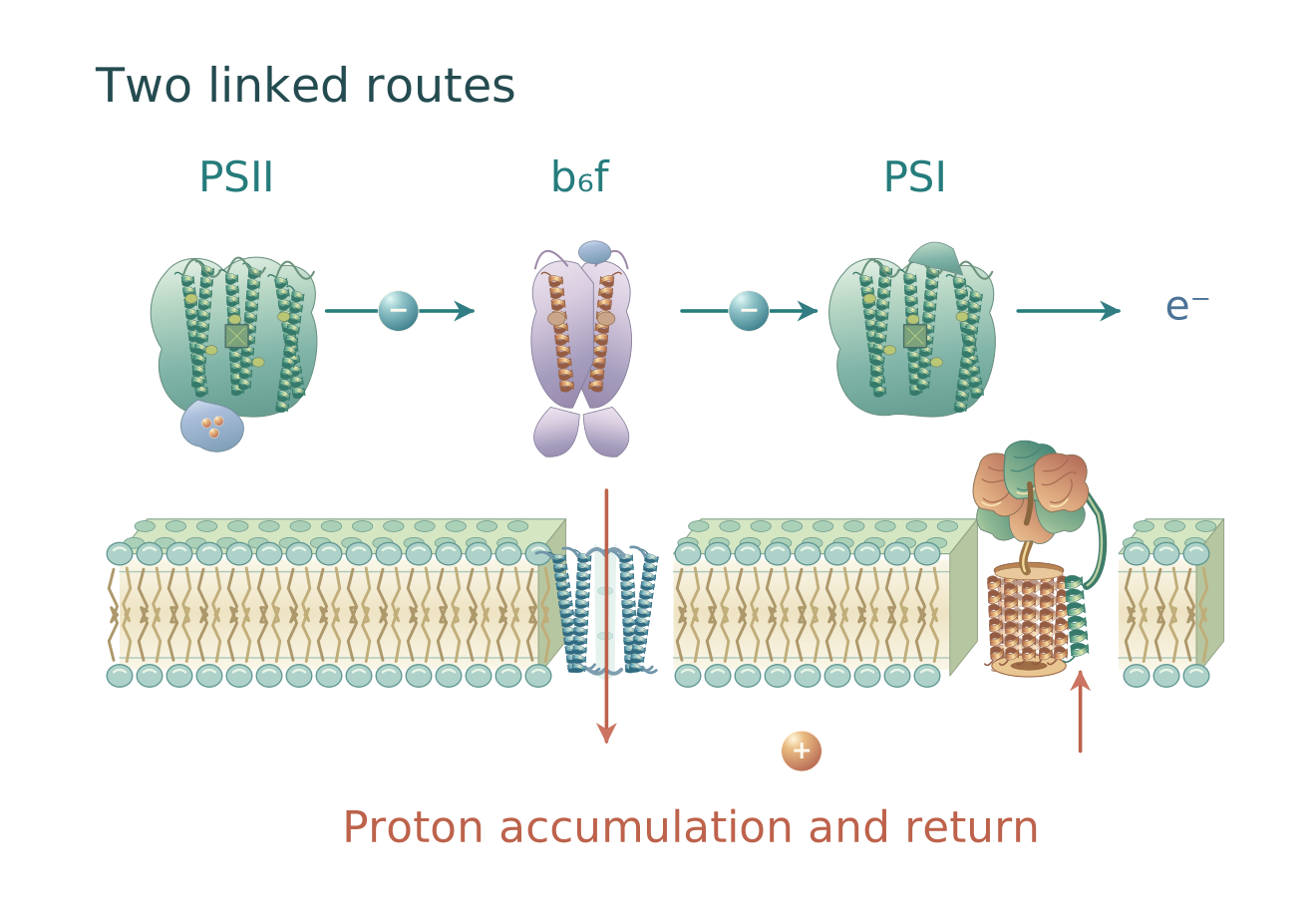
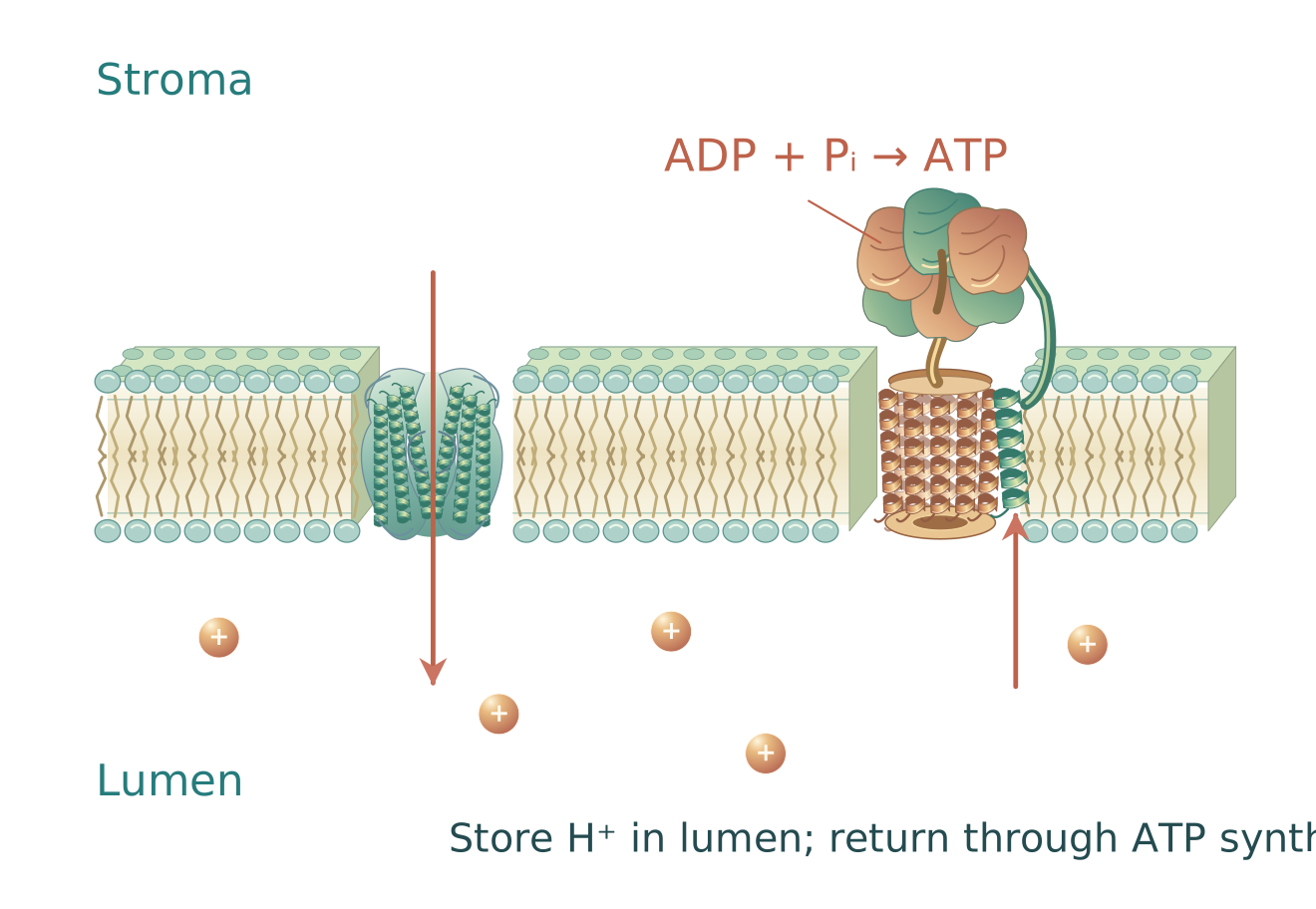
2. Different particles: Keep the two routes separate. Electrons pass between carriers; protons move across the membrane. An electron does not travel through ATP synthase to make ATP
Water supplies the electrons
Photosystem II
Photosystem II
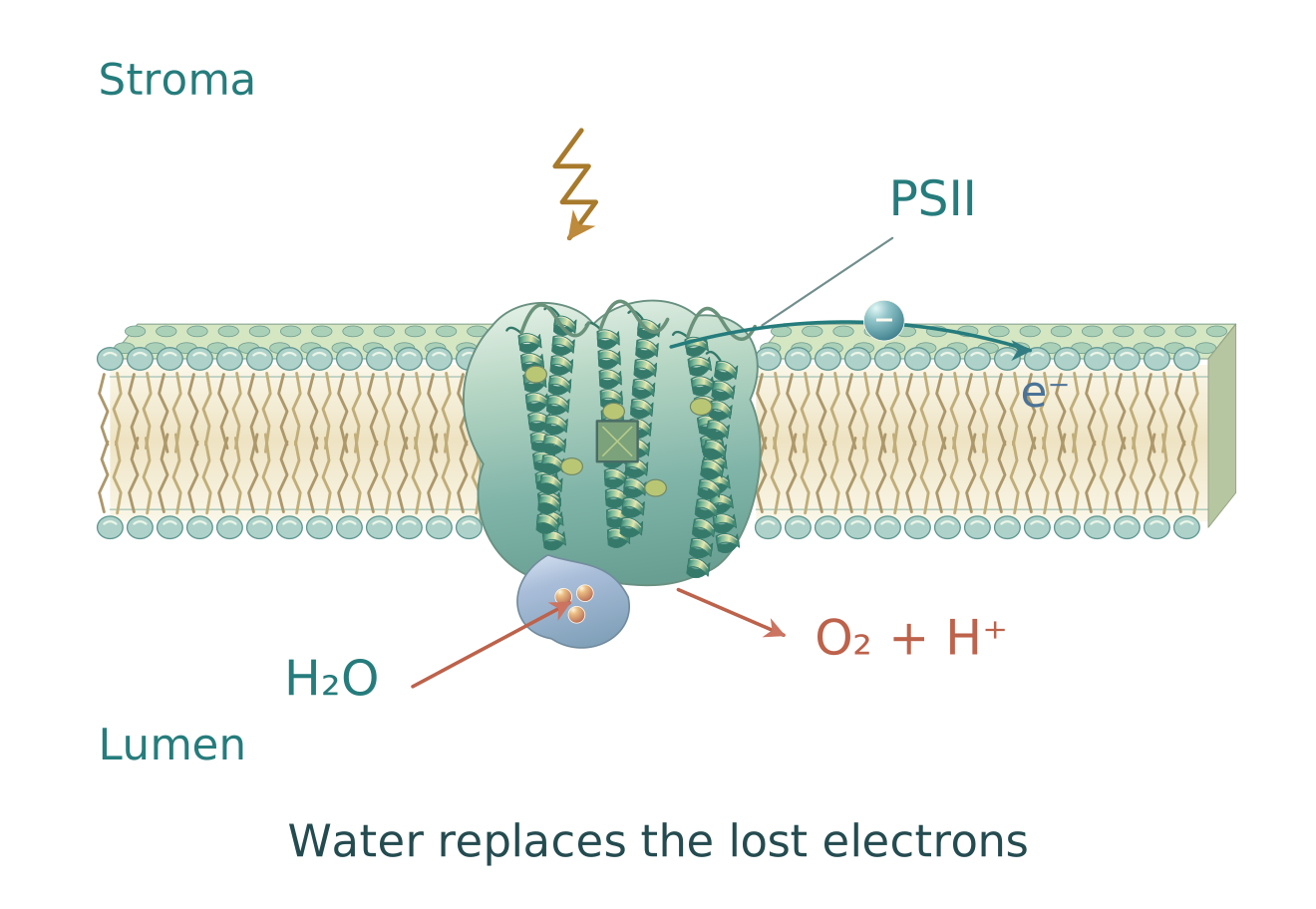
Structural view of photosystem ii
Photosystem two loses excited electrons to the transport chain. Its water-oxidizing machinery replaces them. That is why water is essential to this route
Pigments: Absorb light
Water-oxidizing machinery: Replaces lost electrons
Source and destination
1. From water: Splitting water supplies electrons and releases oxygen. It also adds protons to the lumen. The oxygen released by photosynthesis therefore comes from water, not carbon dioxide
2. To NADPH: After transport and a second light boost, electrons reach an enzyme on the stromal side. It reduces NADP plus to NADPH. This product carries reducing electrons to reactions that build carbon compounds
Use proton return to make ATP
A separate route for protons
Electron transfer helps move protons into the lumen, while water splitting adds more. The membrane restricts their return. Protons then flow through ATP synthase toward the stroma, driving ATP formation from ADP and phosphate
Two resources for the Calvin cycle
ATP supplies energy for reaction steps; NADPH supplies reducing electrons. The Calvin cycle needs both. Their spent forms return to the light reactions, linking two pathways in different locations
| Item | Properties |
|---|---|
| ATP | Energy for reaction steps |
| NADPH | Reducing electrons |
Connect the energy changes
Follow the energy, rather than treating every arrow as the same moving particle. Light becomes usable chemical resources through these linked transfers
Light energy → usable chemical resources
ATP supplies energy · NADPH supplies reducing electrons