Facilitated Diffusion and Active Transport
Transport direction depends on a concentration gradient and the route available through a membrane. Compare facilitated diffusion with active transport and apply the distinction to a changed gradient.
Make the gradient visible
Glucose carrier
Glucose carrier
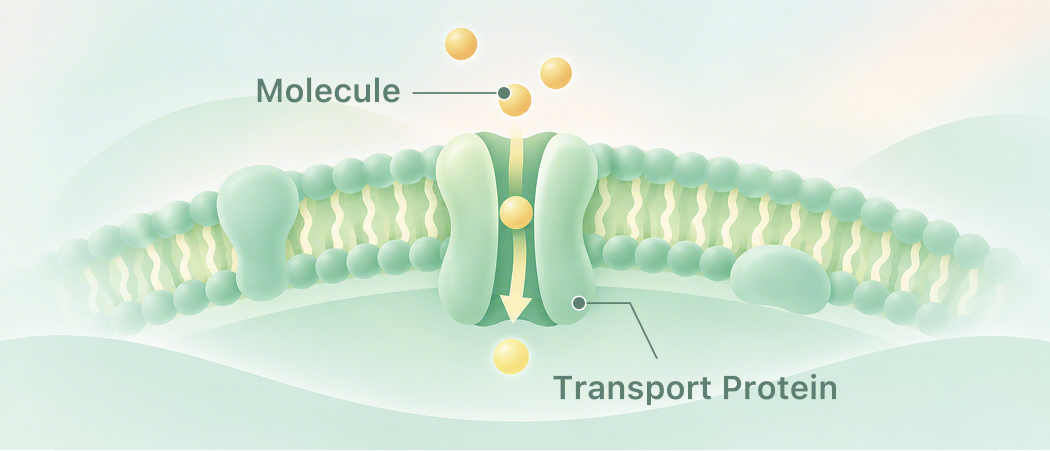
Structural view of glucose carrier
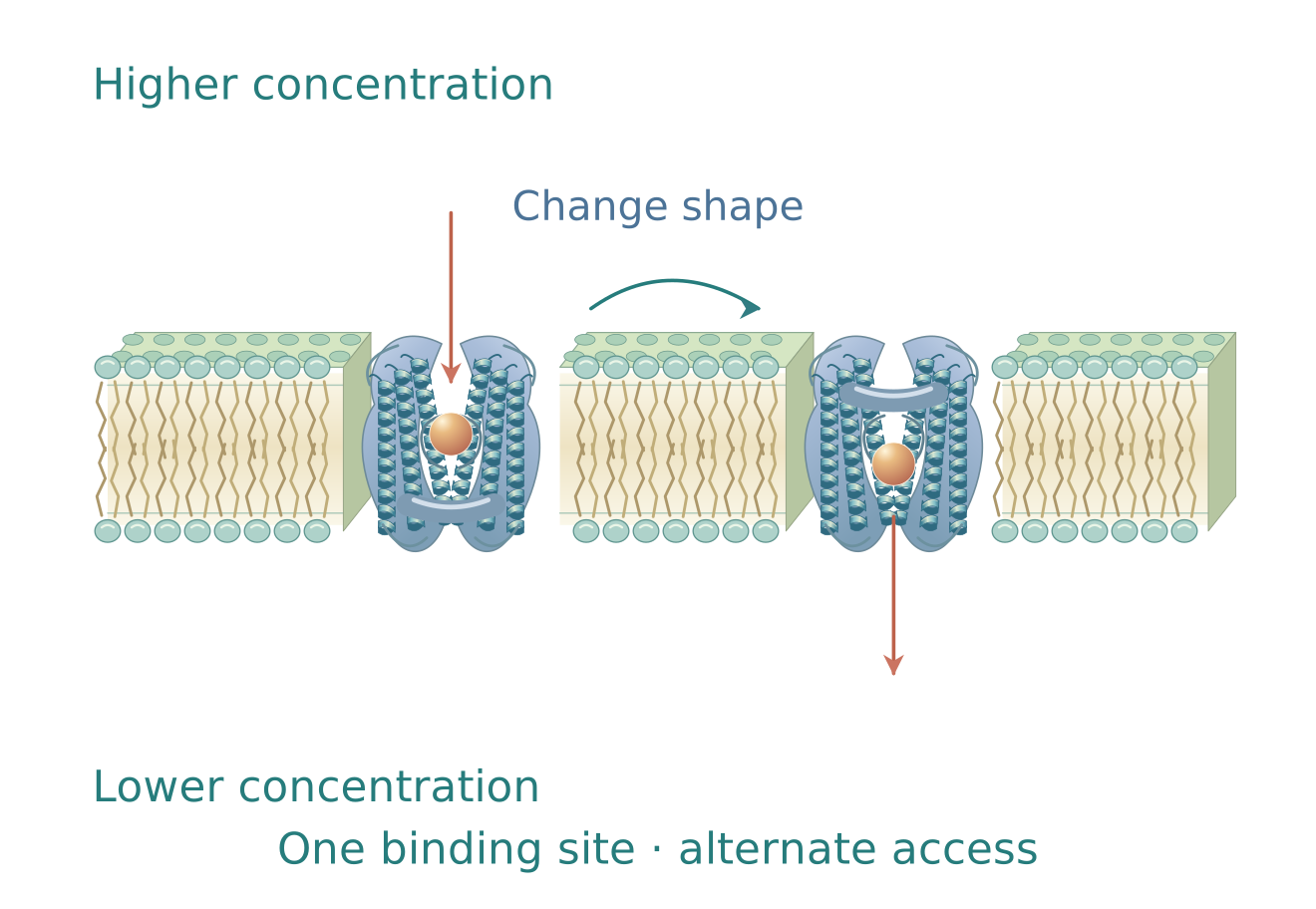
This glucose carrier catches a molecule on one side, then exposes its binding site on the other. The protein supplies a route. To decide whether that route needs energy, we must also ask which way the molecules move
Binding site: Recognizes cargo
Changing shape: Opens to either side
Downhill without a push
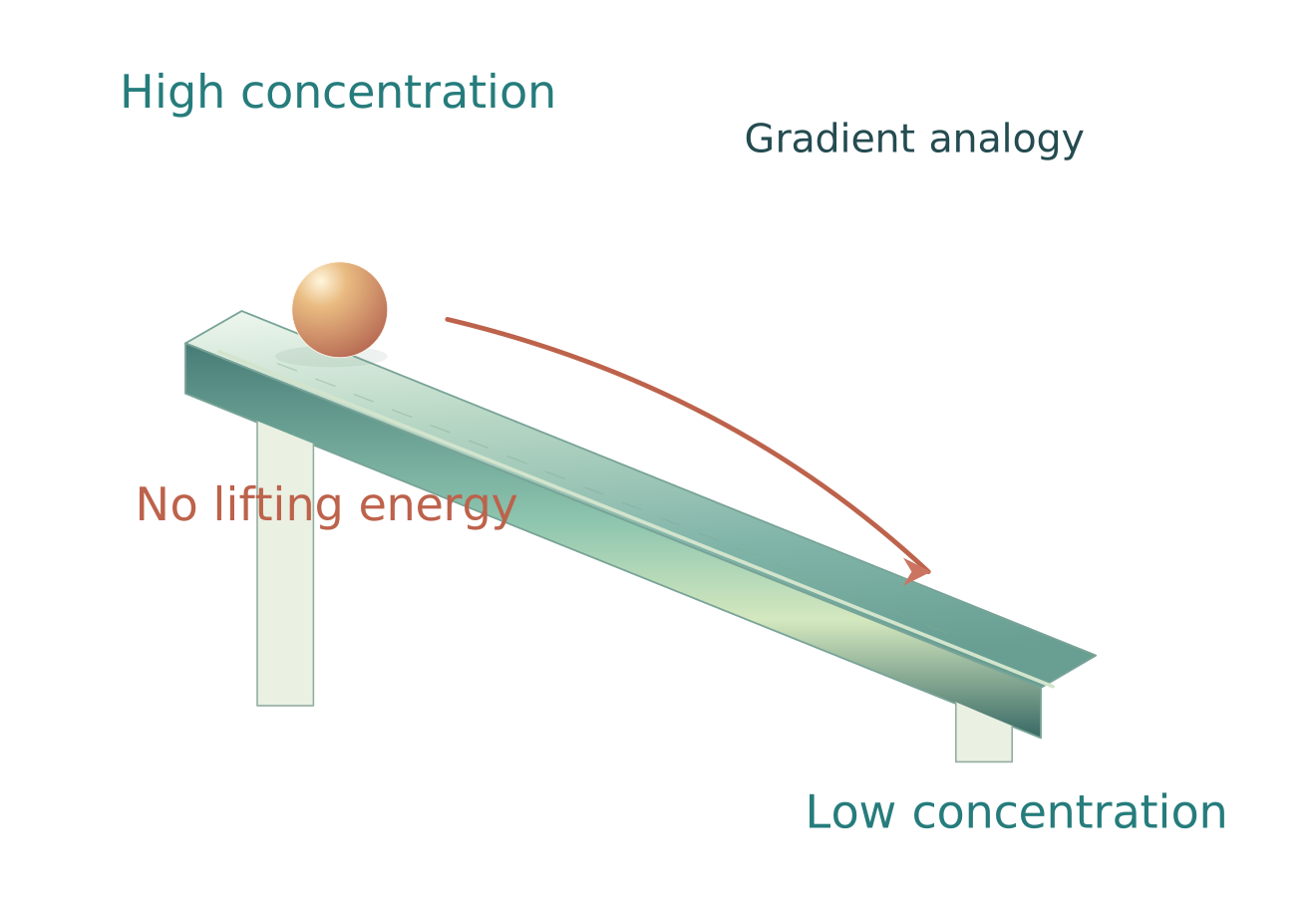
1. A concentration slope: Picture high concentration at the top of a slope and low concentration at the bottom. A ball rolls downhill without being lifted. Diffusion likewise needs no pumping energy
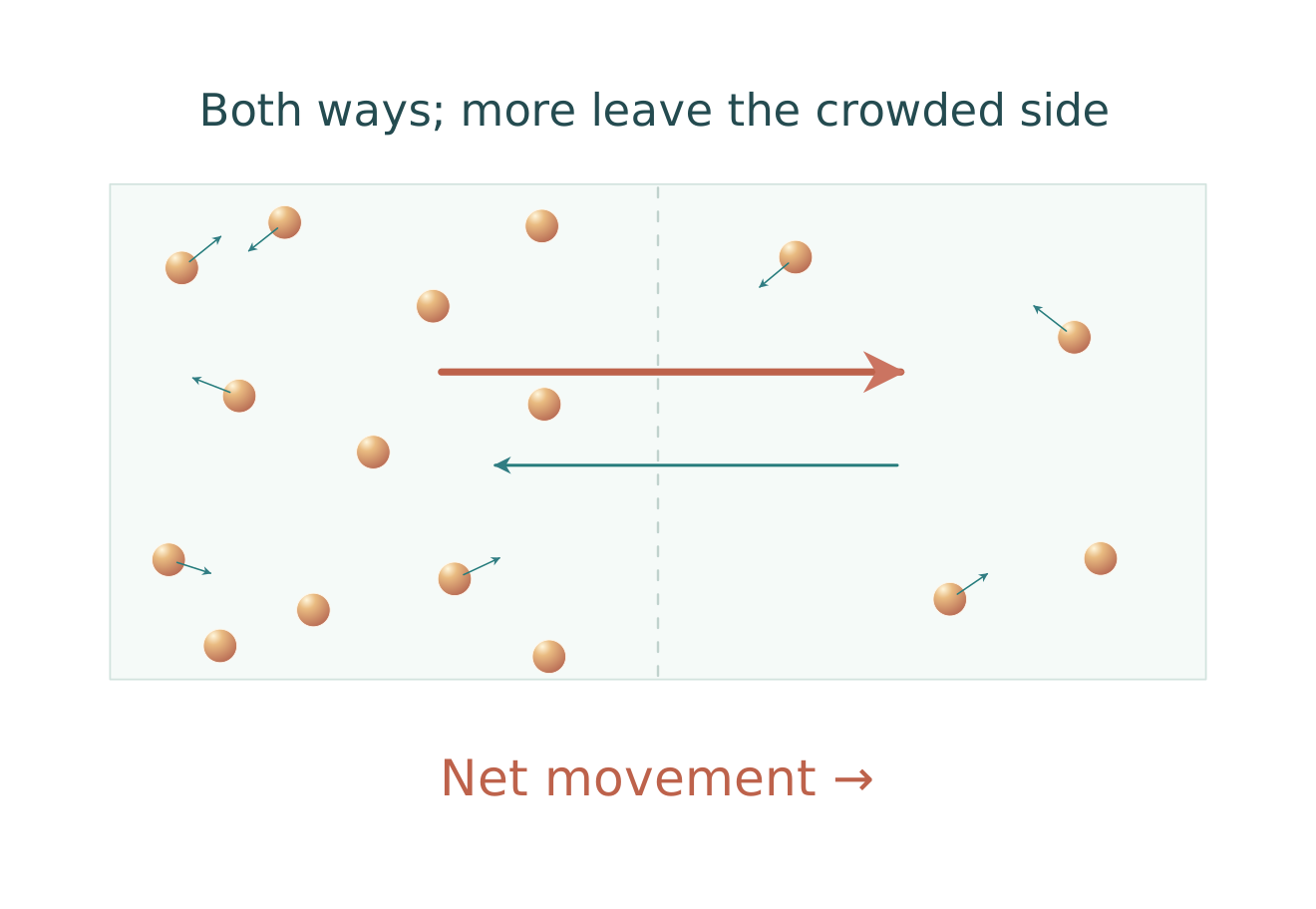
2. Random motion: Real molecules move randomly both ways. More leave the crowded side, giving net movement toward the dilute side. The slope represents a gradient, not gravity pulling molecules
Three protein routes
Sodium–potassium pump
Sodium–potassium pump
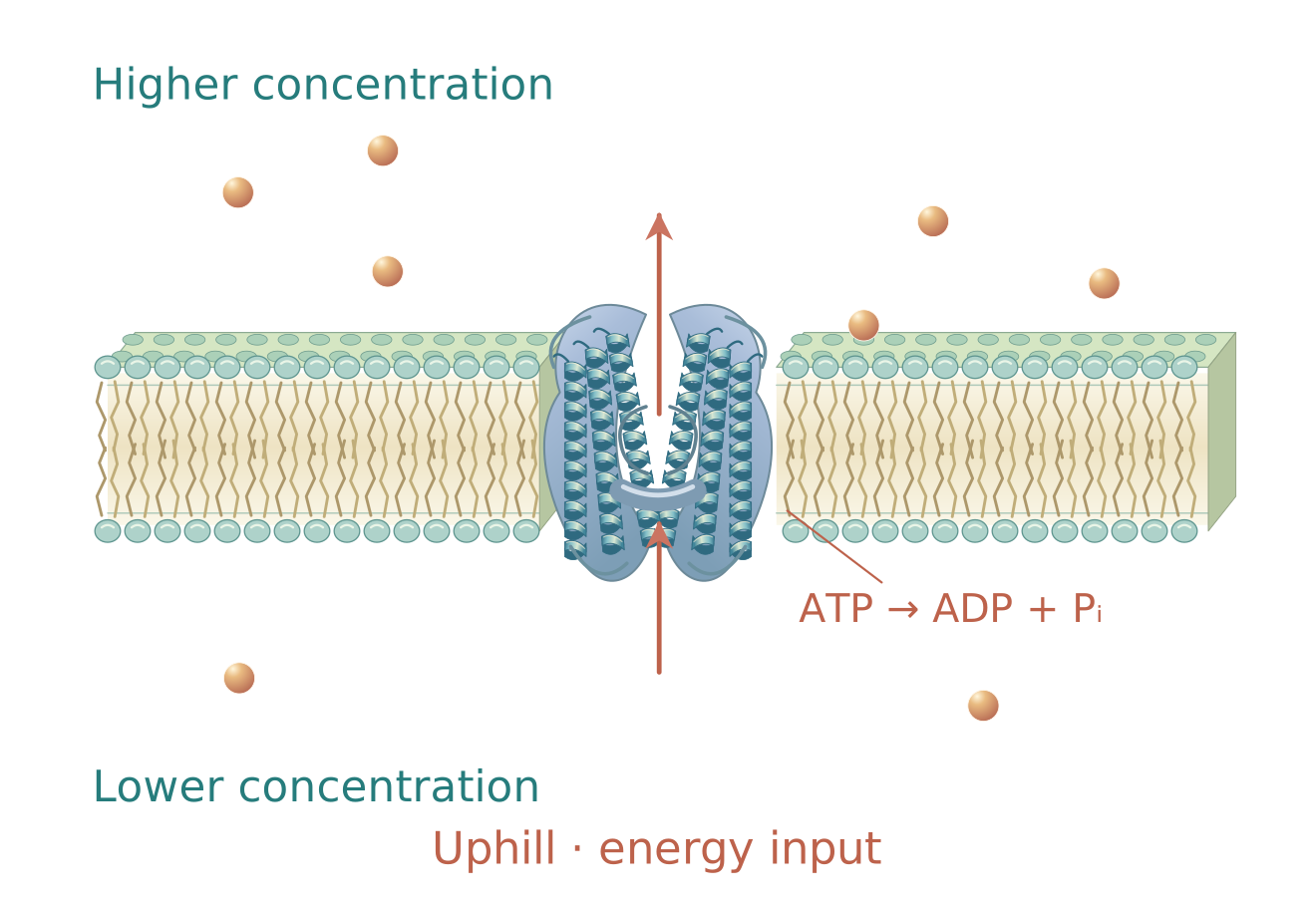
Structural view of sodium–potassium pump
The sodium potassium pump spends ATP to maintain unequal ion concentrations. Each cycle sends three sodium ions out and two potassium ions in
Open, alternate, or pump
1. Channel: A channel provides a water-friendly pore. Particles move downhill; for ions, both concentration and voltage determine that direction
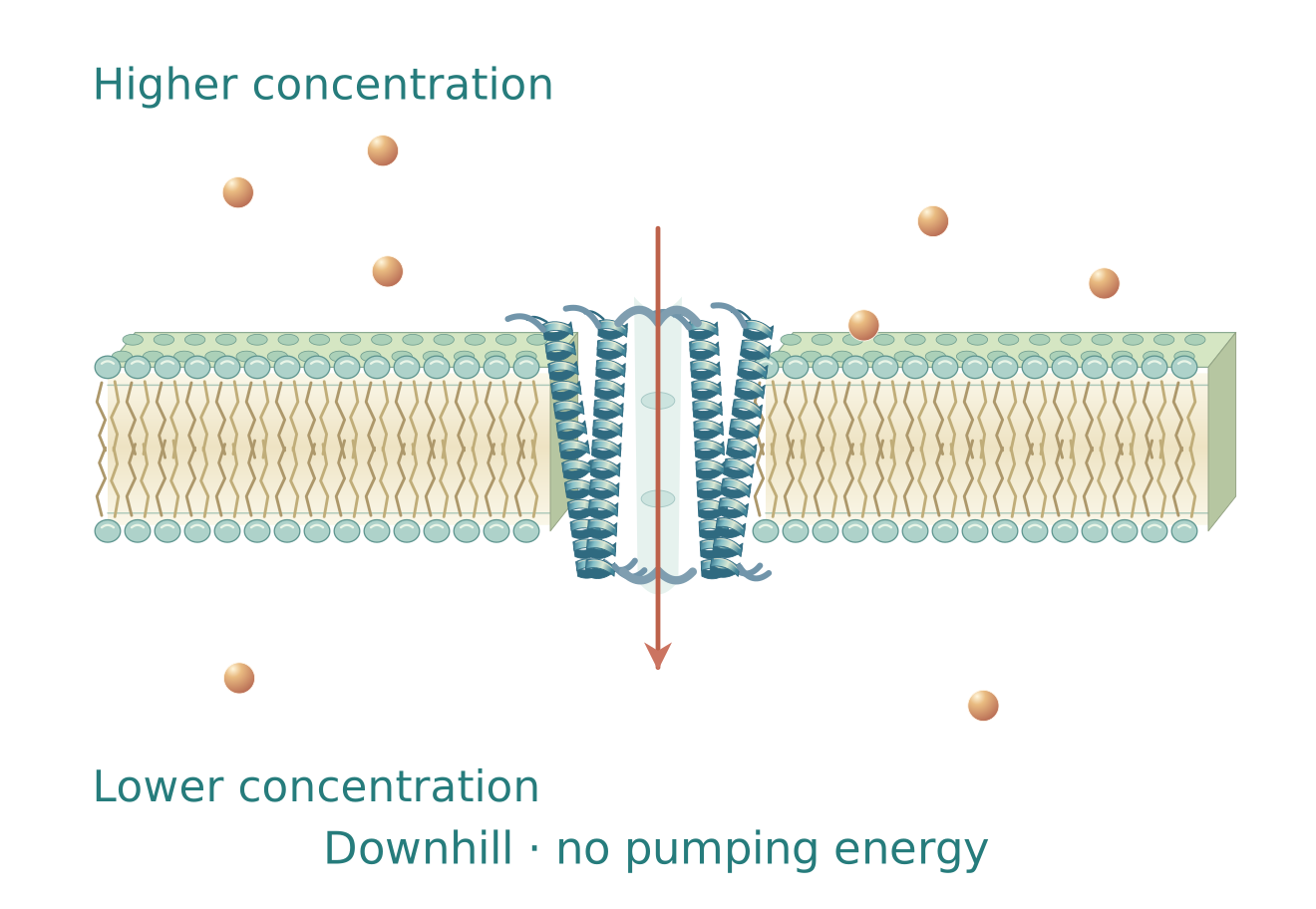
2. Carrier: A carrier alternates access to its binding site. This glucose carrier moves cargo downhill, so protein assistance is still passive transport
3. Pump: A pump couples an energy source to uphill movement. Here ATP powers the change; some other transporters use energy stored in another ion's gradient
Predict the result
Direction plus energy
Judge the journey, not just the presence of a protein. A gated channel may open or close, but opening it does not itself pump cargo uphill
| Net movement | Category |
|---|---|
| Downhill through a protein | Facilitated diffusion |
| Uphill with energy input | Active transport |
If pumping stops
Suppose pumping stops and a neutral solute can still cross. The concentration difference gradually shrinks. At equilibrium, particles keep moving both ways, but equal opposing flows cancel. Equilibrium means no net change, even though individual molecules have not stopped moving. For ions, electrical forces must also be included; equal concentrations are not always the endpoint
Initially — An unequal distribution — A passive route remains open
Later — Dynamic equilibrium — Movement continues; net flow is zero