Lumen and Stroma Inside a Chloroplast
A chloroplast contains an outer envelope and an internal thylakoid membrane system. Distinguish the stroma from the lumen of a thylakoid and connect each name to the correct side of the membrane.

From a leaf to its cells
Leaf cross-section
Leaf cross-section
Dicot leaf cutaway showing palisade and spongy tissue; enlarged anatomical teaching model
A leaf is a layered structure, not a flat green sheet. Beneath the upper surface, closely packed palisade cells catch much of the incoming light. Looser spongy tissue leaves air spaces for gas movement. Many cells in these tissues contain chloroplasts
Leaf tissue → Leaf cells
Leaf cells → Chloroplasts within the cells
Two useful arrangements
Notice the scale change: the leaf contains tissues, tissues contain cells, and chloroplasts sit inside those cells. Air spaces connect gas movement through the leaf with nearby living cells. Carbon dioxide can reach the cells that use it. We now move from the whole leaf to the organelle where membranes organize photosynthesis
| Item | Properties |
|---|---|
| Palisade tissue | Closely packed photosynthetic cells |
| Spongy tissue | Cells around air spaces |
Two membrane systems
Chloroplast
Chloroplast
Structural view of a chloroplast inside a plant cell
Inside a chloroplast, green stacks sit in a surrounding fluid called stroma. The outer envelope and the internal thylakoids are separate membrane systems
Envelope and stacks
1. Envelope: Two membranes form the envelope around the organelle. They do not form the walls of the green sacs. Those sacs belong to the thylakoid system inside
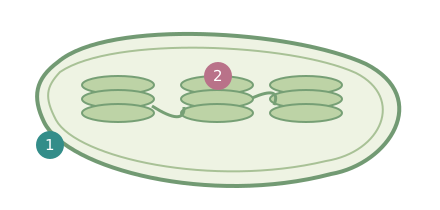
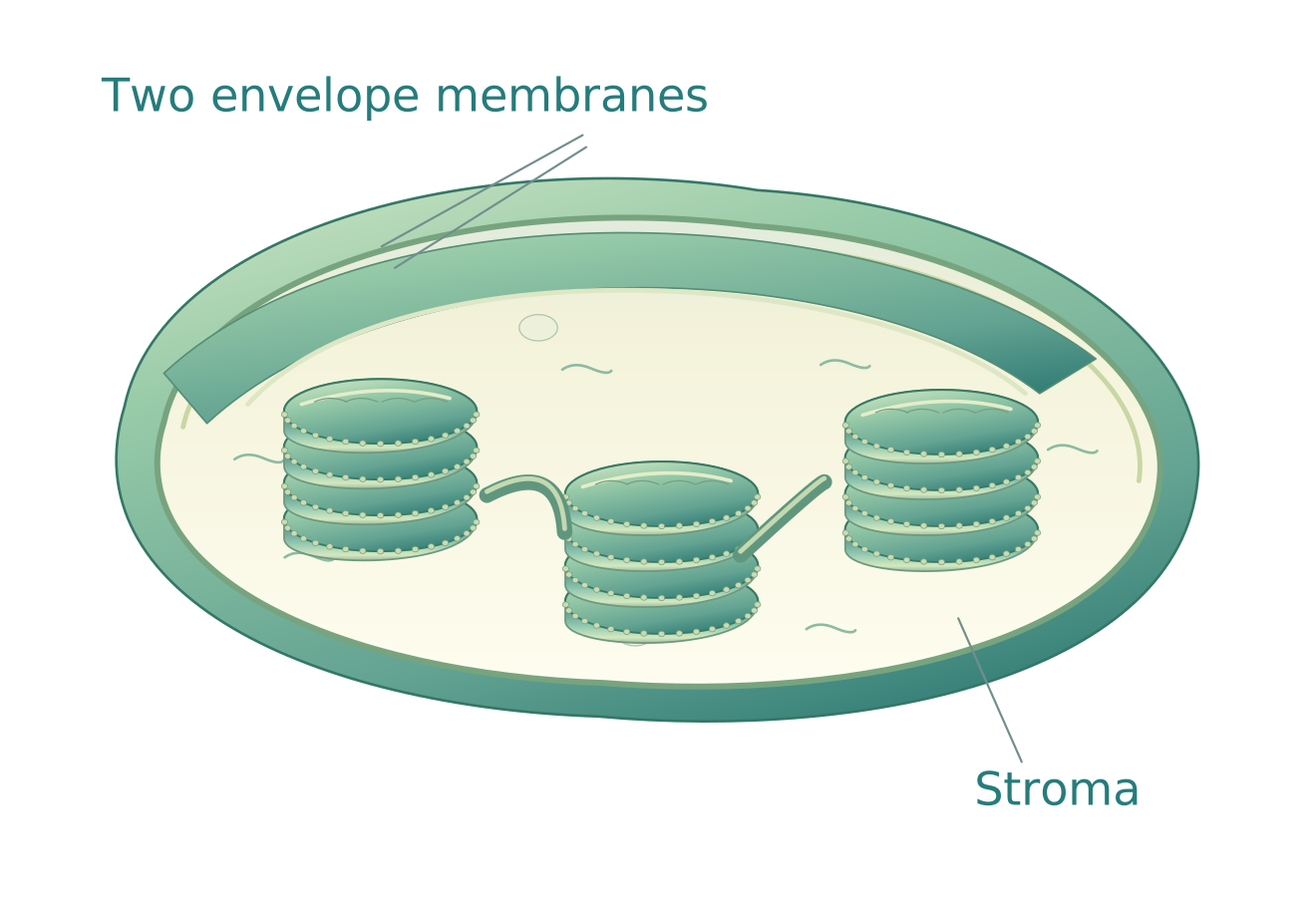
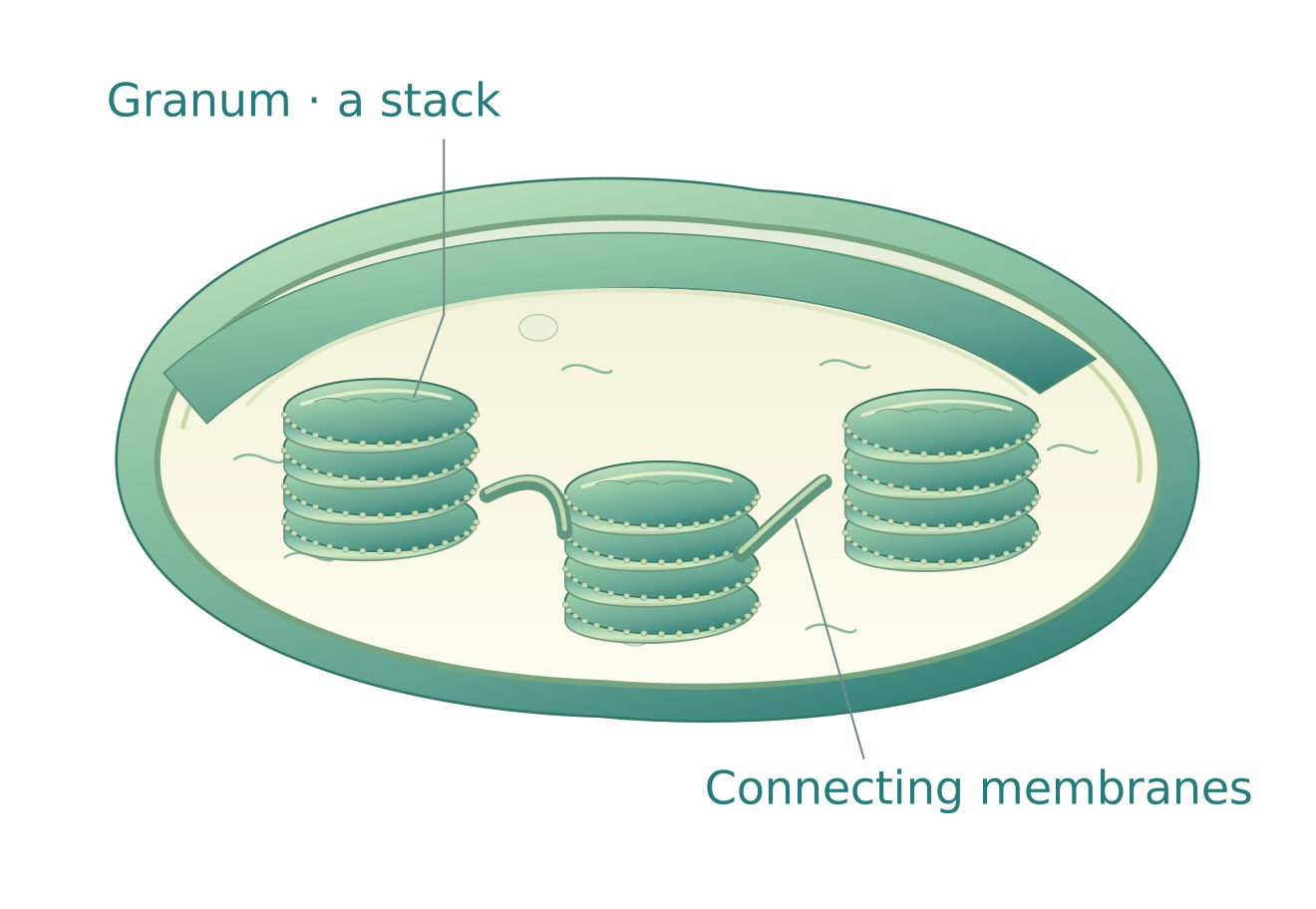
2. Grana: A stack of thylakoids is a granum. Connecting membranes join the stacks into a wider network. Stacking packs membrane into the chloroplast while preserving an enclosed space within the system. Follow one membrane surface into a connecting sheet: the stacks belong to a connected internal system
Name each side of one sac
Open a thylakoid cutaway
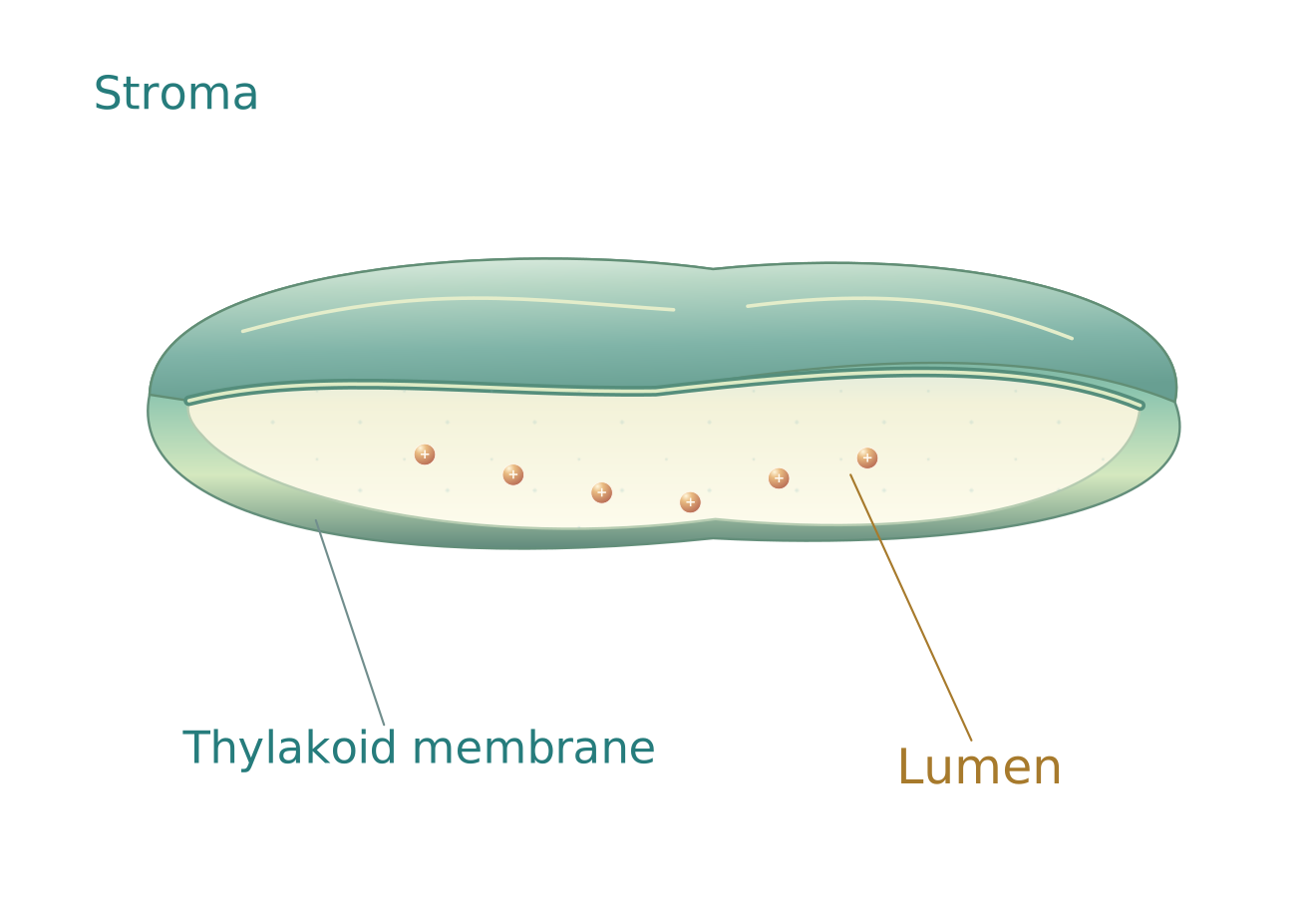
1. A flattened sac: Lift one thylakoid from the stack in your mind. It resembles a flattened pouch. Its wall is the thylakoid membrane
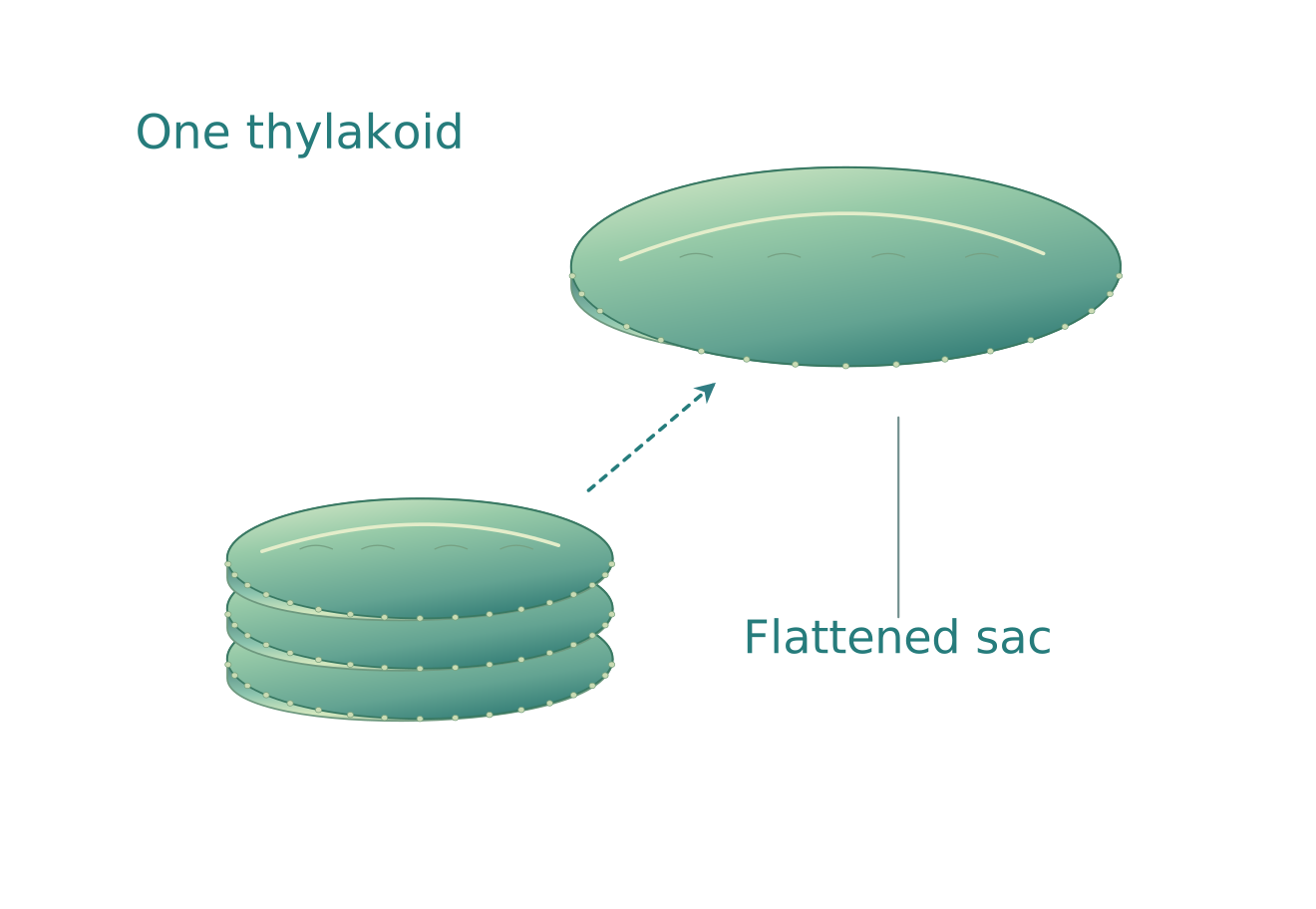
2. Across the boundary: The narrow inside is lumen; the fluid outside is stroma. Crossing this membrane changes compartments while you are still inside the chloroplast
Put the chemistry in place
Light-reaction machinery sits in the thylakoid membrane. Protons accumulate in the lumen. The Calvin cycle uses ATP and NADPH in the stroma. Naming the spaces correctly explains how the reactions can cooperate
| Location | Role |
|---|---|
| Thylakoid membrane | Light absorption; electron transfer |
| Lumen | Proton accumulation |
| Stroma | Calvin cycle; ATP and NADPH available |