Proton Return Drives ATP Synthase
A proton gradient can drive ATP synthase when protons return through its coupled pathway. Compare useful return flow with a proton leak and explain why a shortcut reduces captured chemical work.
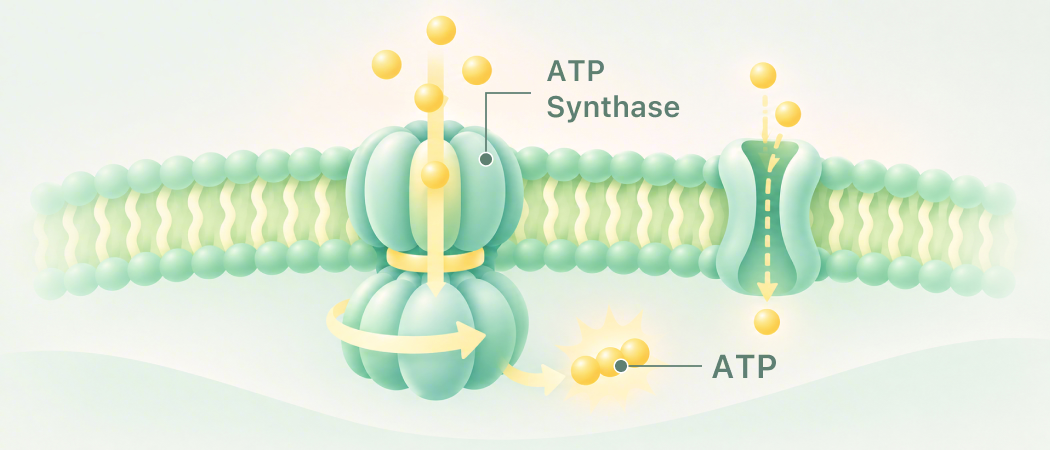
A gradient can drive a rotor
ATP synthase
ATP synthase
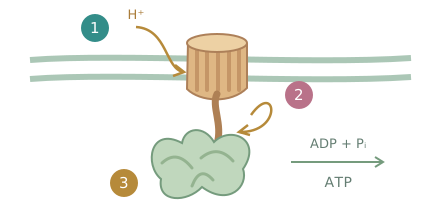
ATP synthase connects two very different events: protons moving across a membrane and ATP being made at a catalytic head. A rotor in the membrane connects through a shaft to that head on the matrix side
Membrane rotor: Responds to proton movement
Matrix-facing head: Catalyzes ATP formation
The driving difference
Respiratory pumping builds a proton concentration difference. The matrix is also relatively negative. Together, these chemical and electrical differences favor proton return. ATP synthase provides a route that can capture some of the released energy. The membrane must restrict free proton passage; otherwise the difference would disappear before the enzyme could use it
Concentration difference + electrical difference
Together they favor H⁺ return to the matrix
Turn return flow into work
From an analogy to the enzyme
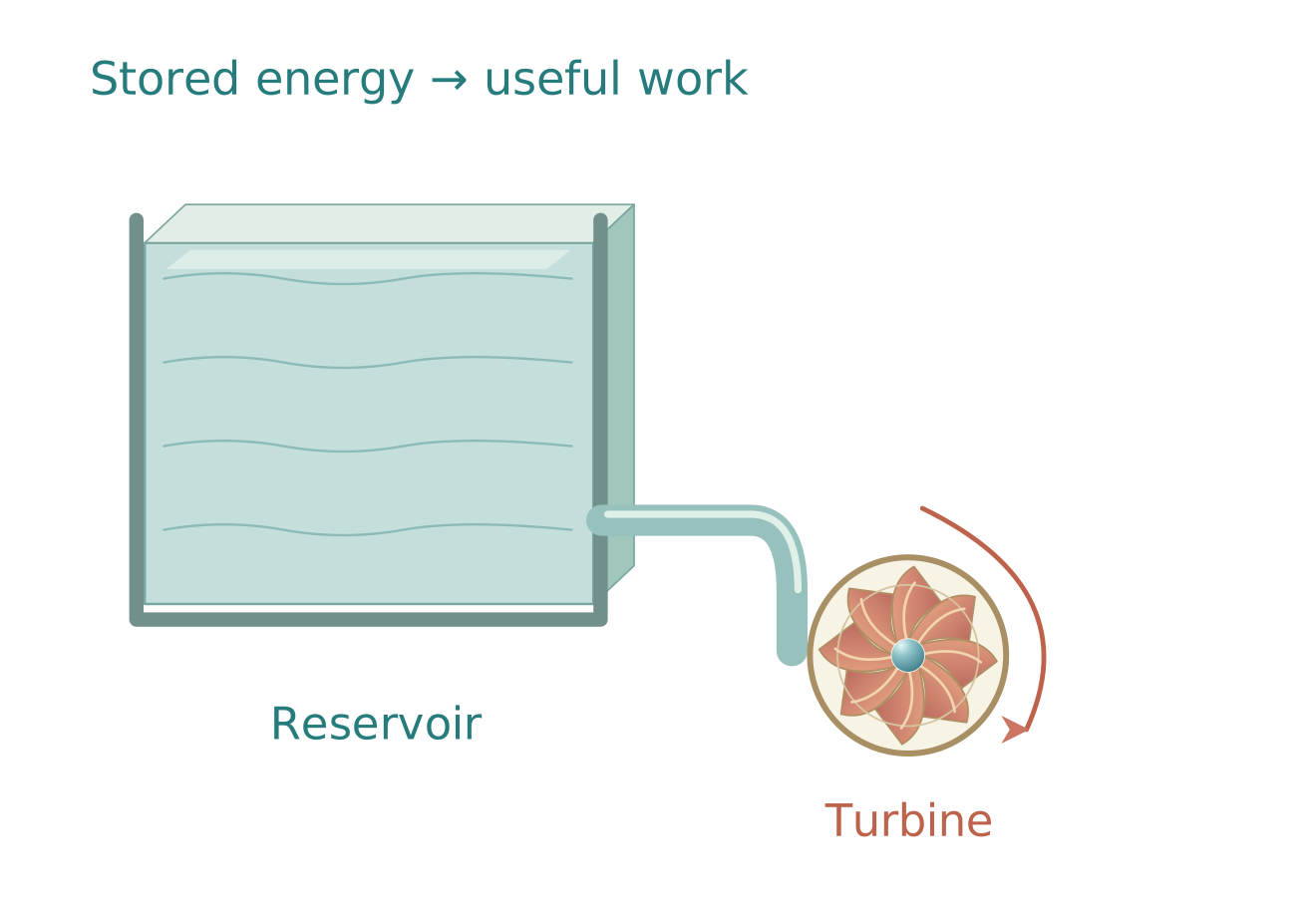
1. A reservoir and turbine: Water held above an outlet stores energy. Returning water can turn a turbine. A proton gradient also stores energy, although its driving difference is chemical and electrical, not a literal height
2. Protons return: Protons follow their electrochemical gradient toward the matrix through ATP synthase. Their passage drives rotation in the membrane
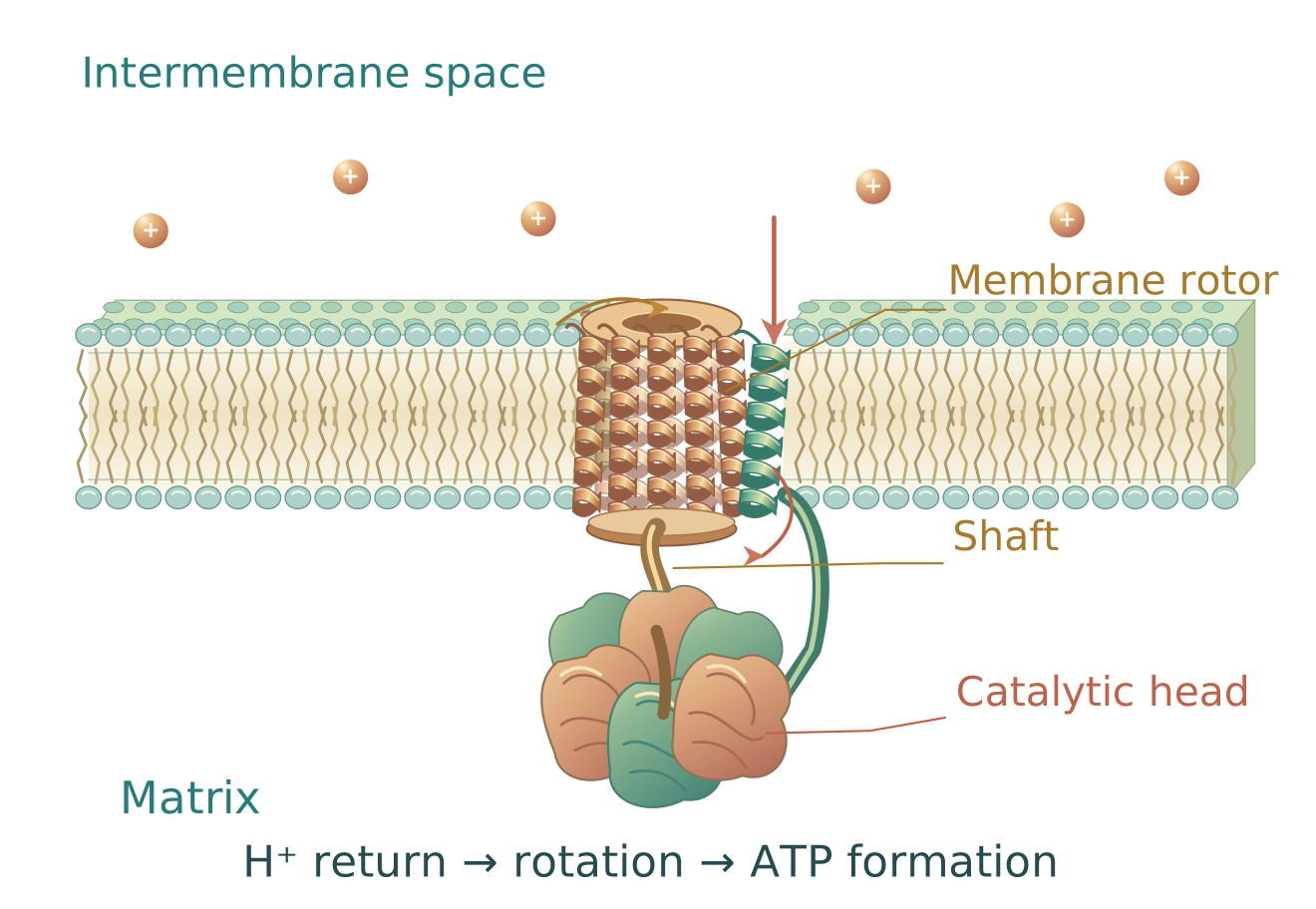
3. ATP is released: The shaft transmits rotation to the catalytic head. Changes in the catalytic sites support ATP formation from ADP and phosphate, followed by ATP release
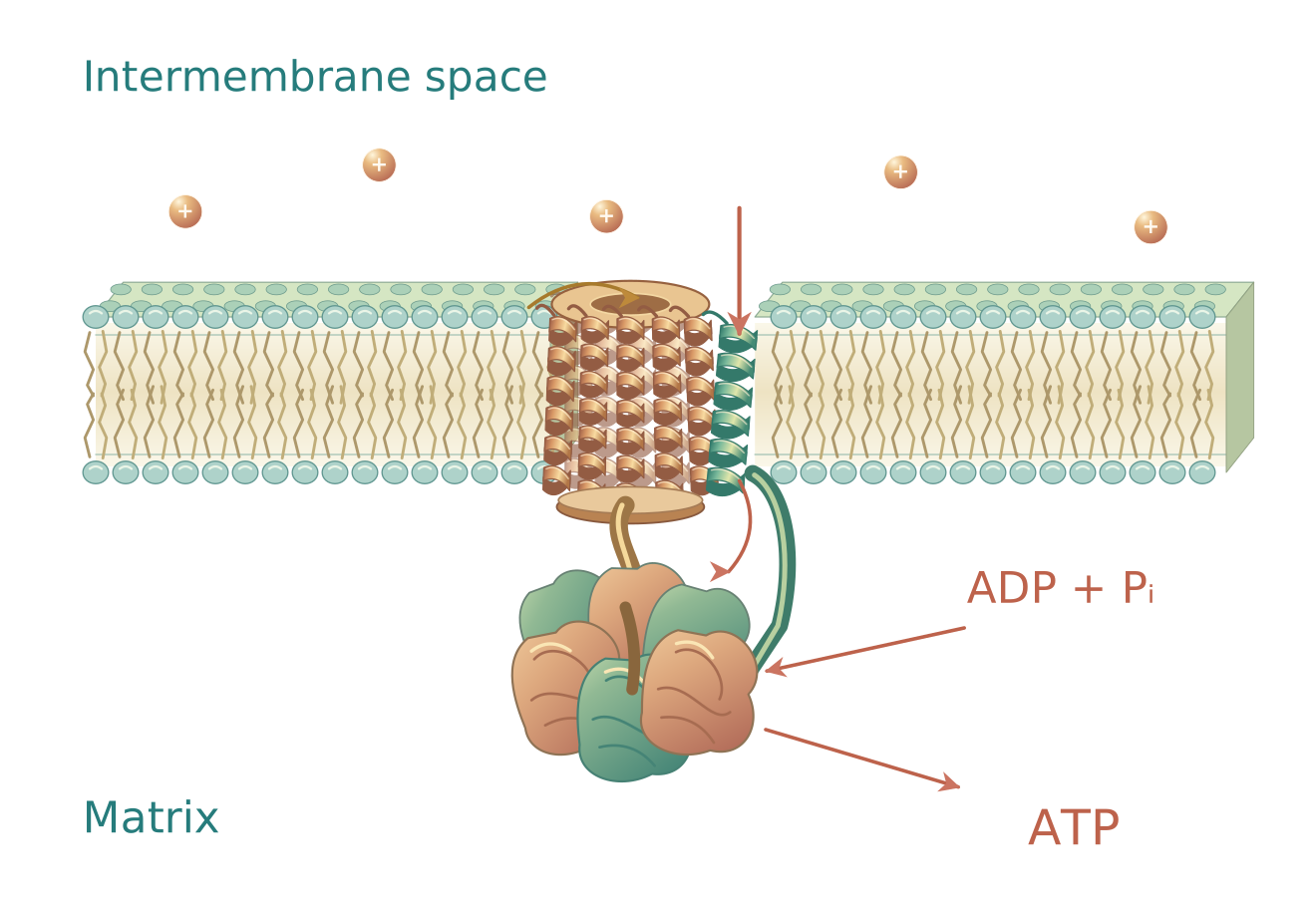
Keep the coupling intact
Each link matters: movement becomes rotation, and rotation changes the chemistry at the head
A shortcut loses useful work
Bypass the rotor
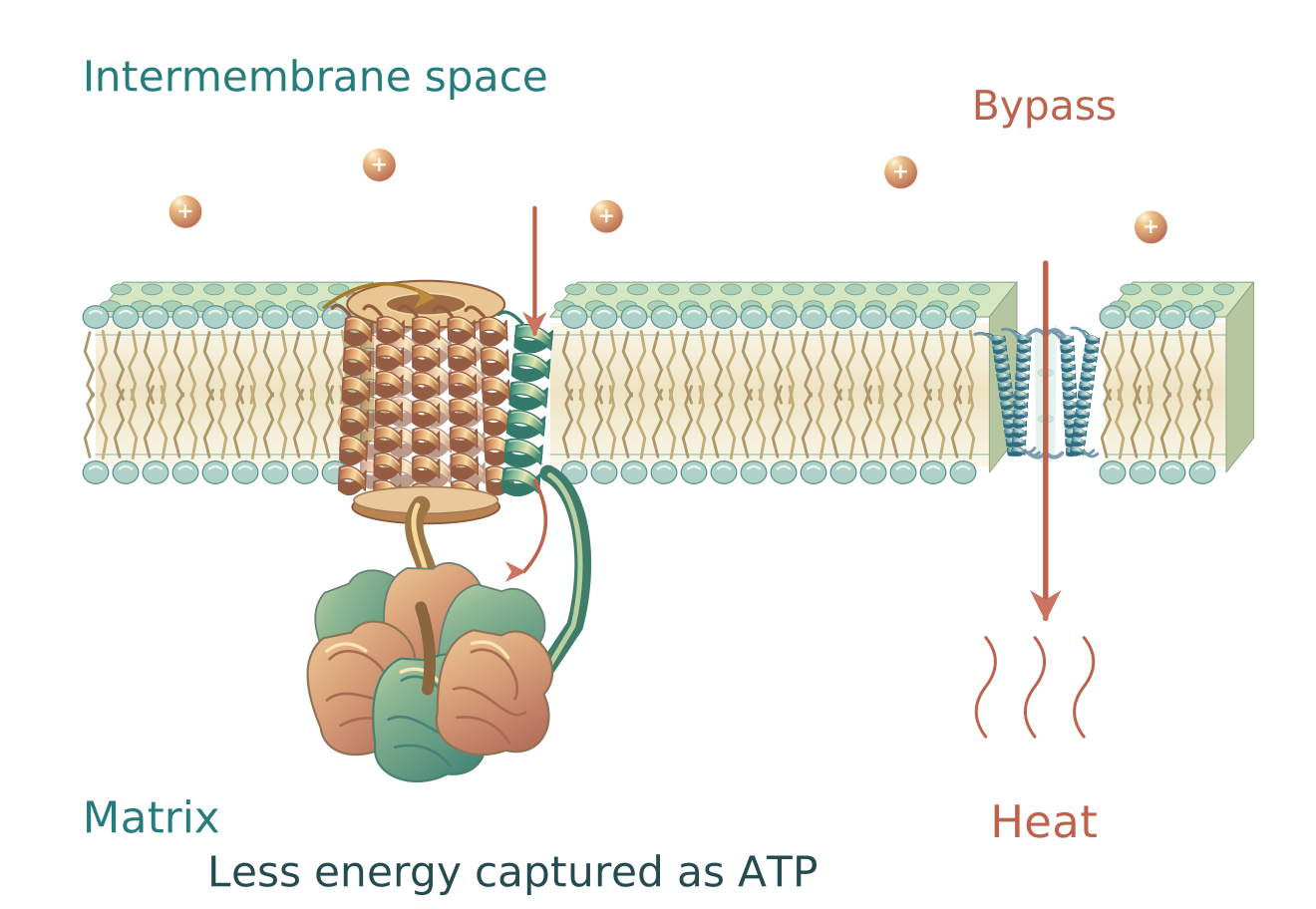
Open a second route across the membrane. Protons still return, but this route bypasses ATP synthase. Gradient energy is dissipated, including as heat, without driving ATP production through that route
Compare the return routes
With comparable respiratory input, a larger leak lowers ATP yield. Respiration may continue, or even increase in compensation, while less of its energy is captured as ATP. Faster proton return alone does not mean more ATP
| Item | Properties |
|---|---|
| Through ATP synthase | Return coupled to ATP formation |
| Through a leak | Return dissipates the gradient |
If the leak grows
The useful question is which route the protons take and whether their flow remains coupled to chemical work
ATP captured per respiratory input: ↓
Energy dissipated: ↑
Larger proton leak · comparable input · qualitative changes