Oxygen Keeps Electron Transport Moving
Oxygen provides an exit for electrons at the end of the respiratory chain. Explain how that exit keeps carriers available and predict what happens to electron flow when oxygen is lost.
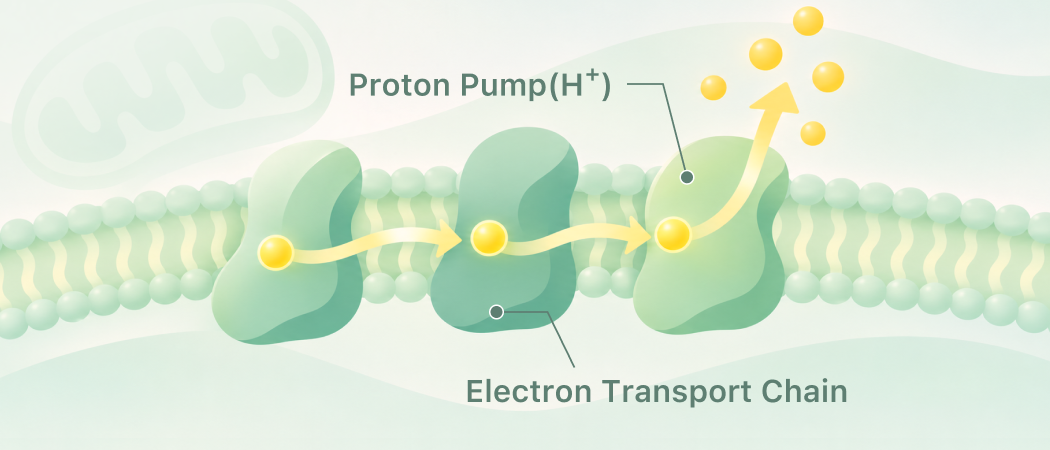
An electron pathway needs an exit
Respiratory membrane
Respiratory membrane
Schematic inner-membrane assembly with complexes I, III and IV and ATP synthase. The matrix-facing catalytic head points below the bilayer; protein shapes and dimensions are illustrative
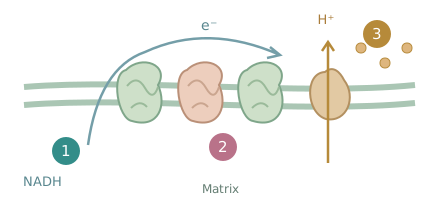
Fuel breakdown loads electron donors such as NADH. At the inner mitochondrial membrane, those electrons enter a chain of carriers. Several transfers release energy that supports proton pumping from the matrix to the intermembrane space
Two linked movements
The electron route and the proton route are linked, but they are different journeys. Electrons pass between chemical carriers. Pumped protons store energy across the membrane. That stored difference can later drive proton return through ATP synthase. For this process to continue, the electron chain needs somewhere to send its electrons
| Item | Properties |
|---|---|
| Electrons | Pass along the carrier chain |
| Protons | Move across the membrane |
Keep carriers available
Complex IV
Complex IV
Structural view of respiratory complex iv
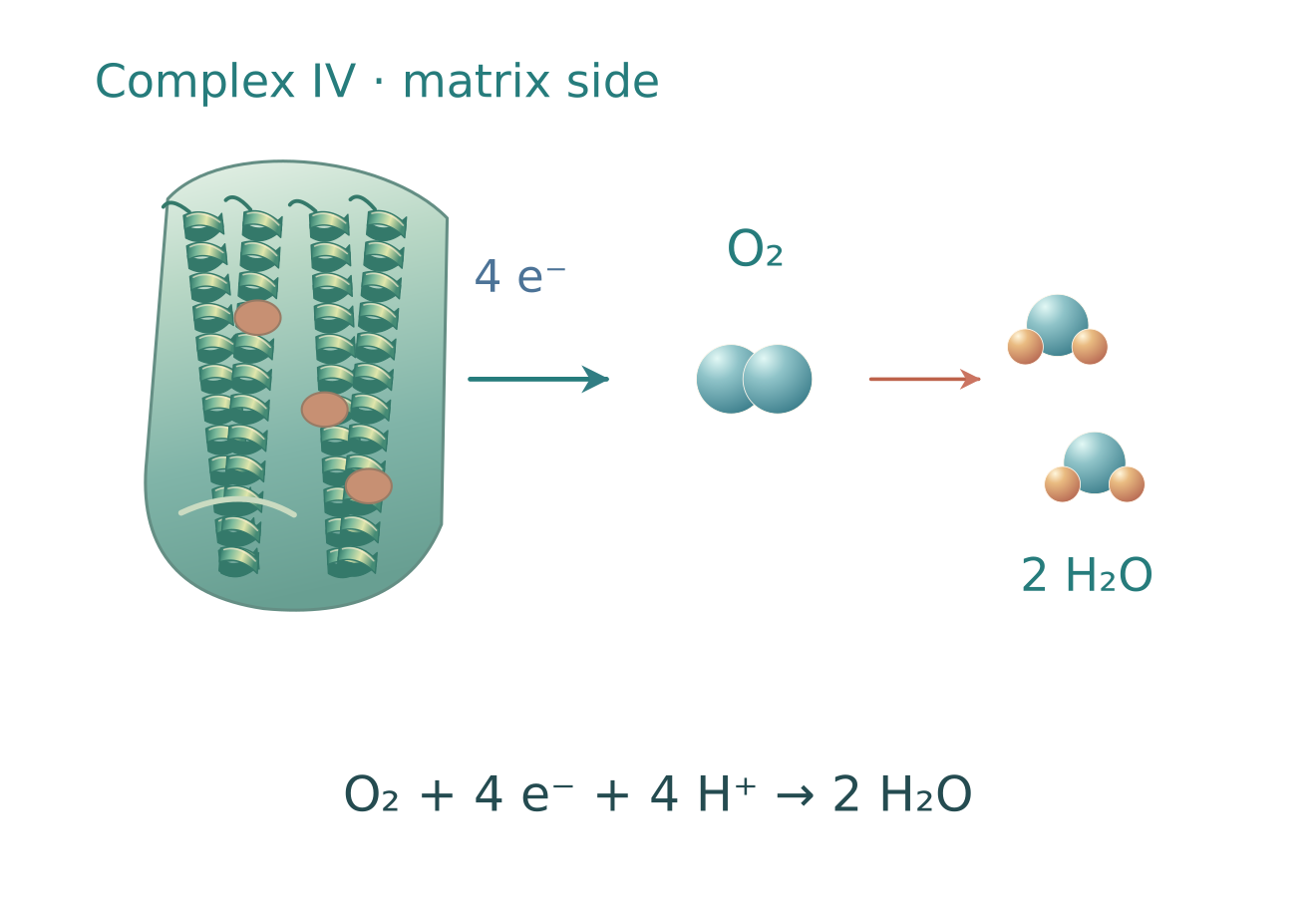
Complex four is the terminal complex. It transfers electrons to oxygen, which combines with protons to form water on the matrix side
Receives electrons: From the upstream carrier
Reduces oxygen: Forms water on the matrix side
An acceptor must be available
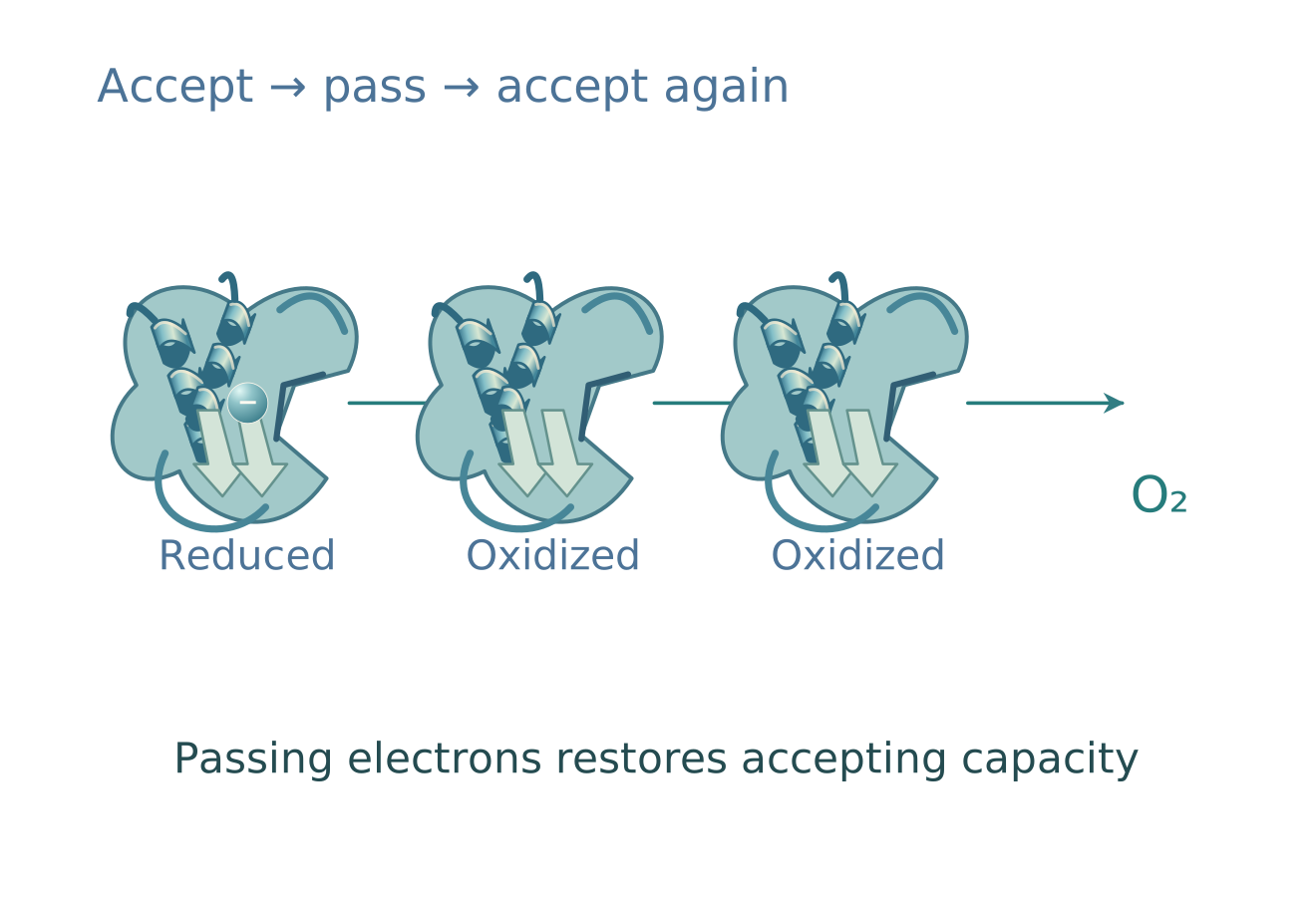
1. Accept and pass: Picture a relay: after a carrier passes electrons onward, it can receive again. In chemical terms, carriers cycle between reduced and oxidized states
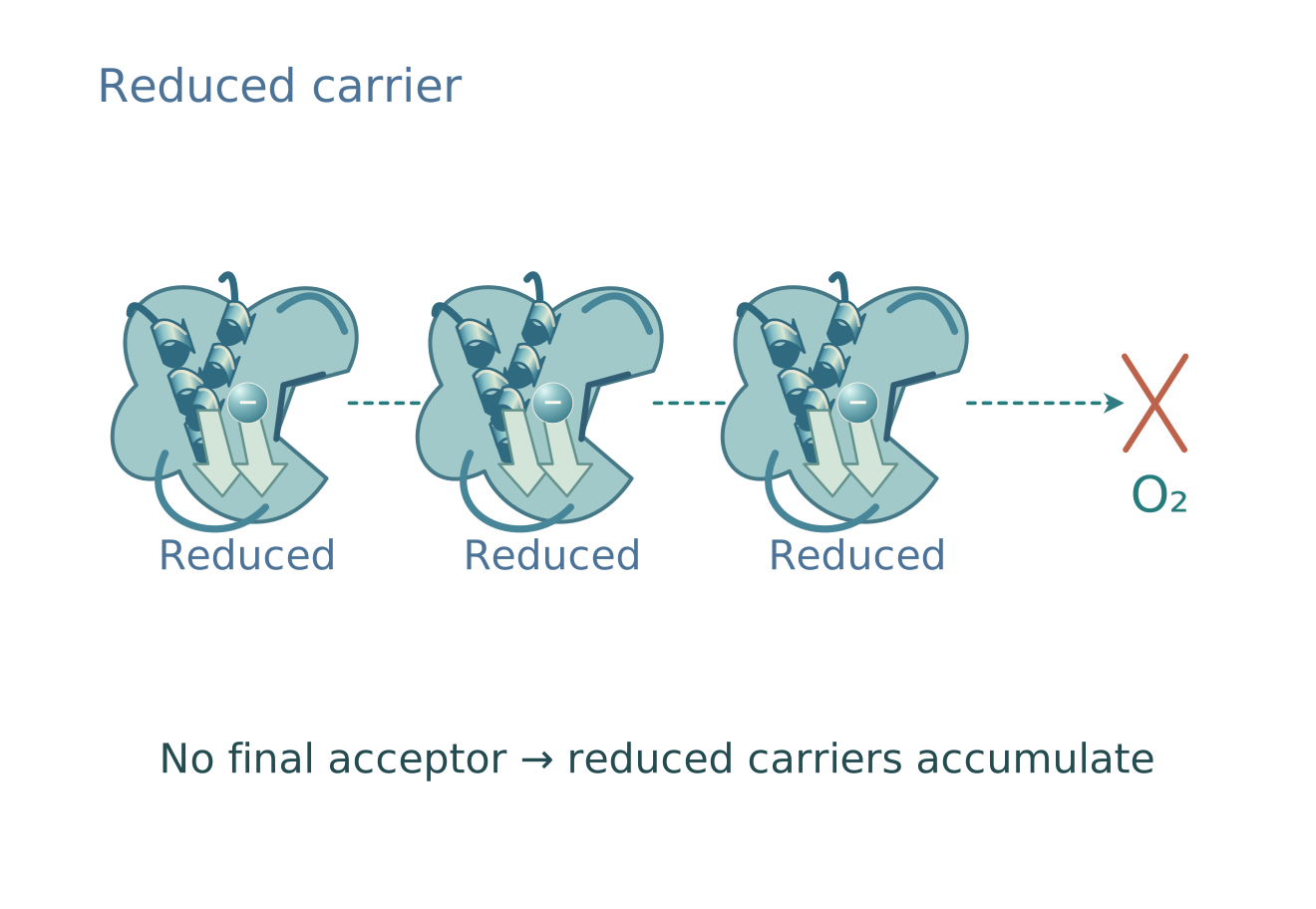
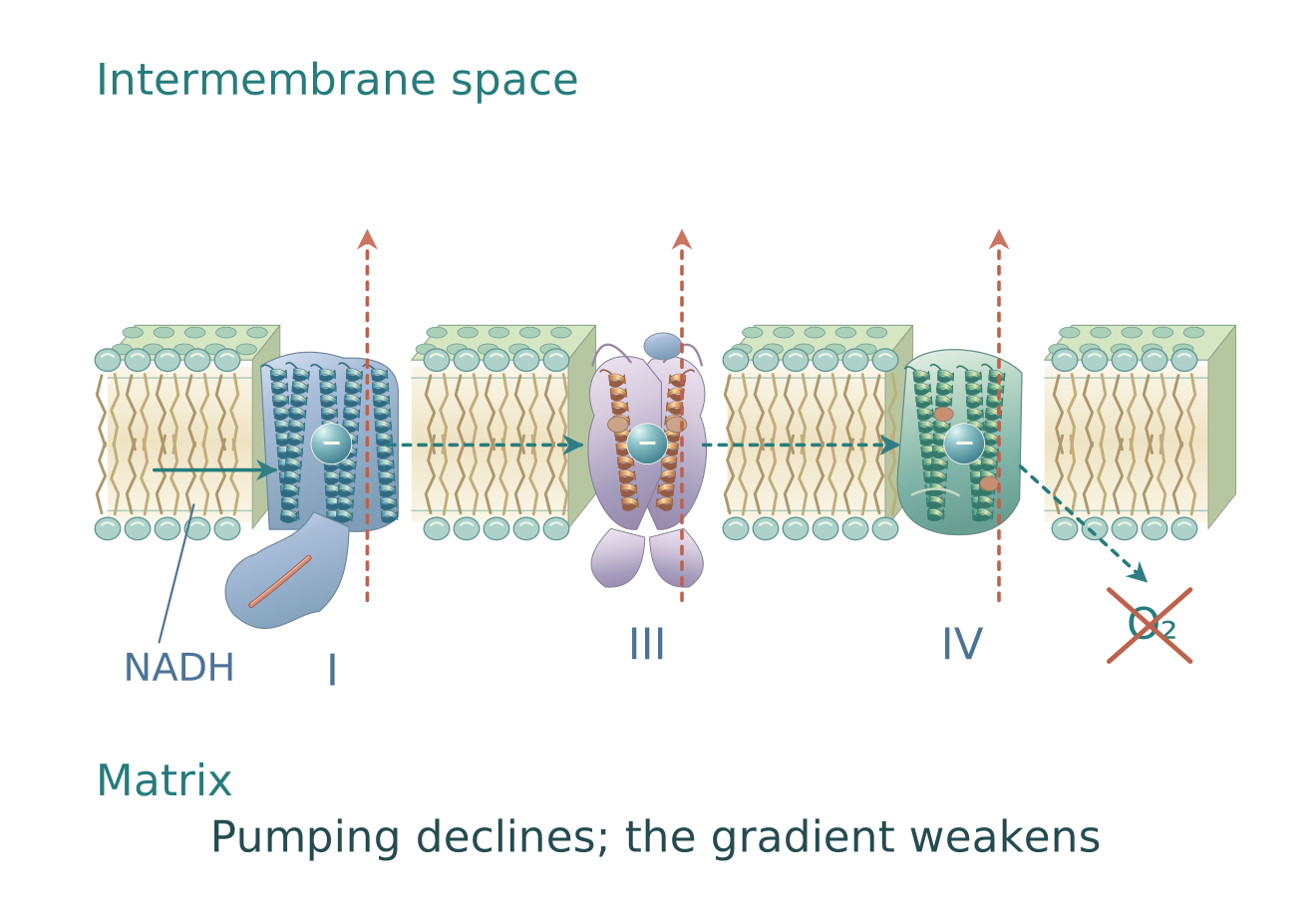
2. Endpoint blocked: Remove the final acceptor and reduced carriers accumulate upstream. The relay slows because the next suitable acceptor is unavailable. This represents chemical redox changes, not electrons piling up like solid balls in a pipe
Predict oxygen loss
Follow the consequences
1. Transfer: NADH feeds the chain. Electron transfers support proton pumping, building the gradient that ATP synthase can use
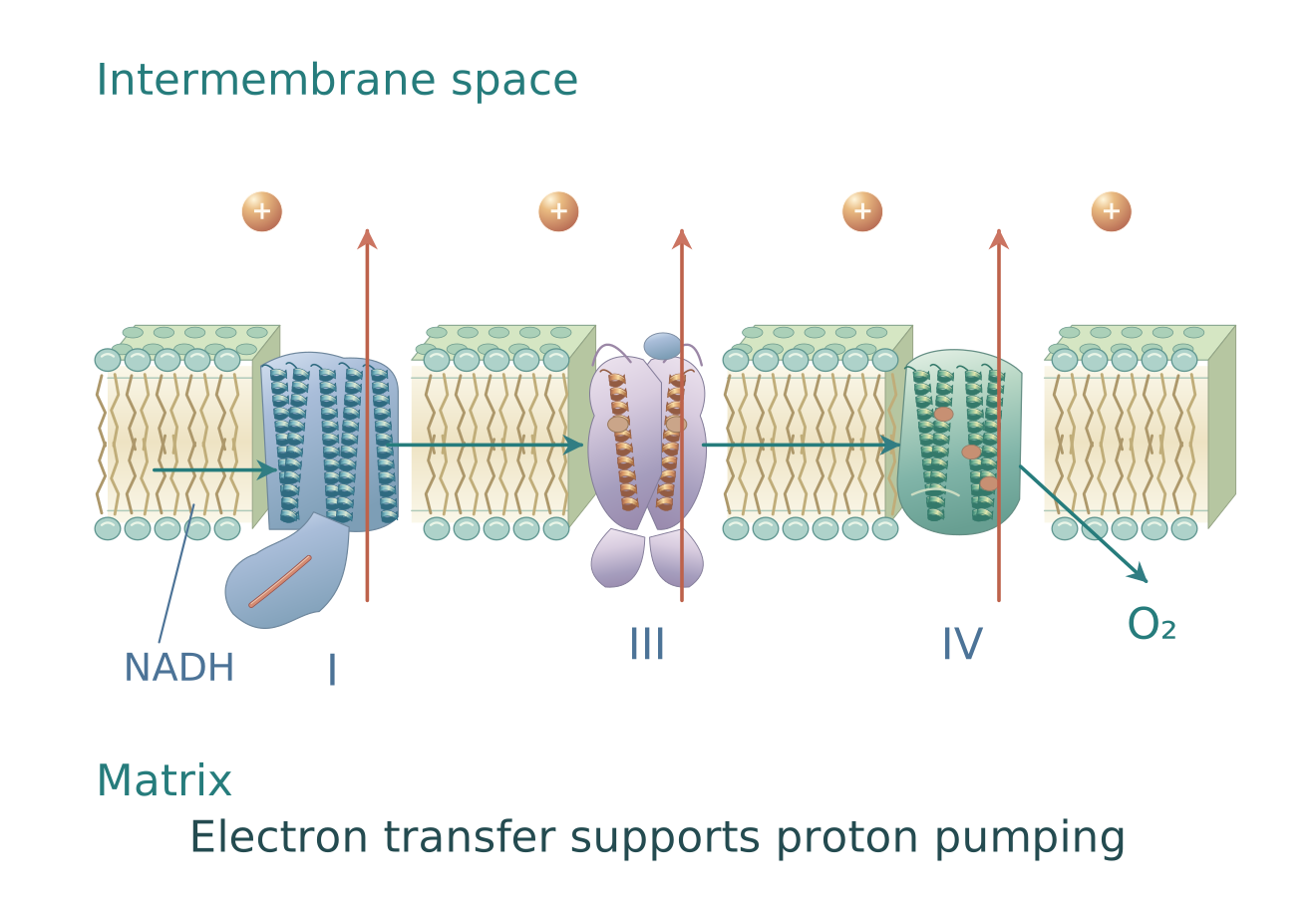
2. Oxygen: One oxygen molecule accepts four electrons and combines with four protons to form two waters. This terminal reaction keeps the route open
3. No oxygen: Without oxygen, sustained electron flow and proton pumping decline. The existing gradient dissipates, and oxidative ATP production falls
What changes next?
This does not stop every ATP-producing reaction instantly. Glycolysis can still make some ATP if NAD plus is regenerated
First — Electron transfer stalls — The final acceptor is missing
Then — The gradient weakens — Oxidative ATP production falls