Phagocytosis and Lysosomal Digestion
Phagocytosis encloses material that is too large to cross a membrane directly. Follow engulfment, fusion with lysosomal compartments and digestion, then explain why enclosure matters.
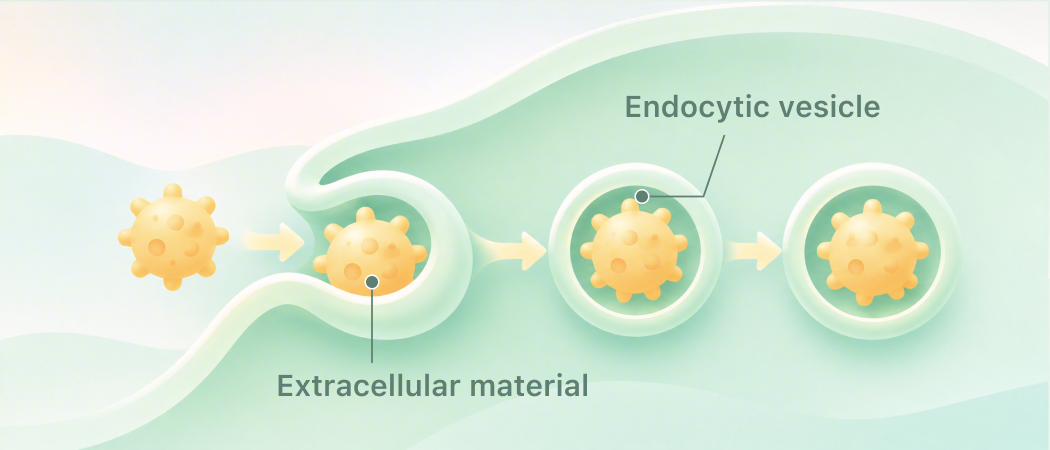
Capture something too large
Macrophage
Macrophage
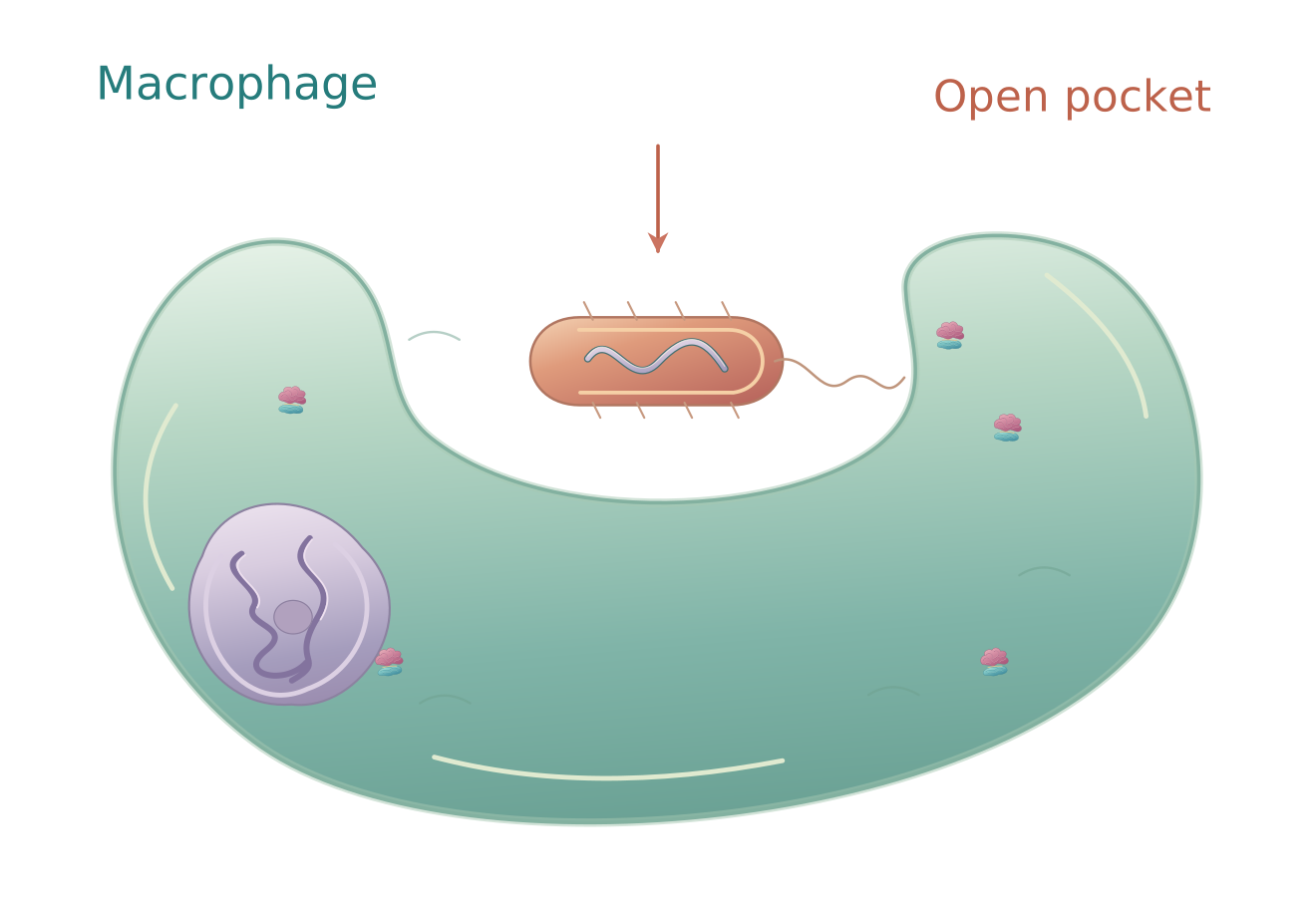
Structural view of a macrophage enclosing bacteria
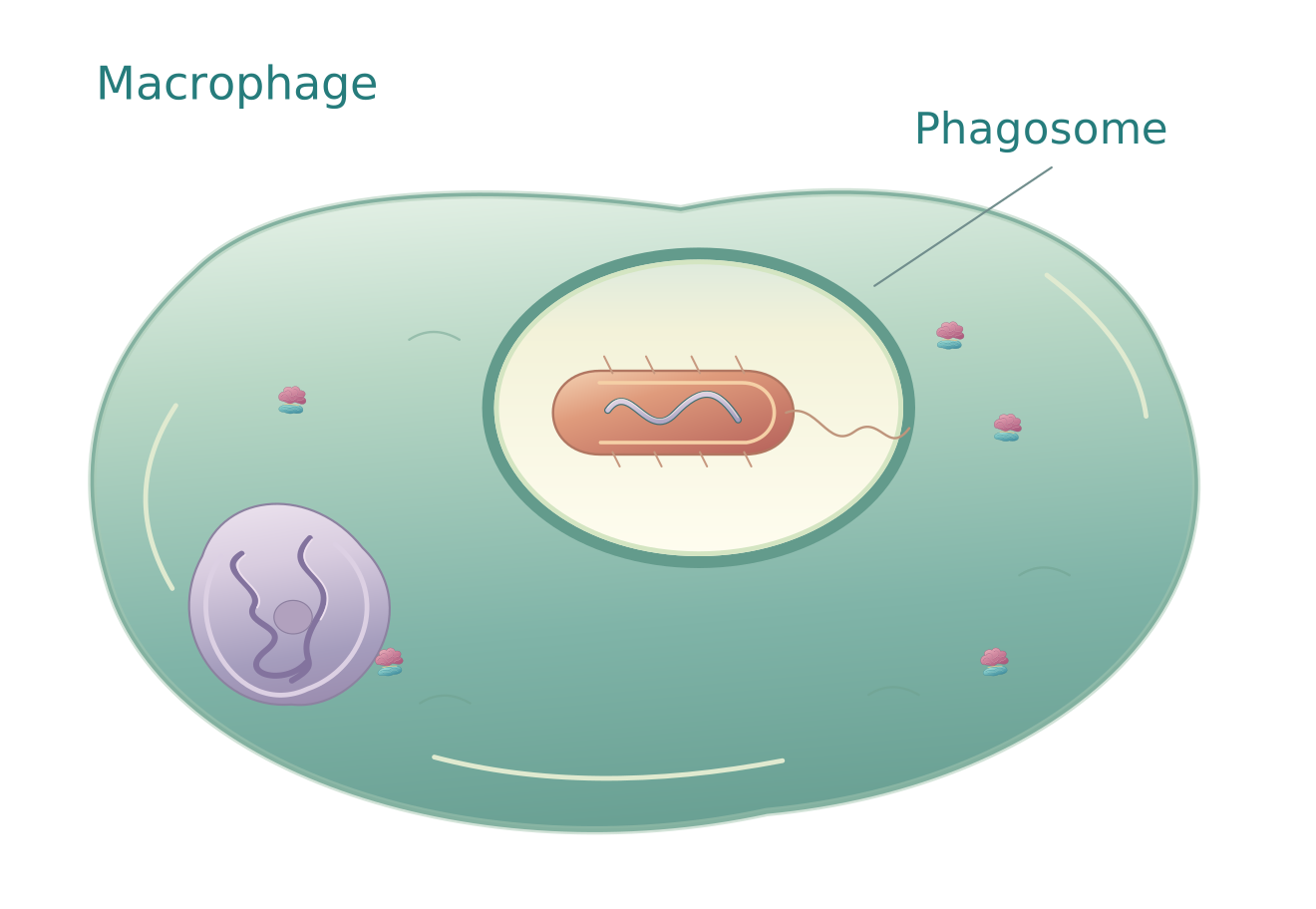
A bacterium is far too large to squeeze through a transport protein. A macrophage solves that problem by wrapping its surface around the entire particle. The pocket it seals is a phagosome. A lysosome has a different job: it supplies enzymes that can break the captured material down
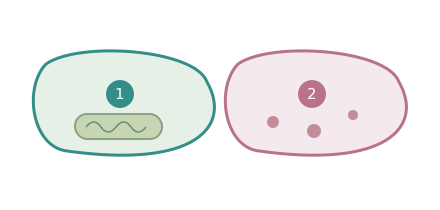
Two achievements to distinguish
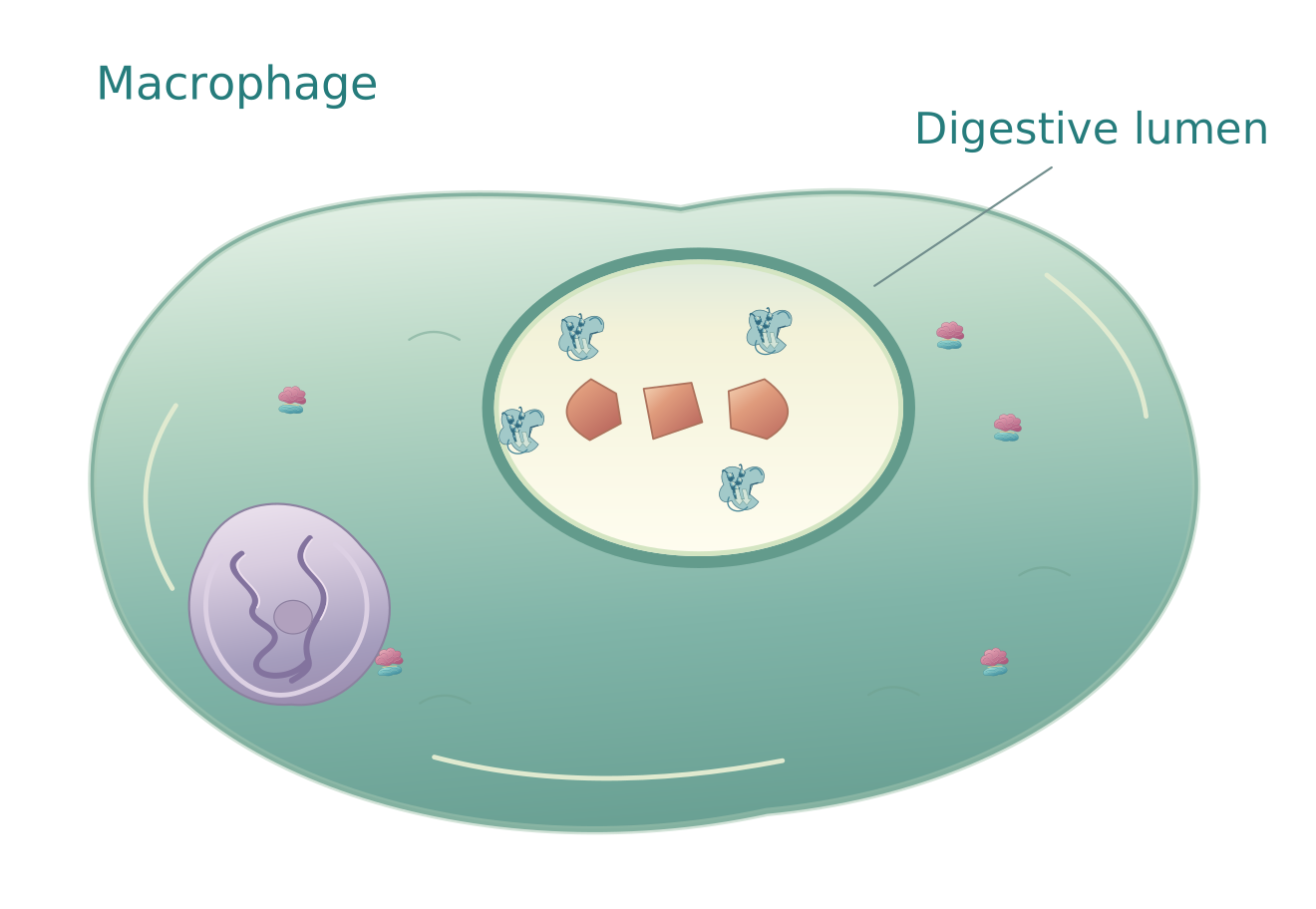
Catching something is only the beginning. The cell must turn its new pocket into a working digestive compartment. An enclosed bacterium is evidence of uptake, but not yet evidence of digestion. Watch for a change in the particle itself: smaller fragments show that breakdown has begun
Uptake ≠ digestion
An enclosed particle shows capture
Smaller fragments show breakdown
Enclose, fuse, digest
Follow the changing membrane
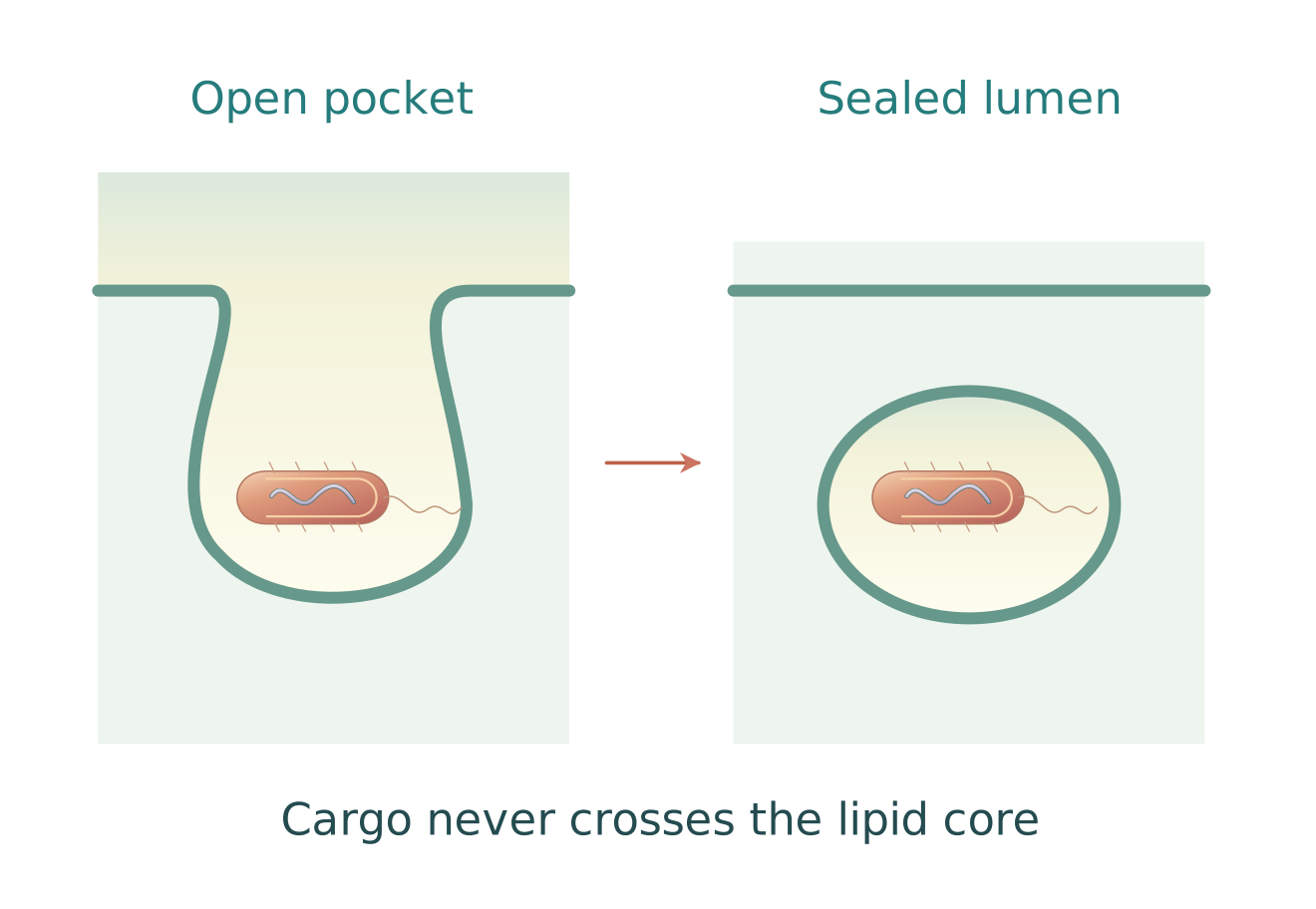
1. Wrap: The cell extends pseudopods around the bacterium. At this stage, the pocket is still open to the outside
2. Seal: The opening closes, leaving a phagosome inside the cell. The bacterium has entered in a pocket, without crossing the oily membrane core
3. Fuse: Fusion connects the phagosome with a lysosomal compartment. Enzymes now share the enclosed space with their target
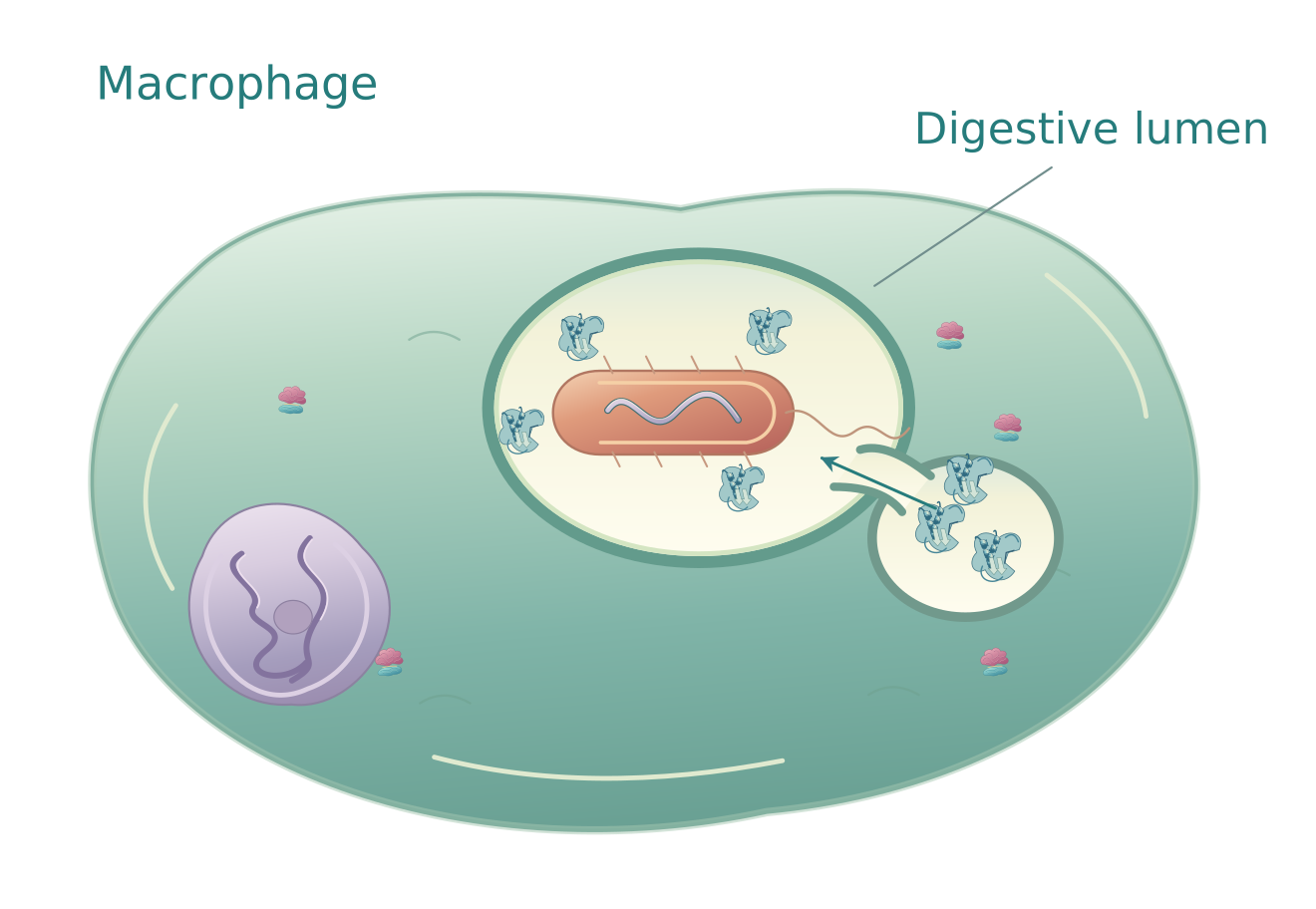
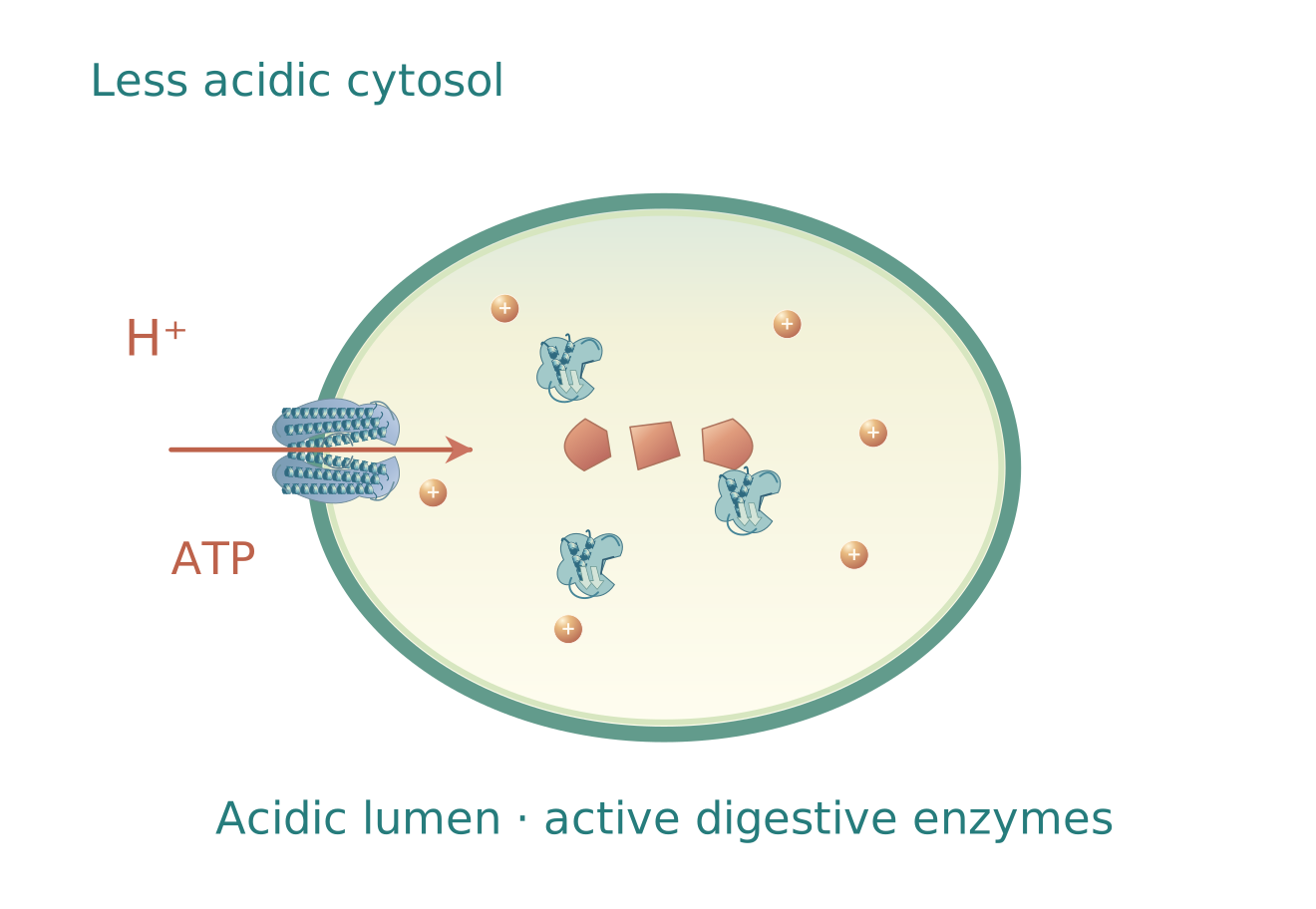
4. Digest: Proton pumps help acidify the compartment. Enzymes break the bacterium into smaller products, and transporters can return useful building blocks to the cytosol
Capture versus breakdown
Membrane movement brings the cargo in. Chemical reactions do the breaking down
| Item | Properties |
|---|---|
| Membrane movement | Brings the particle in |
| Enzyme activity | Breaks the particle apart |
Why the compartment matters
Separate and acidify
1. Same side of the membrane: Trace the pale space around the bacterium. It connects to the outside before closure and becomes lumen afterward. The membrane keeps that space separate from cytosol
2. Suitable conditions: Enzymes also need suitable conditions. An acidic lumen helps lysosomal enzymes work efficiently, while the surrounding cytosol remains much less acidic
Diagnose a blocked step
If fusion is blocked, capture may still succeed while enzyme delivery fails. If acidification fails, delivered enzymes may work poorly. Either defect can leave captured material incompletely digested
Fusion blocked → Enzyme delivery impaired
Acidification fails → Delivered enzymes work poorly
Enzyme delivery impaired → Digestion reduced
Delivered enzymes work poorly → Digestion reduced