The Endomembrane System: A Secretory Protein's Journey
A targeting signal directs a secretory protein into the rough ER pathway. Follow transport to the Golgi, sorting and vesicle fusion while tracking which side of the membrane contains the protein.
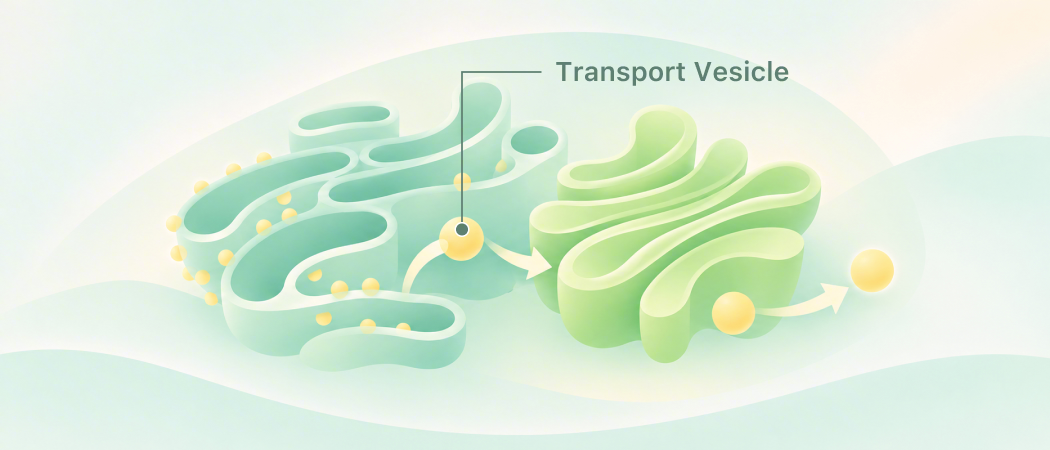
A signal opens the ER route
Rough endoplasmic reticulum
Rough endoplasmic reticulum
Structural view of rough endoplasmic reticulum
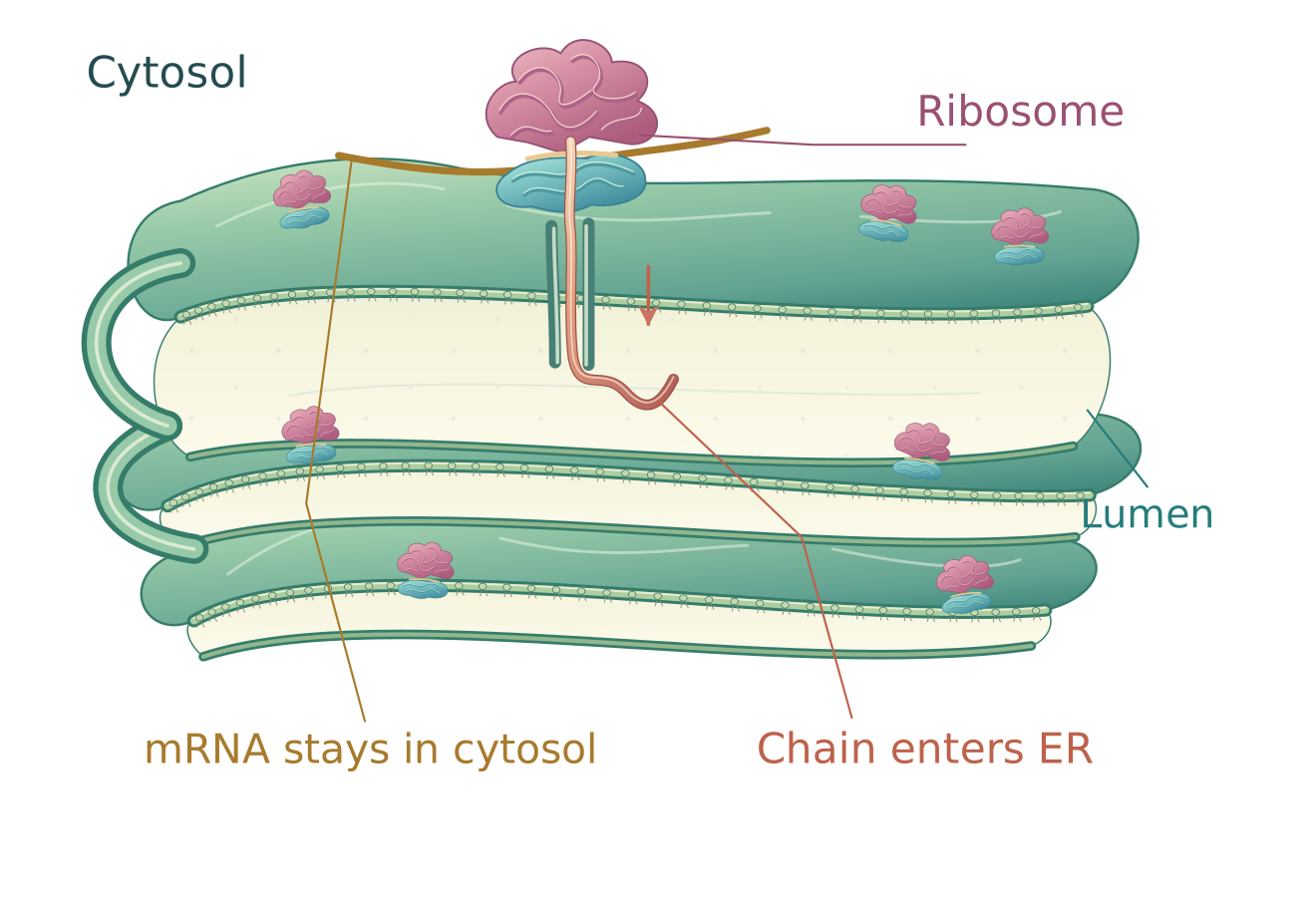
Follow a protein destined for secretion. An early signal in its sequence acts like an address, directing the growing chain to rough ER. The ribosome is on the cytosolic face; the enclosed space beneath it is the lumen
Targeting signal: Selects the route
Membrane channel: Provides entry
Enter and fold
1. Enter ER: The ribosome stays outside while the growing chain passes through a membrane channel. The signal selects the route; it does not act as a hole
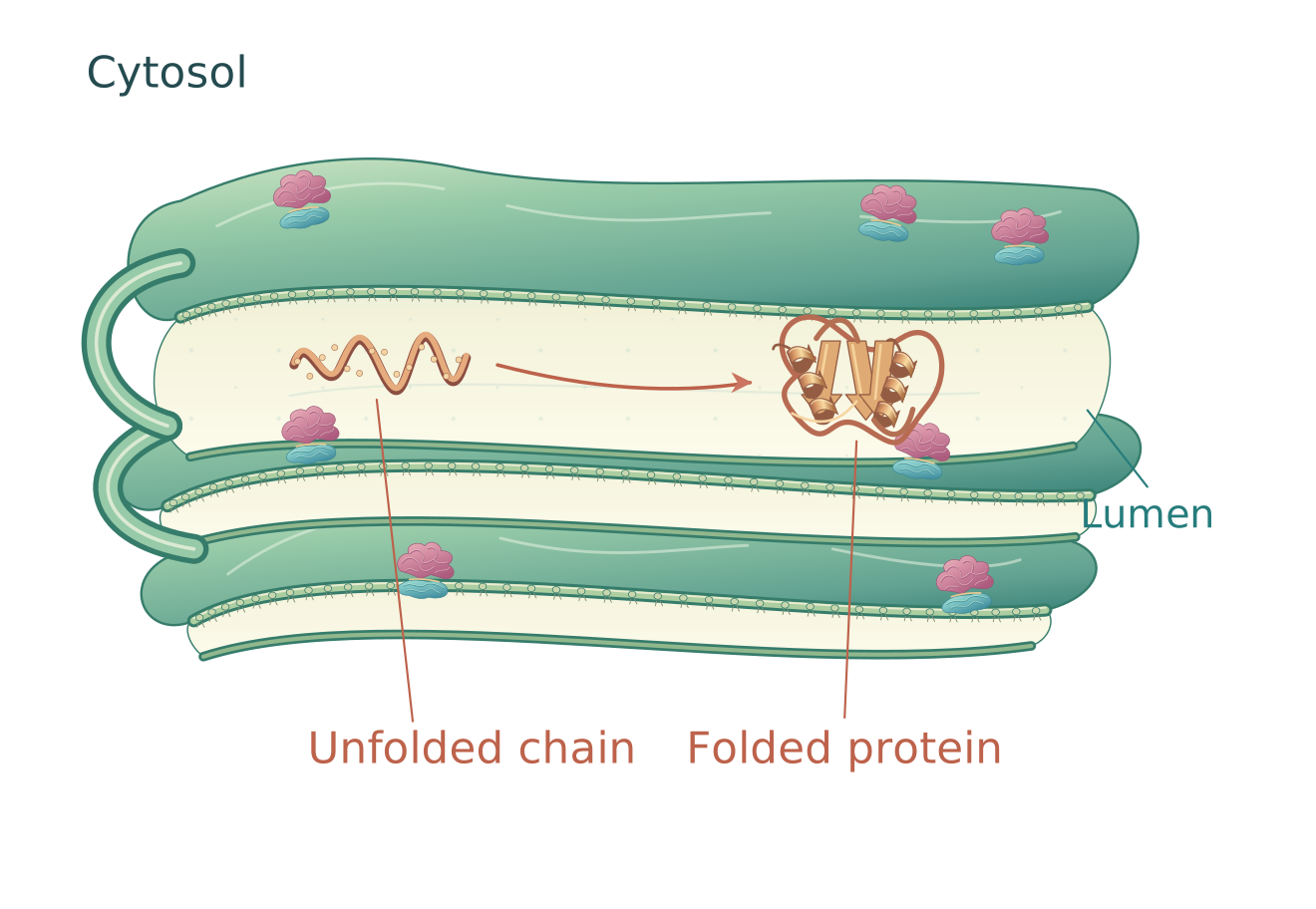
2. Fold: Inside the lumen, the chain folds and begins processing. Many proteins acquire sugars here. Proteins without an ER targeting signal can instead finish on free ribosomes. The same ribosome can serve different destinations; the protein's signal determines this route
Deliver, modify, sort
Golgi apparatus
Golgi apparatus
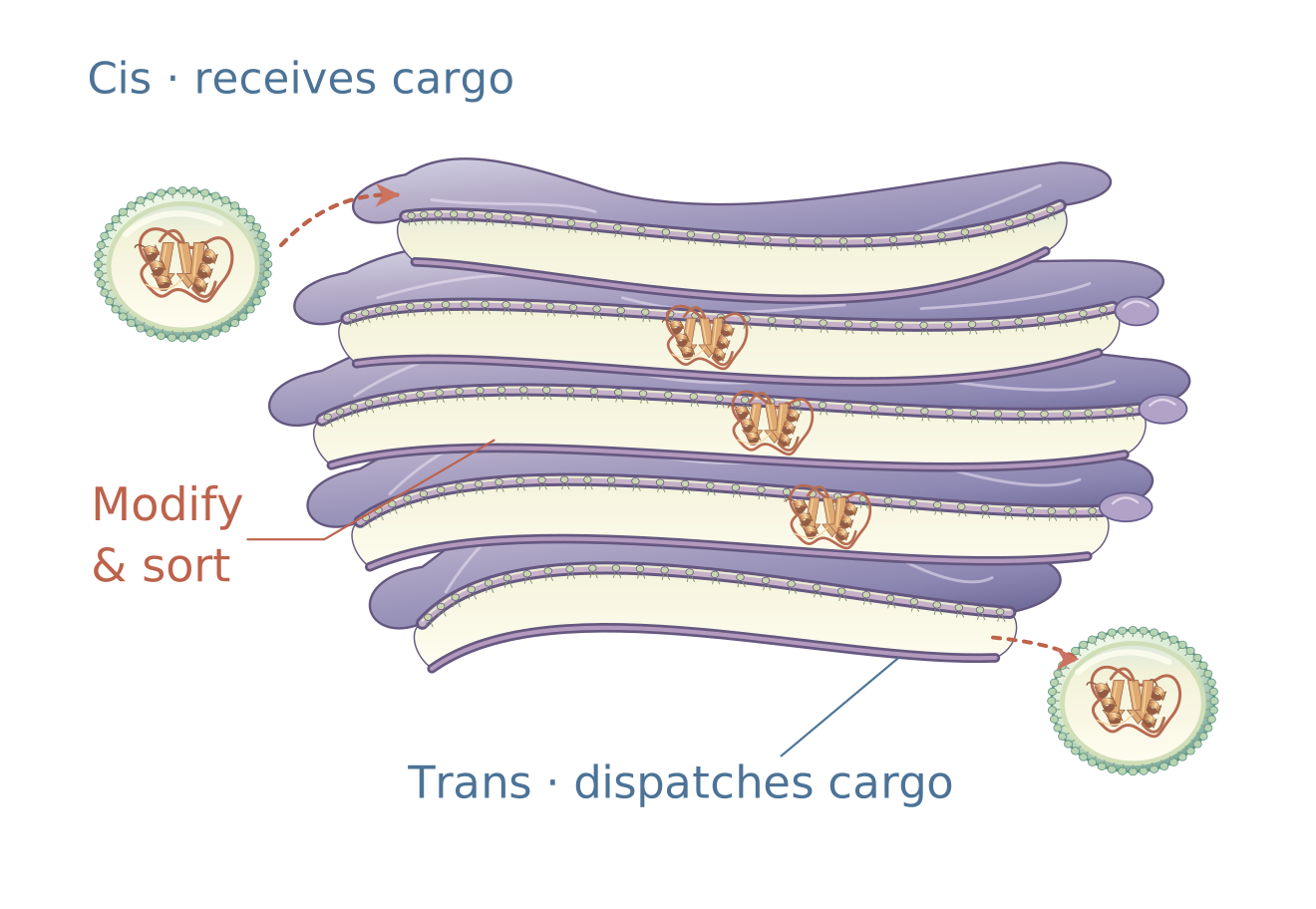
Structural view of the Golgi apparatus, a stack of membrane sacs
The Golgi is a stack of membrane sacs with different processing enzymes. Its cis side receives cargo, while its trans side organizes dispatch
| Item | Properties |
|---|---|
| Cis side | Receives incoming cargo |
| Trans side | Sorts outgoing cargo |
Keep cargo enclosed
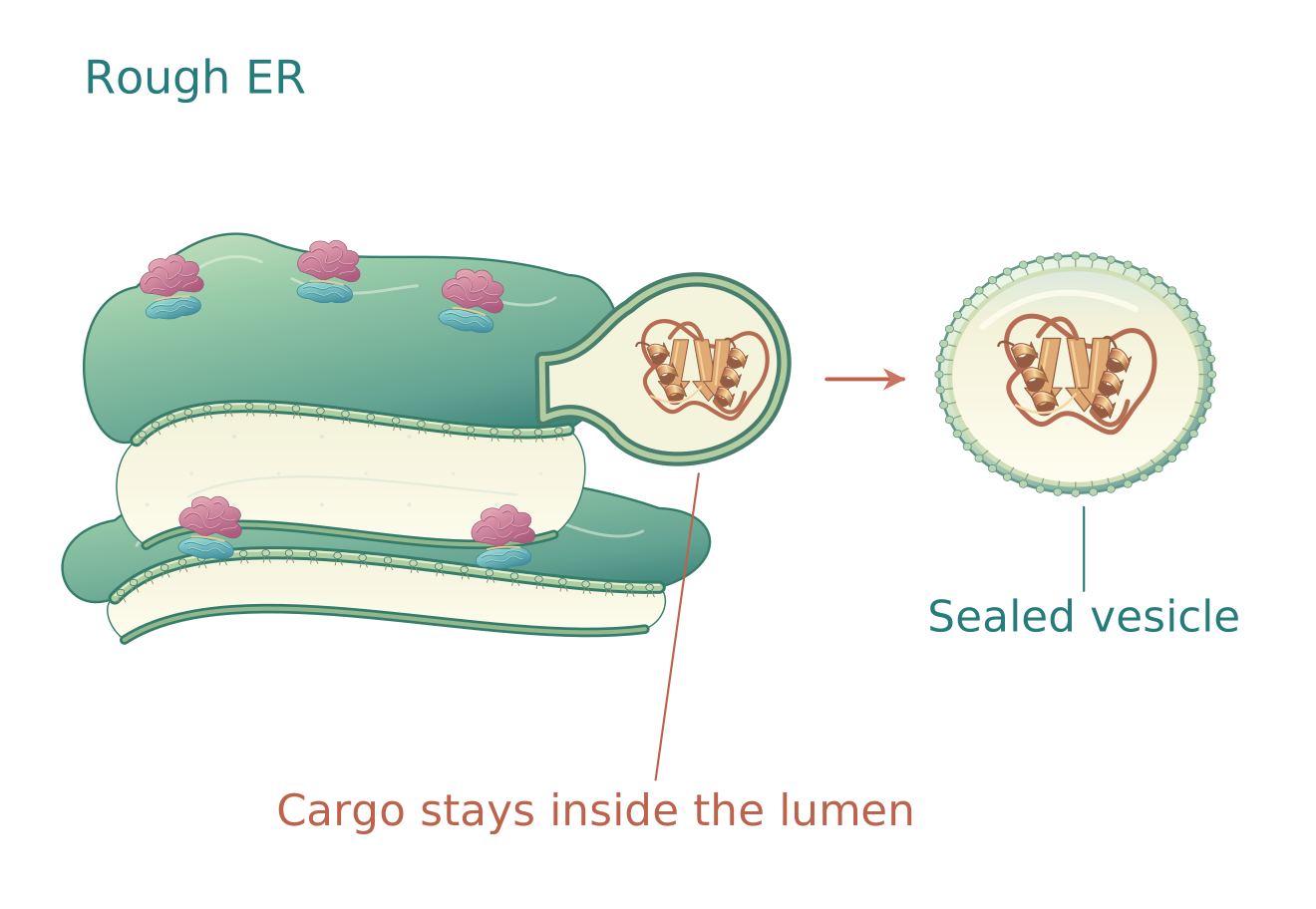
1. Bud: Watch the membrane bulge around the folded protein. The neck pinches closed, creating a sealed transport vesicle. Cargo stays inside as the carrier leaves the ER
2. Modify and sort: Delivery brings cargo to the Golgi lumen. Further processing modifies it, and sorting directs different proteins to different destinations. Our secretory protein enters an outgoing carrier; other cargo may travel toward lysosomes
Open the lumen to the outside
Release by membrane fusion
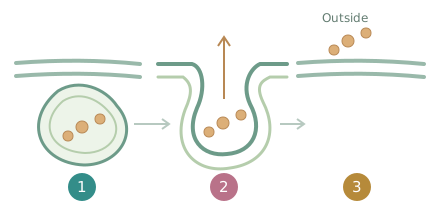
1. Before fusion: The secretory vesicle approaches the cell surface. Its protein is still separated from cytosol by a membrane, just as it was inside the ER and Golgi
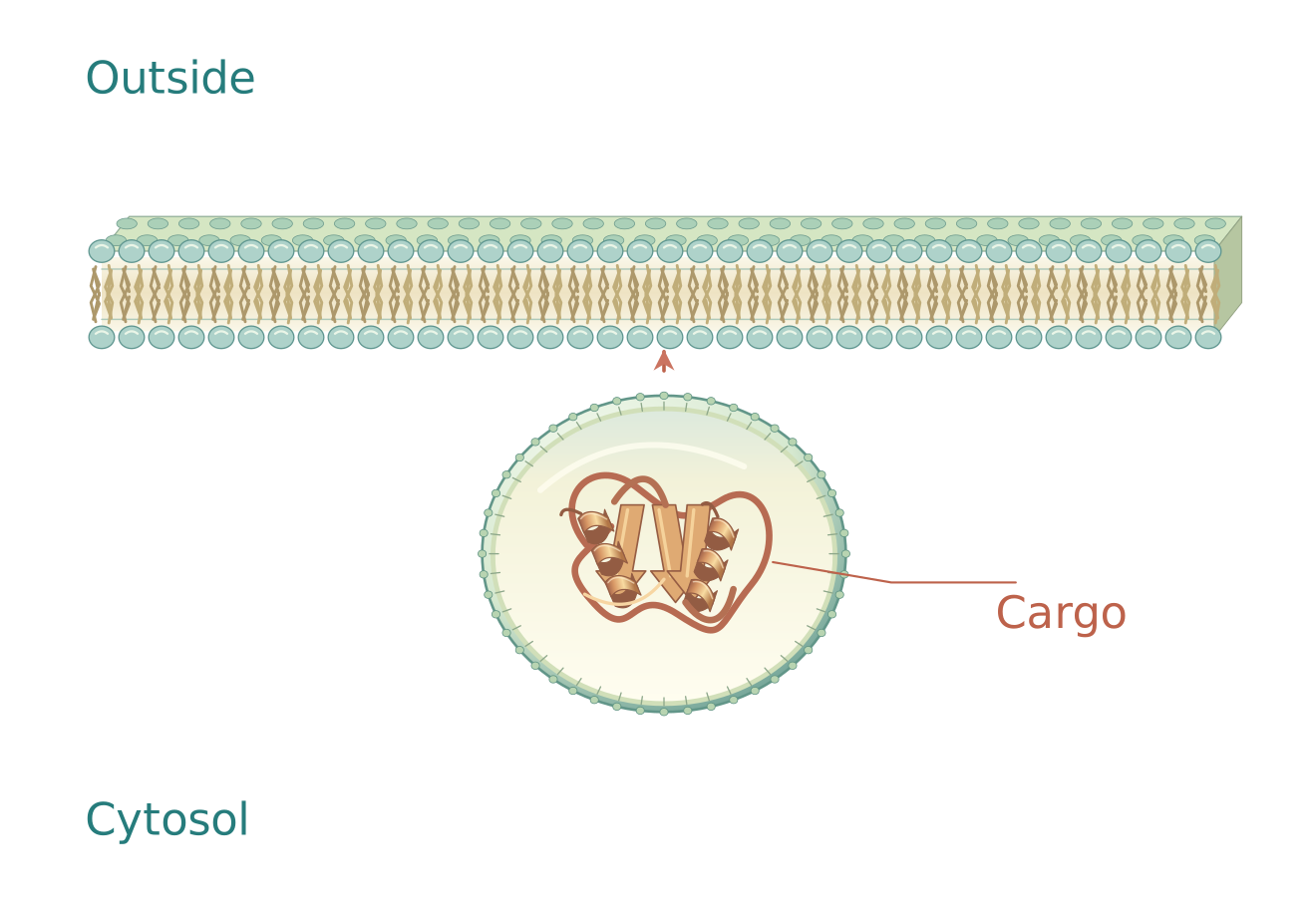
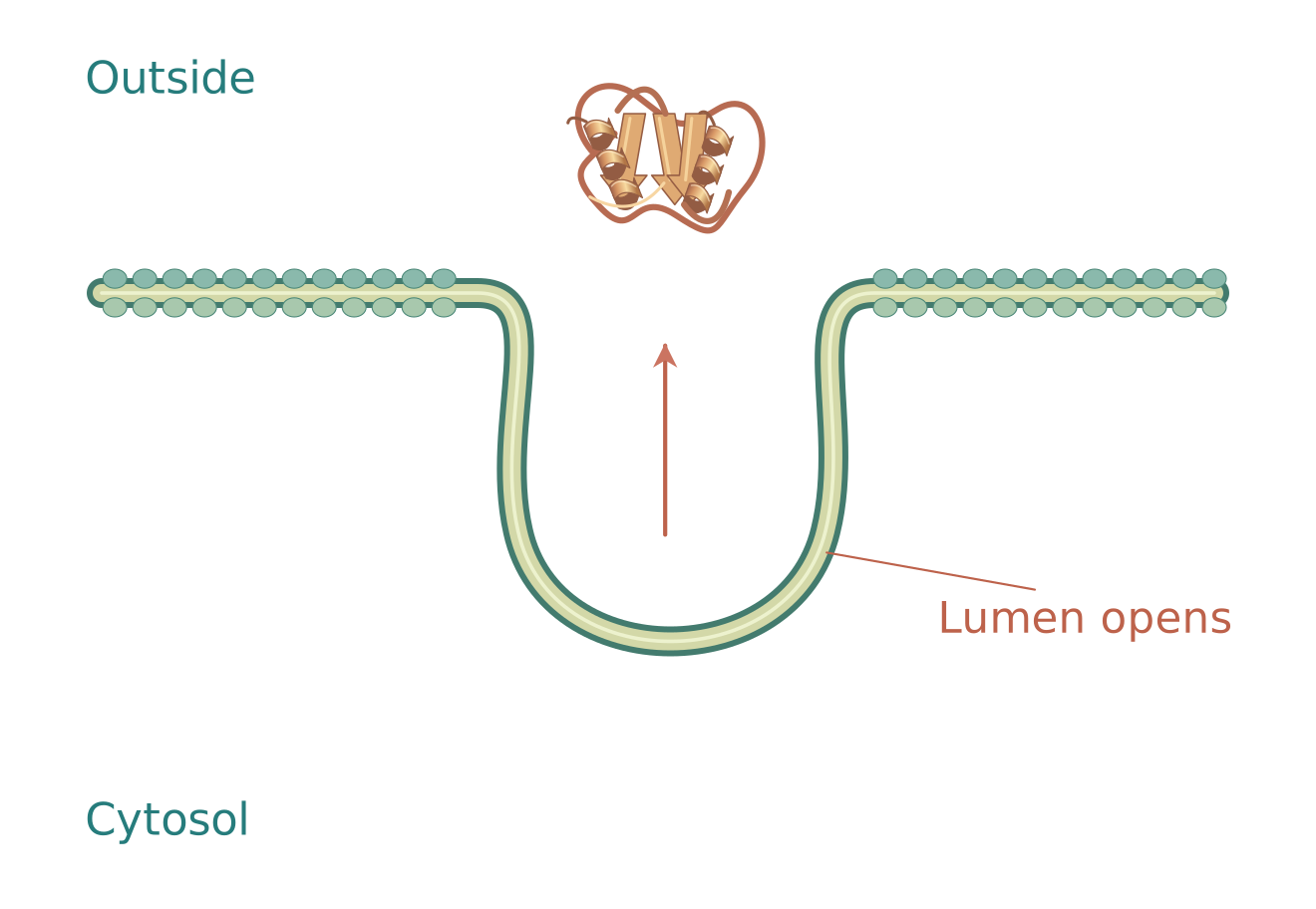
2. After fusion: Fusion connects the vesicle membrane with the plasma membrane. The lumen opens to the outside, and the protein is released without passing through the oily core
Follow the same cargo
The key change is which spaces connect. The vesicle's inner space becomes continuous with the exterior. Membranes provide both protected transport and a way to release the cargo